


Inlaid Ladies Bureau
An inlaid ladies bureau offers a compact writing space, and this selection spans Victorian walnut and Edwardian satinwood designs.
Inlaid Ladies Bureau
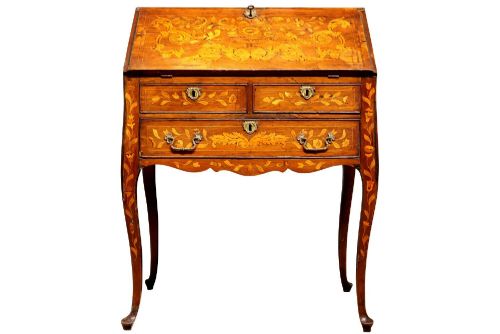
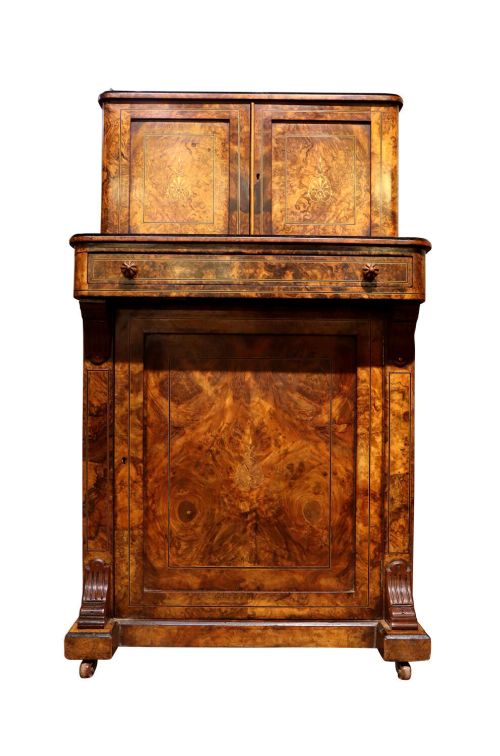
An inlaid ladies bureau brings together writing surfaces and concealed storage in smaller proportions suited to domestic rooms. When exploring an inlaid ladies bureau, a buyer encounters pieces originating primarily from the Victorian and Edwardian eras, alongside French and Dutch examples from the nineteenth century.
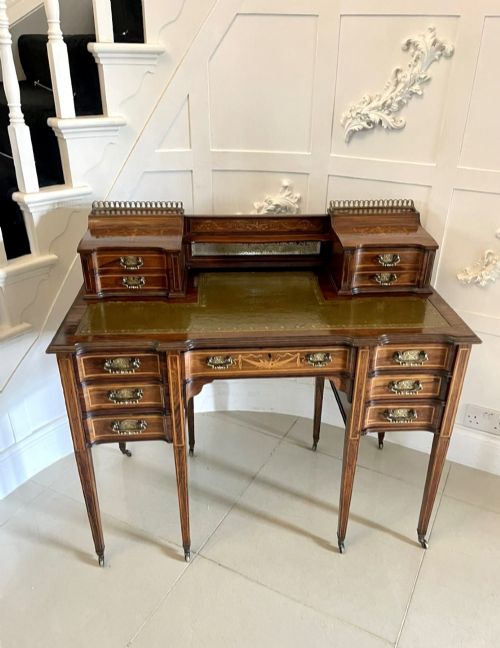
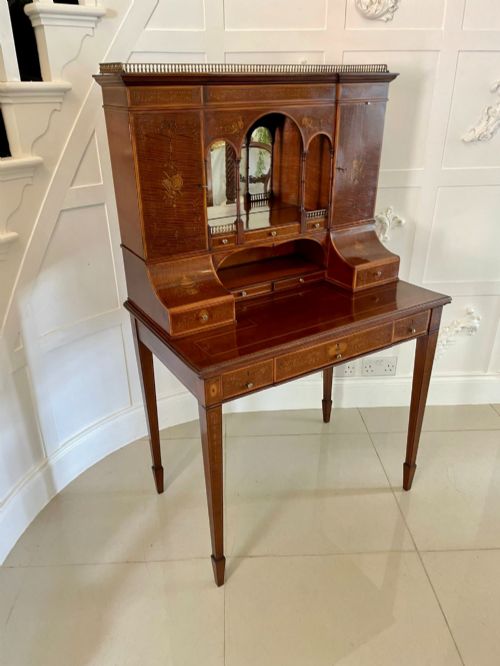
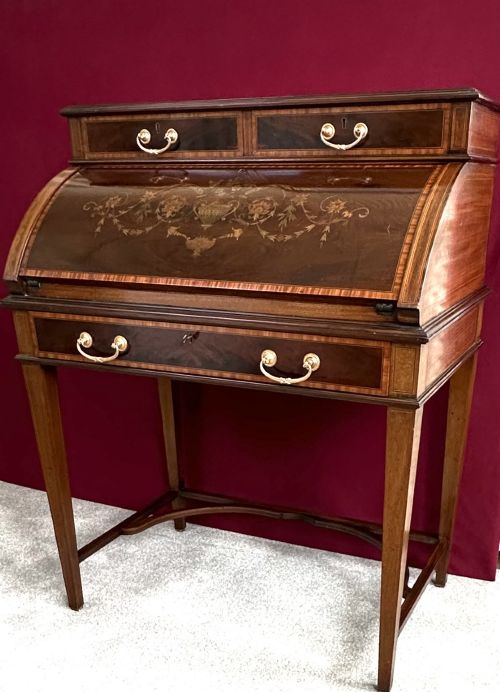
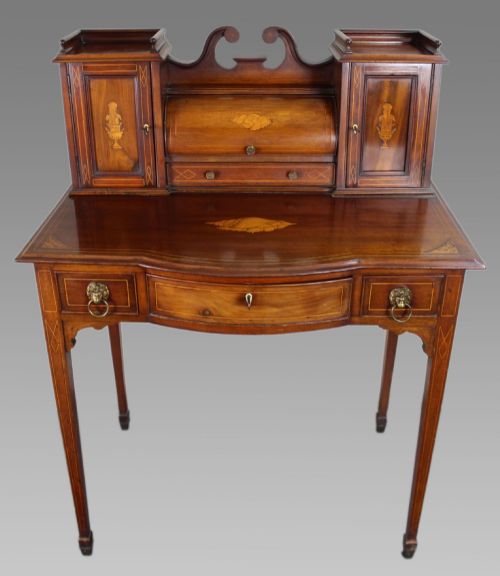
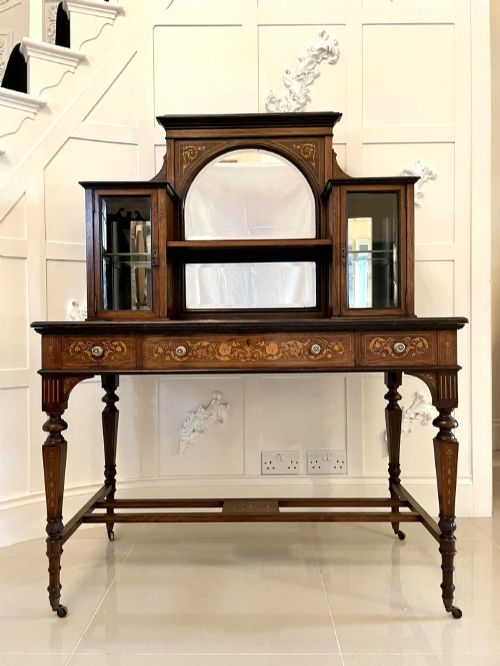
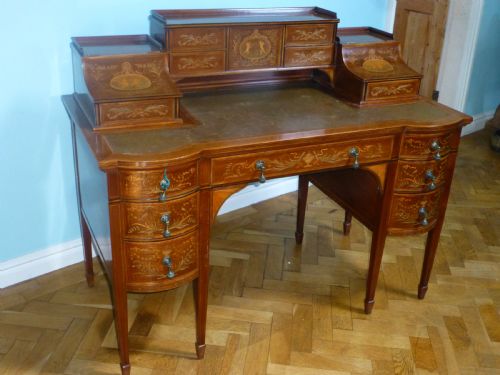
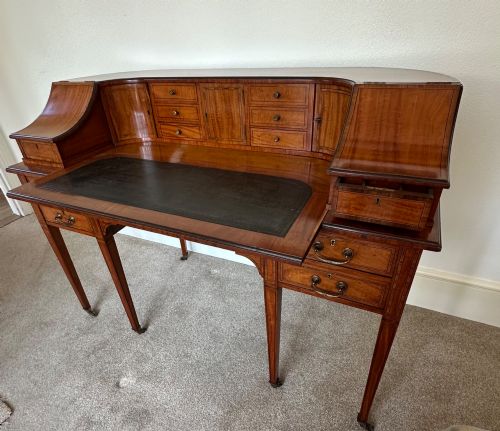
The survival of these desks covers distinct forms, including fall-front bureaux, writing tables, bonheur-du-jour cabinets and Carlton House desks. Edwardian satinwood and Victorian mahogany or walnut versions appear most frequently, often featuring fitted interiors behind sloped or cylinder lids.
Materials and Construction
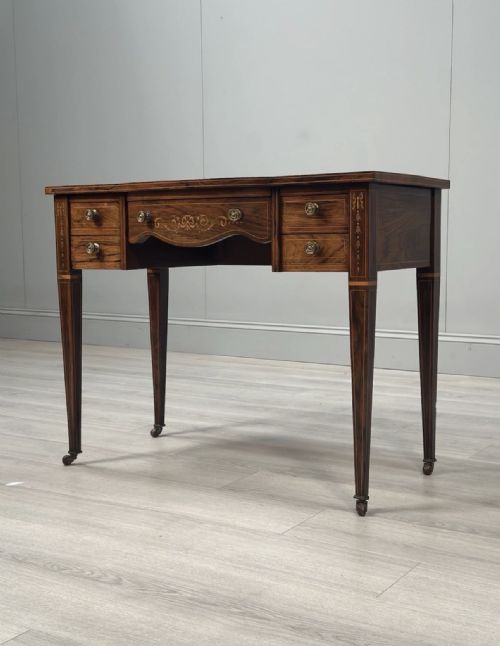
Cabinet makers built these pieces using structural timbers such as mahogany, walnut and rosewood, overlaid with finer veneers including satinwood, kingwood and amboyna. Decorative enrichment relied on contrasting inlay and marquetry, using floral motifs, ribanding and classical stringing.
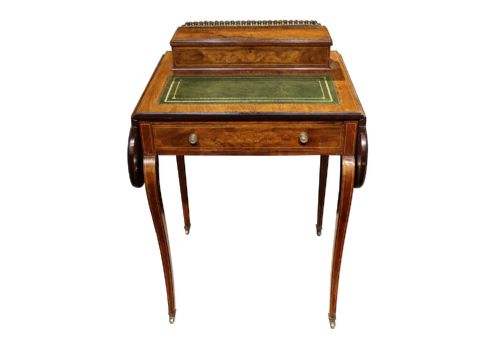
Metal mounts in brass, ormolu and gilt bronze frequently frame the woodwork, while writing surfaces incorporate inset panels of tooled leather. Secondary elements include glass doors on cabinets and fitted internal compartments with small drawers and pigeonholes.
Listings feature woods such as satinwood, mahogany, rosewood, walnut, kingwood and amboyna alongside brass and ormolu mounts.
Evaluating Construction and Ornament
Differentiation across the range rests on the precision of the cabinet work and the ambition of the surface decoration. Finer pieces demonstrate seamless veneer matching, crisp marquetry cutting and substantial timber thickness rather than thin surface laminates.
The distinction between standard commercial output and workshop-attributable furniture lies in secondary timbers, the refinement of internal fittings, and the integration of quality mounts in brass or ormolu.
Maple & Co·JAS Shoolbred·Edwards and Roberts
The Inlaid Ladies Bureau Glossary
- Bonheur-du-jour
- A light ladies writing desk featuring a small cabinet or set of shelves superstructure upon the main writing surface. This French form gained popularity during the nineteenth century.
- Carlton House desk
- A distinctive writing desk with a curved superstructure of small drawers and pigeonholes enclosing the rear and sides of the writing area. Edwardian makers frequently produced inlaid versions in satinwood and mahogany.
- Marquetry
- The art of forming decorative patterns using thin veneers of different coloured woods, ivory or metal. It differs from inlay by assembling the entire design on a backing before application.
- Parquetry
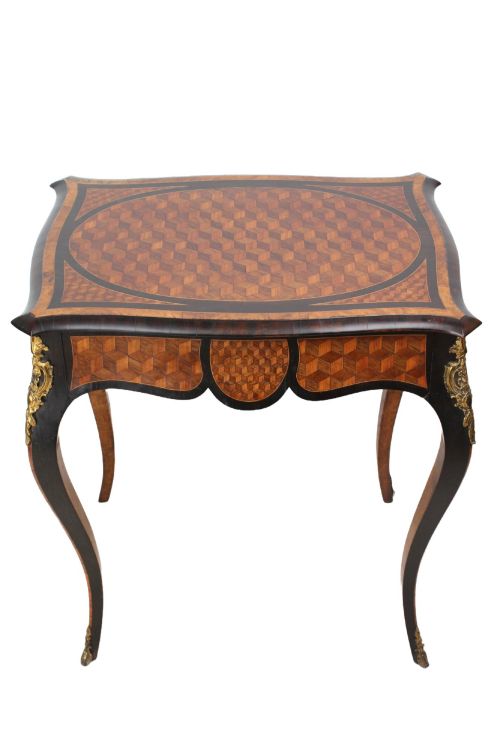
- A geometric mosaic of wood pieces used for surface decoration. It creates repeating patterns such as cubes or chequers across the desktop or fall-front.
- Escritoire
- A writing cabinet with a fall-front enclosing drawers and pigeonholes. These pieces combine storage capacity with a dedicated writing space.
Inlaid Ladies Bureau: Frequently Asked Questions
What is a bureau de dame?
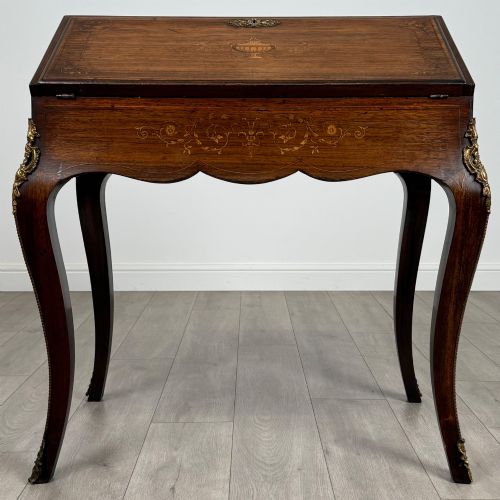
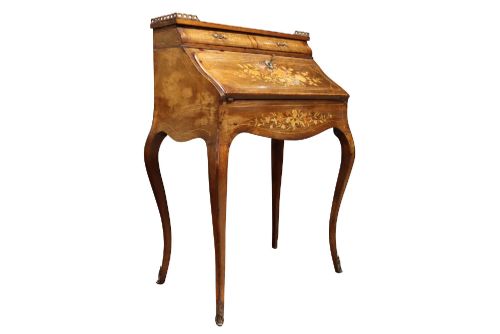
A bureau de dame is a ladies desk, typically French in origin, featuring a sloping fall-front or a cylinder top that opens to reveal fitted interior compartments.
These pieces emerged in various woods including rosewood, walnut and kingwood, often enhanced with marquetry and bronze mounts.
How do I date an inlaid bureau?
Dating relies on timber choices, construction methods and stylistic revivals present in the piece. Edwardian examples often utilise bright satinwood and light stringing, while Victorian versions favour darker walnut, mahogany and rosewood.
Secondary woods inside drawers and the style of the inlay provide further chronological markers.
Were these desks used for correspondence?
These pieces served as private writing stations for managing household accounts, personal letters and diary keeping. The fitted interiors provided dedicated space for stationery, inkwells and small valuables.
Their compact proportions allowed them to sit comfortably in drawing rooms and private boudoirs rather than libraries.
What is Sheraton revival style?
Sheraton revival furniture draws inspiration from the lighter neoclassical designs of the late eighteenth century. Pieces in this style typically feature satinwood veneers, painted floral details and tapered legs.
Victorian and Edwardian cabinet makers produced these revivals to satisfy demand for refined, elegant proportions.