
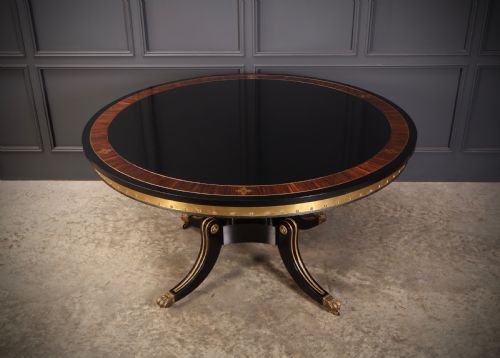


Inlaid Foyer Table
An inlaid foyer table anchors a hallway with fine timbers, decorative marquetry and polished stone surfaces selected over centuries of design.
Inlaid Foyer Table
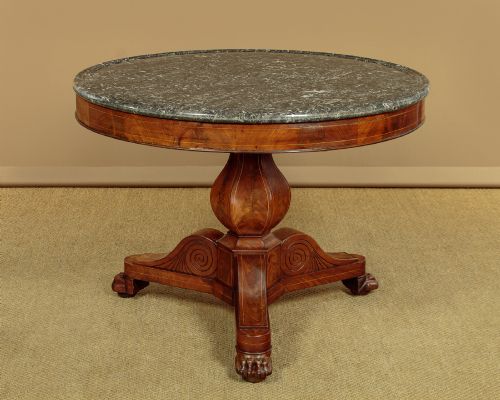
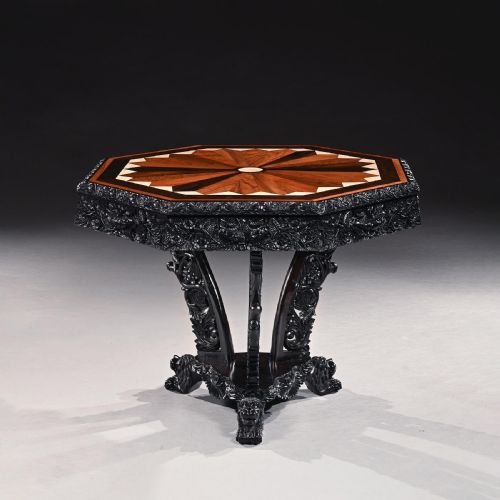
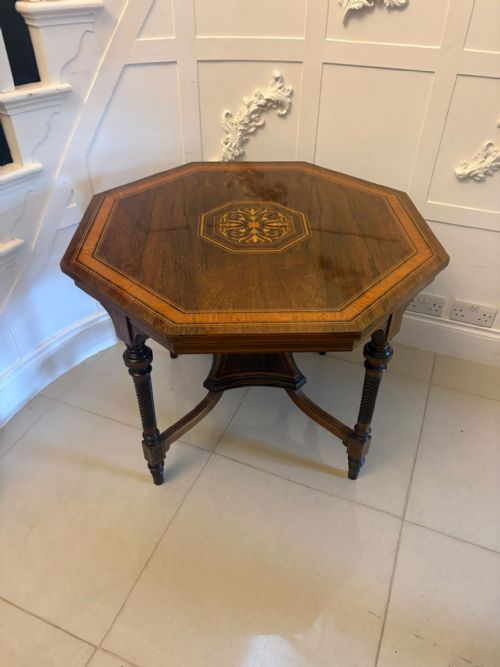
The inlaid foyer table typically manifests in this selection as a centre table or a console table positioned to greet visitors in an entrance hall. These pieces span the nineteenth century, including Victorian, Regency and Edwardian eras, alongside later twentieth-century iterations.
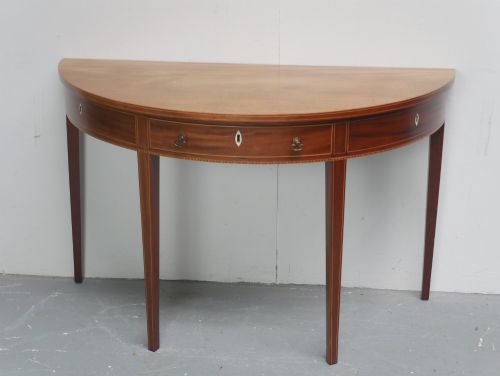
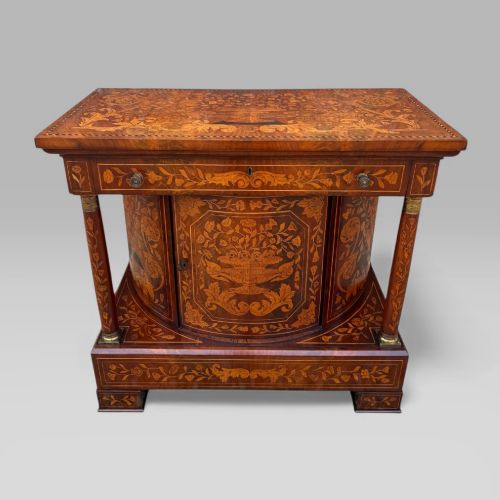
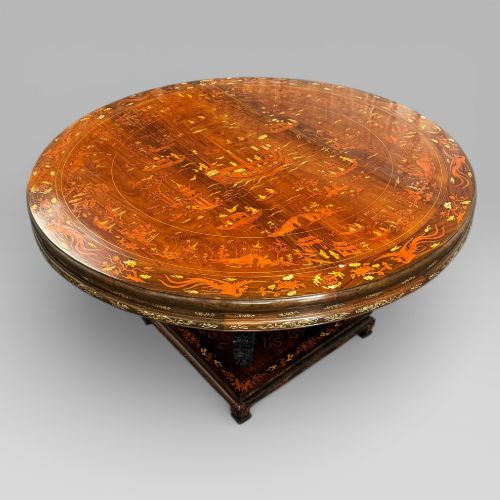
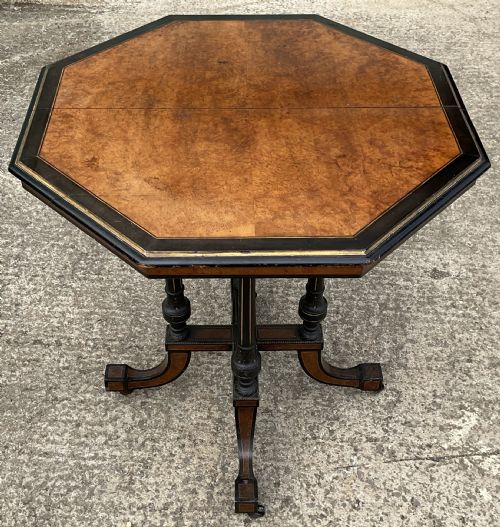
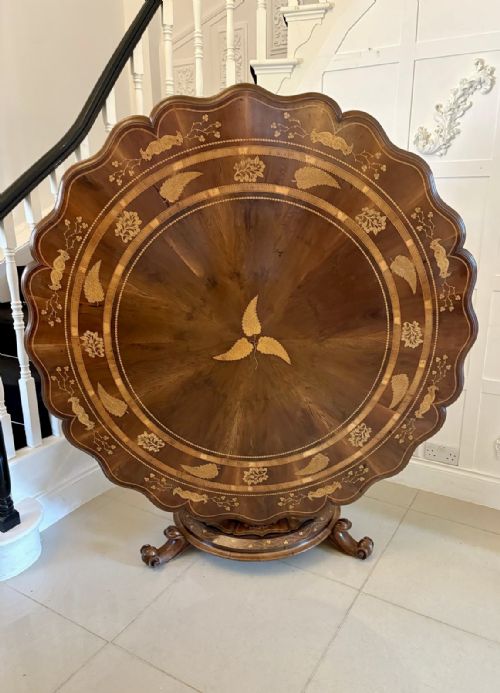
Makers and workshops construct these tables in diverse forms such as circular, octagonal and demi-lune shapes designed to sit freestanding or against a wall. The typology merges practical surface utility with decorative statement, drawing upon historical styles from Sheraton revival to Dutch Baroque.
Materials and construction methods
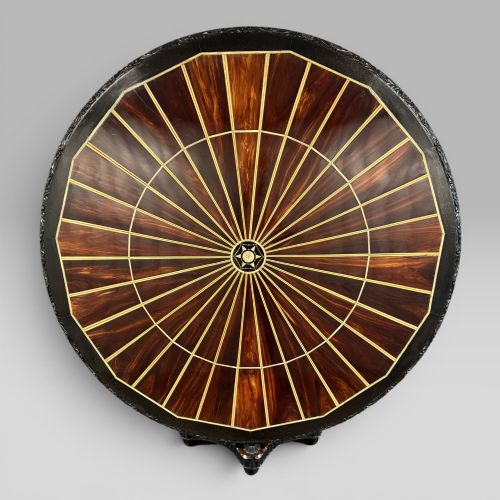
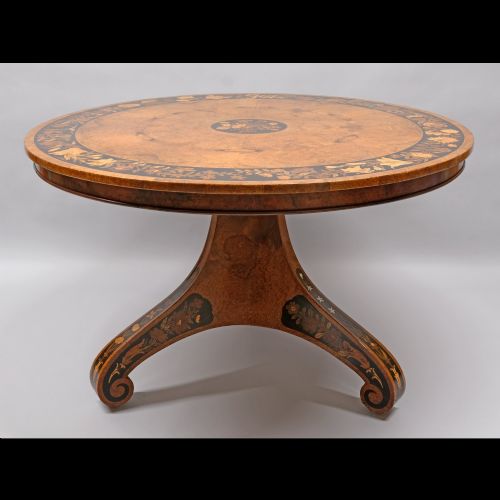
Cabinet makers utilise dense hardwoods including walnut, burr walnut, mahogany, rosewood and satinwood as foundations for detailed surface work. Artisans apply marquetry and parquetry inlay using contrasting timbers, brass and specimen woods to create geometric patterns and pictorial scenes.
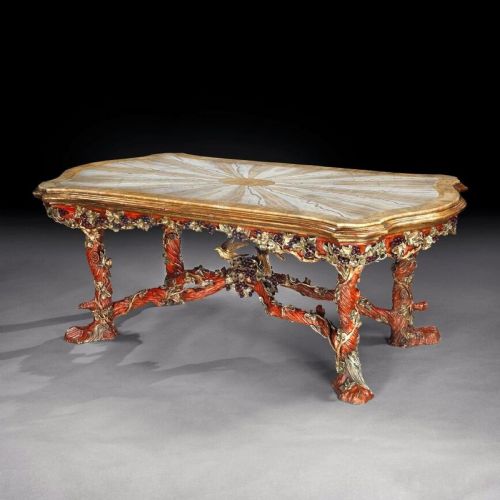
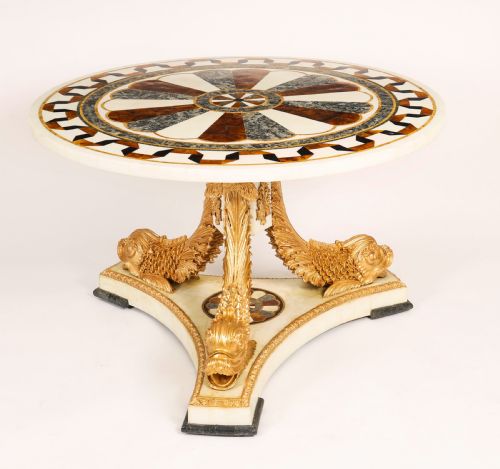
Structural elements frequently incorporate turned pedestals, carved wooden supports or fitted marble and onyx tops. French polishing and specialised joinery finish the timber components, binding decorative veneers to solid carcasses.
Current listings feature nineteenth-century furniture incorporating walnut, rosewood, mahogany, brass inlay and specimen marble.
Judging quality in inlaid tables
Distinction across these pieces relies on the precision of the timber matching and the intricacy of the marquetry inlay. Superior examples display seamless veneer work where individual botanical or geometric elements fit tightly without excessive filler.
The choice of secondary materials dictates overall execution, with heavy marbles, exotic coromandel or documented attribution to workshops separating standard production from exhibition-grade furniture.
Edwards and Roberts·Amleto Bertoni·Holmes Baldock·Egan Workshop
The Inlaid Foyer Table Glossary
- Marquetry
- Decorative veneer work arranged in pictorial or ornamental patterns on a solid timber ground. This technique uses contrasting woods and organic materials to form complex designs.
- Demi-lune
- A half-moon shape used for tables designed to stand flat against an entrance wall. This profile saves floor space while providing a prominent display surface.
- Parquetry
- Geometric mosaic woodwork forming repeating patterns across a table top. It relies on precise cutting of small timber blocks.
- Gueridon
- A small circular French table supported by a central column or figures. These pieces often feature stone or marble inserts.
- Specimen wood
- Timbers gathered from various regional sources to display natural variations in tone and grain. They appear frequently in nineteenth-century decorative tabletops.
Inlaid Foyer Table: Frequently Asked Questions
What distinguishes a console table from a centre table?
Console tables feature flat backs designed to stand directly against a wall, often accompanied by matching wall mirrors or wall-fixing brackets.
Centre tables are built to stand freestanding in the middle of a room or grand hallway, finished with decorative detail on all sides.
How do I care for antique wood and marble tops?
Wooden surfaces require occasional application of appropriate wax polish and protection from direct sunlight and excessive heat sources.
Marble and onyx tops need gentle cleaning with mild soap and water, avoiding acidic substances that can etch polished stone.
How do I identify a Victorian piece from a Regency one?
Regency tables often display classical restraint, Sabine-style supports, dark rosewood and bronze mounts reflecting early nineteenth-century neoclassical tastes.
Victorian pieces frequently utilise burr walnut, heavier carved pedestal bases, and elaborate marquetry reflecting industrial-era manufacturing capabilities.
Where should an octagonal table be placed?
Octagonal tables suit open entrance halls and circular foyers where viewers can walk entirely around the freestanding base.
The multi-sided geometry provides balanced viewing angles from any approach within the space.