



Inlaid Folding Console Table
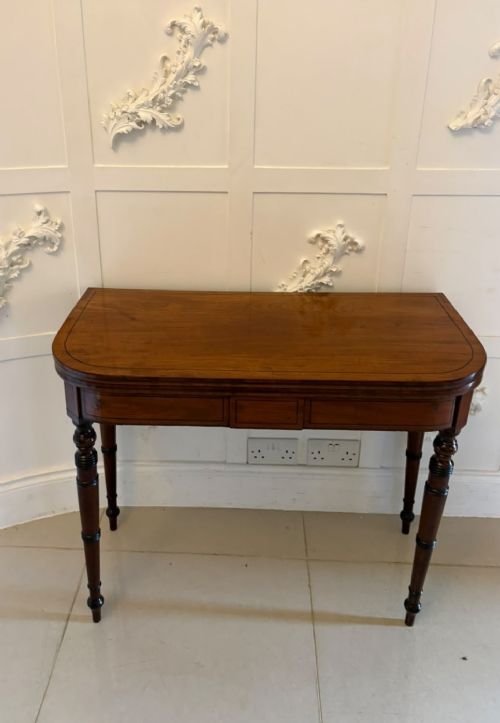
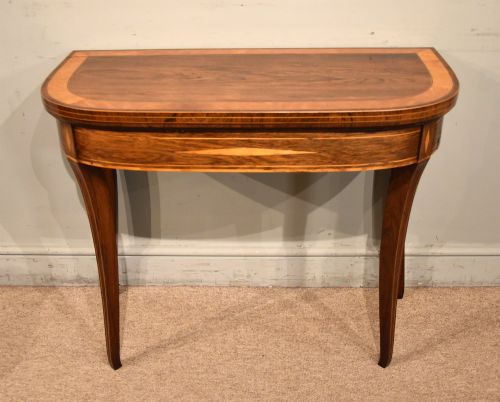
An inlaid folding console table brings versatile Georgian and Regency craftsmanship into a room, serving as a slim pier table or opening for cards.
Inlaid Folding Console Table
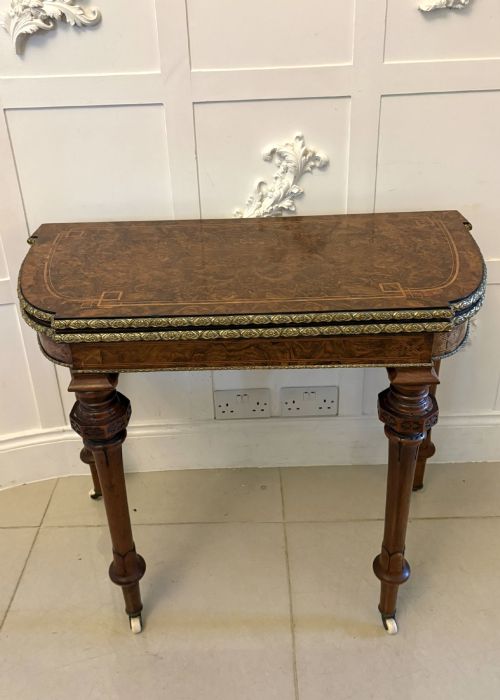
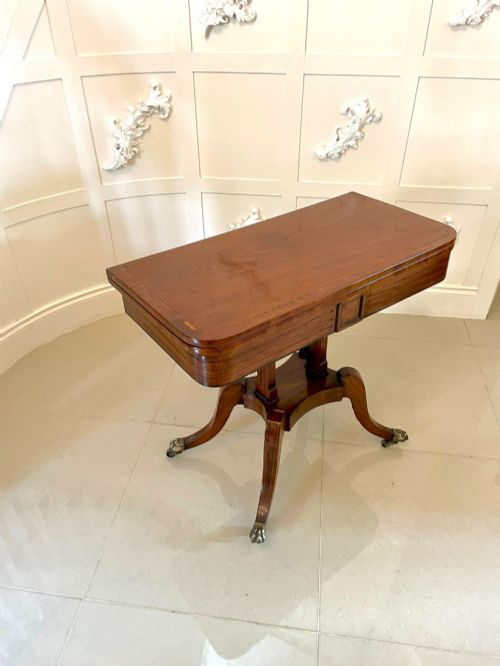
An inlaid folding console table functions as a dual-purpose piece, shifting from a narrow wall console to a wider surface for games or tea. These tables emerge primarily from the Georgian, Regency, and Victorian periods, spanning the eighteenth and nineteenth centuries.
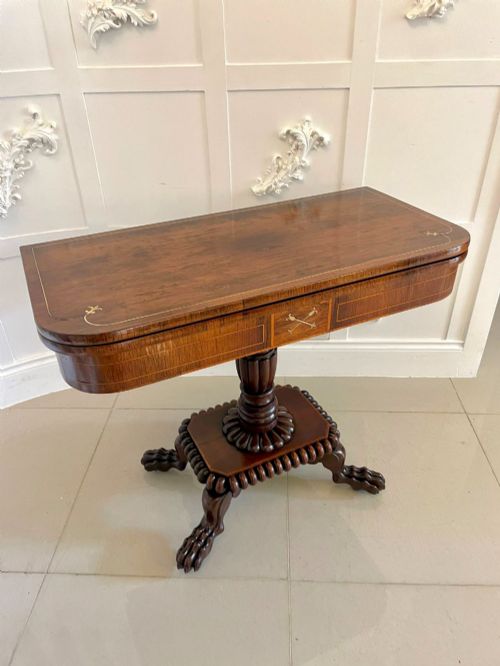
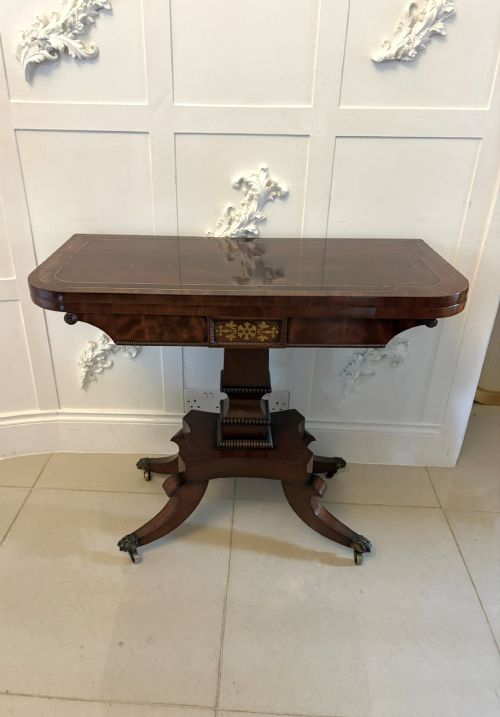
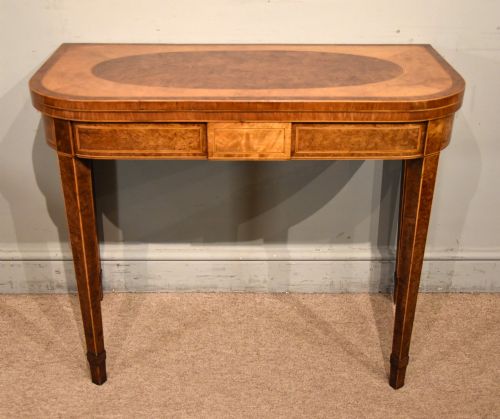
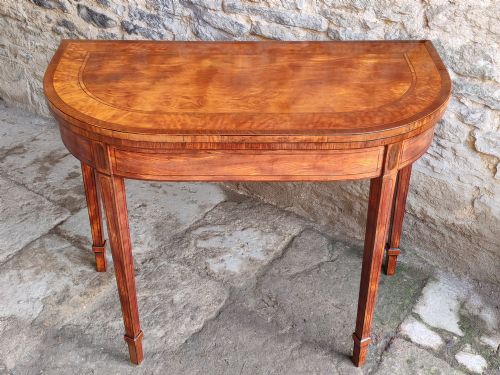
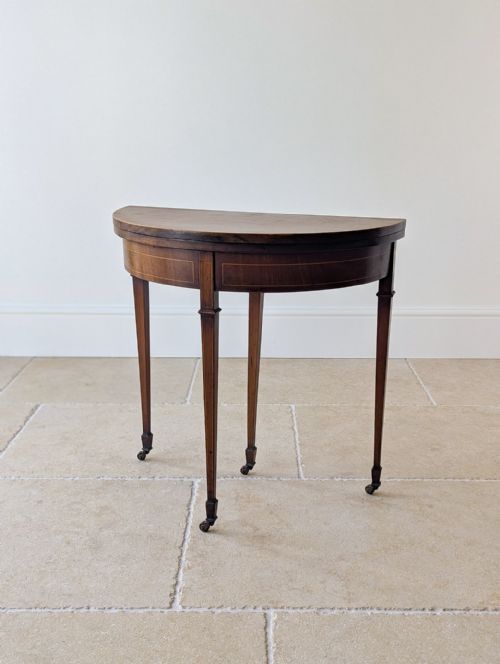
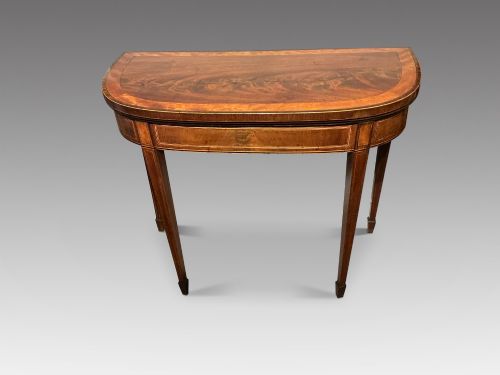
The format frequently appears as a demi-lune or rectangular shape with a hinged top that folds open, supported by a pivoting rear leg or folding frame. Mahogany and rosewood form the main body, often paired with satinwood or boxwood stringing.
Makers designed these items for parlours and drawing rooms where space demanded adaptable furniture. On this page, buyers encounter various iterations including card tables, games tables, and tea tables with inlaid surfaces.
How they were made
Cabinetmakers constructed these pieces using dense timber frames veneered with figured mahogany, rosewood, kingwood, or burr walnut. Craftsmen then cut intricate channels into the primary wood to inlay contrasting slips of satinwood, boxwood, and ebony.
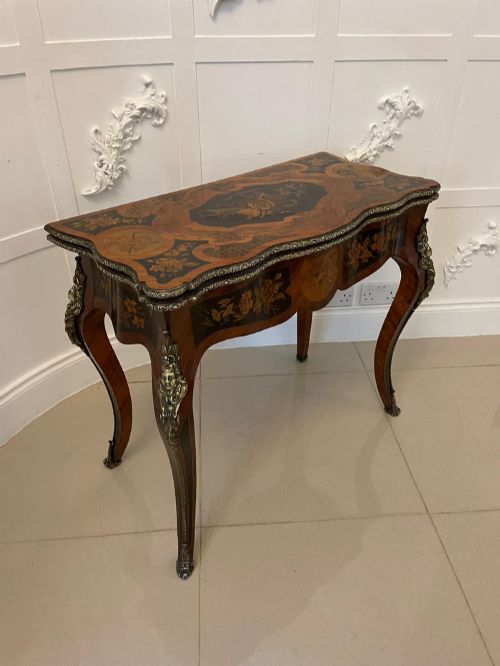
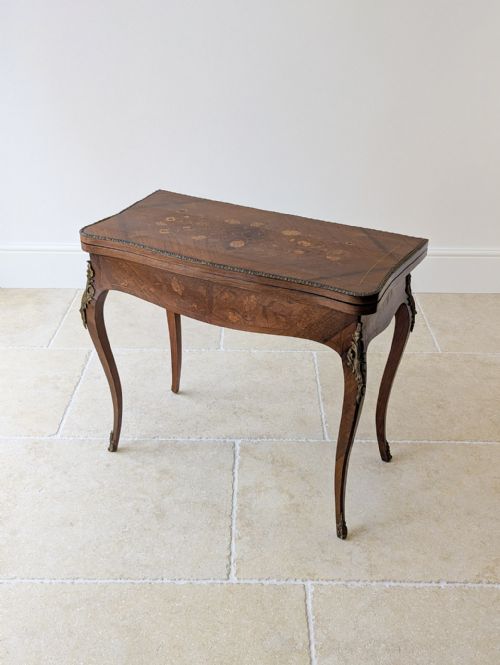
Many Regency and Victorian examples incorporate cast brass or ormolu mounts along the frieze and legs, alongside precision brass stringing embedded into the top. Secondary timbers such as oak or deal typically form the internal framing of the folding mechanisms.
Periods represented span the Georgian, Regency, Edwardian, and Victorian eras, alongside specific stylistic revivals like Louis XV.
What varies in quality
Quality rests in the precision of the timber selection and the sharpness of the inlay work. Finer examples display highly figured grain patterns, such as flame mahogany or richly variegated rosewood, matched symmetrically across the fold-over top.
The delicacy and complexity of the stringing and marquetry separate standard pieces from superior ones. Well-executed pivot mechanisms and finely carved pedestals or legs also distinguish the workshop output.
George Bullock·Bruce & Burns of Edinburgh
The Inlaid Folding Console Table Glossary
- Demilune
- Half-moon shaped, describing tables with a curved front and a flat back designed to sit flush against a wall. This profile is common among eighteenth-century card and console tables.
- Stringing
- Thin lines of contrasting timber inlaid into the surface of furniture to create geometric borders and outlines. Boxwood and ebony are typical choices for this delicate work.
- Marquetry
- Decorative veneer patterns composed of various woods arranged to form pictorial or abstract designs. Craftsmen applied this technique to elaborate table tops.
- Ormolu
- Gilded bronze mounts applied to furniture for decorative effect, frequently seen on nineteenth-century pieces. The metal adds metallic contrast to dark woods like rosewood and kingwood.
- Fold-over top
- A hinged wooden surface that doubles the area of a table when opened out. This mechanism allows a console table to convert into a card or tea table.
Inlaid Folding Console Table: Frequently Asked Questions
How did people use an inlaid folding console table?
Households placed these tables against drawing room walls to display decorative objects during the day. When evening arrived, the hinged top folded open to create a stable surface for card games or tea.
The clever dual-purpose design allowed rooms to remain uncluttered until guests gathered for evening entertainment. The pivoting leaf swung out to support the extended timber flap securely.
How do I tell a Georgian table from a Regency one?
Georgian tables often feature straight tapered legs and restrained mahogany veneers with subtle stringing. Regency pieces frequently introduce rosewood, bolder brass inlay, and heavier scroll pedestals or pillar bases.
Proportions also shift between the eras, with Regency cabinetmakers favouring more pronounced classical revival motifs. The integration of ormolu mounts becomes more common as the nineteenth century progresses.
Where should I place this table in my home?
An entryway or hallway makes an ideal spot for a folded console, as the shallow depth takes up minimal floor space. Living rooms and dining rooms also suit the form well when positioned against a blank wall.
Opening the top requires clearance around the piece, so positioning it away from tight corners ensures the leaf operates smoothly. The decorative wood grain provides a striking focal point whether the top remains closed or open.
What woods were used for these tables?
Mahogany and rosewood serve as the primary structural and surface timbers across the majority of surviving examples. Cabinetmakers added richness by utilising satinwood, burr walnut, kingwood, and amboyna for contrasting panels.
Fine stringing and marquetry details relied on lighter woods like boxwood or dark accents of ebony. These varied timbers created striking visual contrast across the folded top surfaces.