


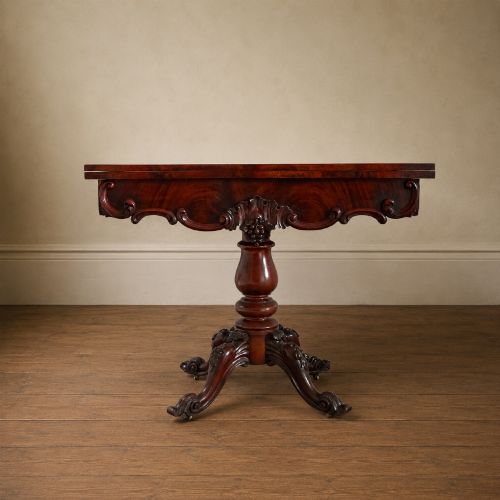
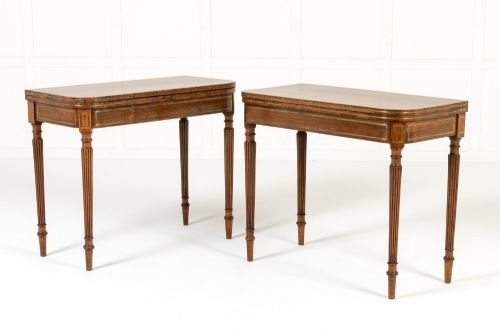
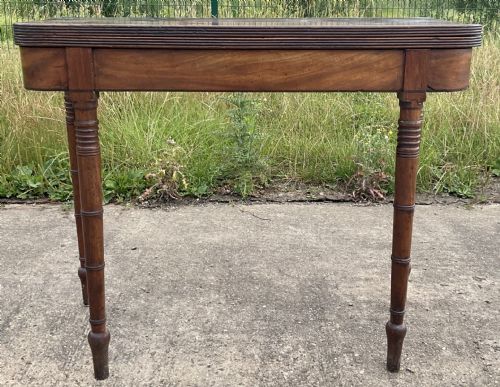
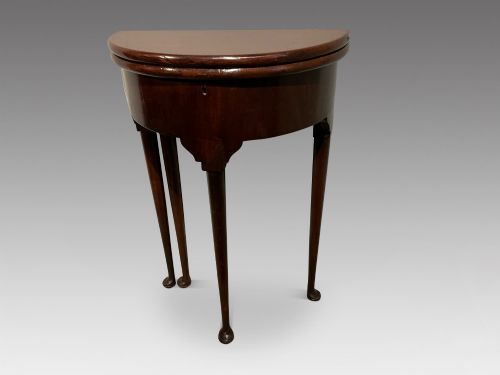
Foldover Console Table
When you search for a foldover console table, you find a versatile piece that doubles its surface area with a hinged top, moving effortlessly from a side console to a card or tea table.
Foldover Console Table
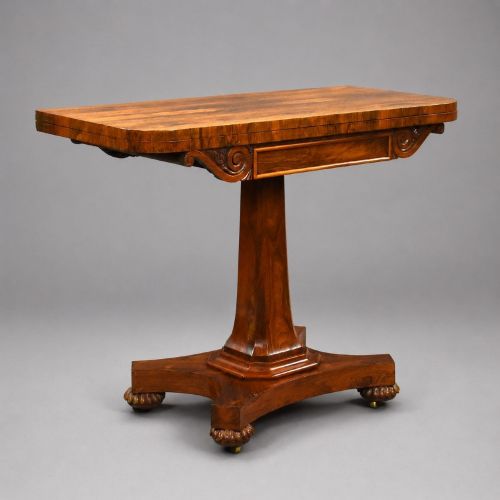
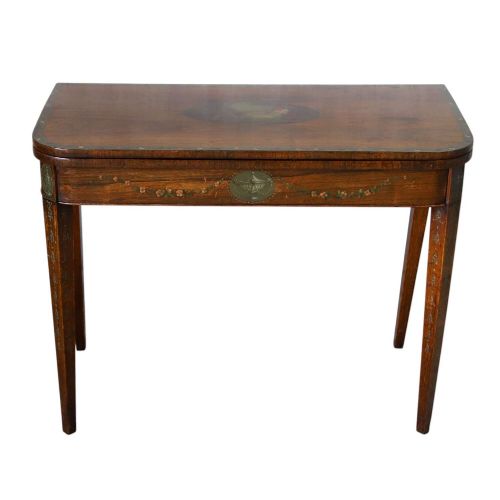
A foldover console table is primarily designed with a hinged top that opens to reveal a finished surface, frequently functioning as a card, tea or games table across Georgian, Regency and Victorian periods.
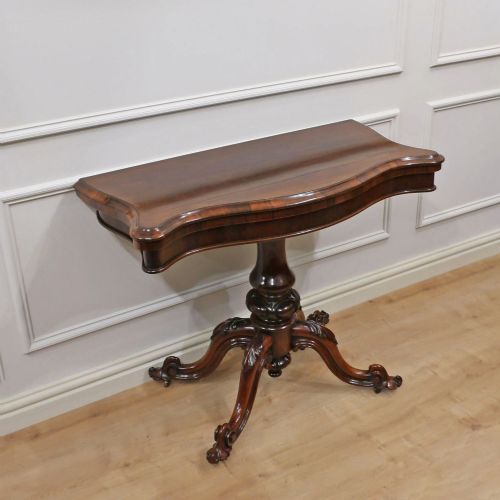
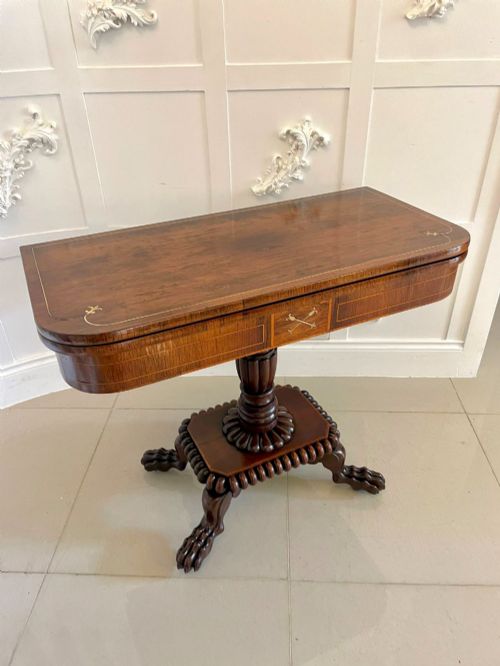
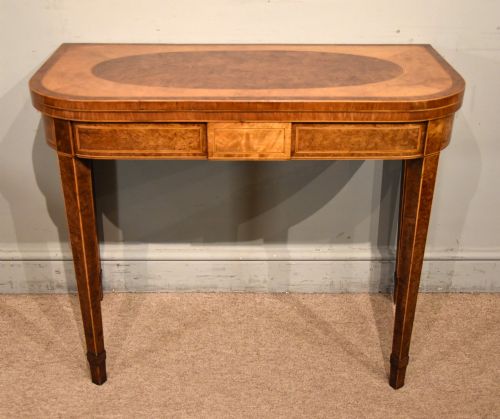
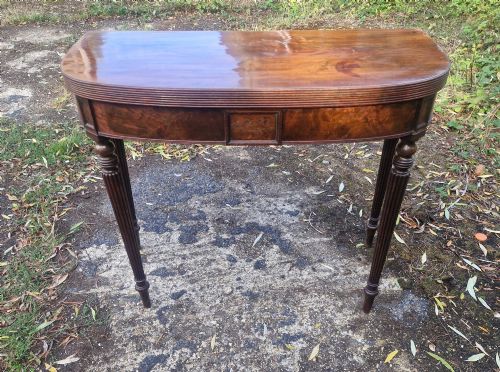
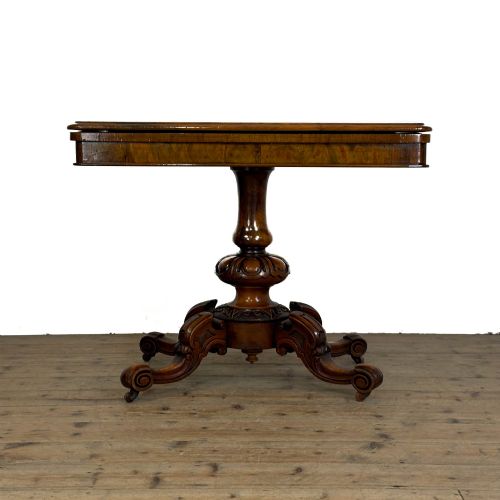
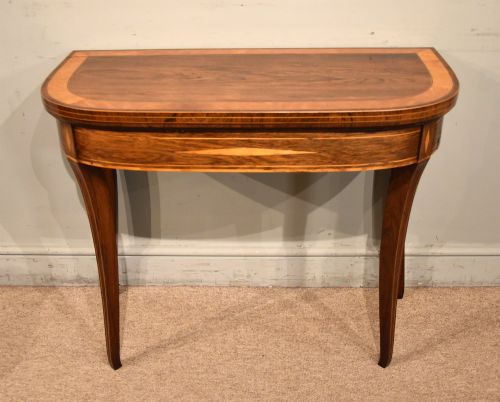
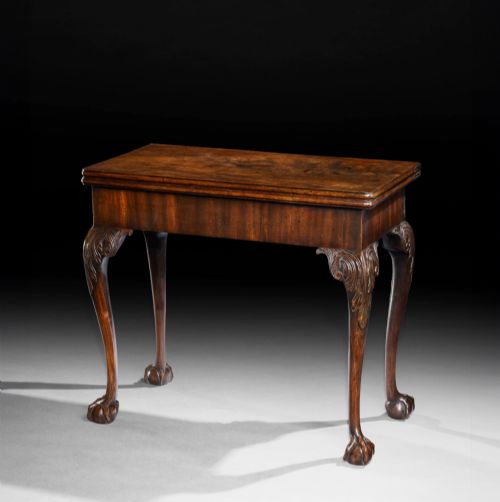
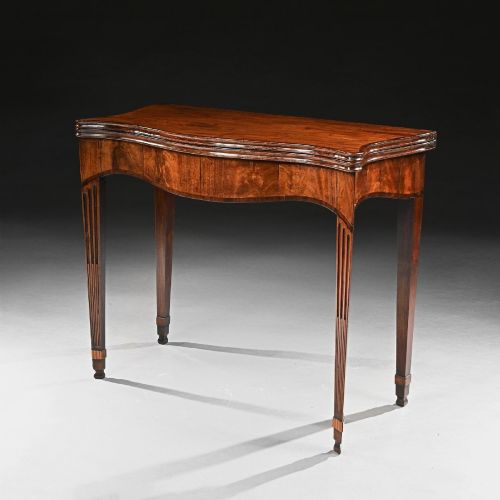
The pieces seen here span the eighteenth and nineteenth centuries, taking the form of demilune, serpentine or rectangular tables executed in styles ranging from George II and George III to William IV and Victorian Sheraton Revival.
Buyers seeking this phrase encounter formats that bridge the gap between a narrow wall console and a fully expanded gaming or dining surface, often supported by concertina actions or rotating pivoting tops.
How They Were Made
Cabinet makers utilised dense primary timbers such as mahogany, walnut and rosewood, often applying intricate wood veneers including satinwood, burr yew, kingwood and tulipwood to the show surfaces.
Decorative enrichment relied heavily on contrasting stringing, boxwood inlay, brass inlays, marquetry and ormolu mounts, paired with functional brass sabots and castors on the legs.
Some tables hide dished gaming wells beneath their folding tops, ready for eighteenth-century wagers.
What Varies in Quality
The distinction between standard examples and top tier pieces rests on the choice of timber figures, such as highly figured Cuban mahogany or burr walnut, and the crispness of hand-carved details.
Superior construction involves complex mechanisms like concertina actions that allow all four legs to move in unison, alongside meticulous brass inlay and finely executed marquetry work.
George Bullock·Gillows·Giles Grendey·Edwards & Roberts
The Foldover Console Table Glossary
- Foldover top
- A hinged wooden leaf that rotates or folds back to double the available surface area of the table. This ingenious mechanism allows a slim console to transform instantly into a card or tea table.
- Concertina action
- An expandable frame mechanism that allows the rear legs to pull outward with the opening top, providing stable support on all four corners without a central swinging gate leg.
- Demilune
- Half-moon shaped furniture designed to sit flush against a wall as a console. These semicircular tables open up into full circles when the foldover top is deployed.
- Marquetry
- Decorative veneer patterns formed by fitting together thin pieces of various coloured woods, ivory or metal. Artisans use this technique to create elaborate floral or geometric scenes across the tabletop.
- Ormolu
- Gilt-bronze mounts applied as decorative accents to furniture corners and aprons. This French-derived technique adds metallic contrast to dark woods like rosewood and kingwood.
Foldover Console Table: Frequently Asked Questions
How do foldover console tables work?
The upper leaf of the table is hinged along the back edge, allowing it to swing open and rest upon a pivoting leg or an expanding concertina frame. When closed, the piece sits flush against a wall as a narrow console.
Opening the top doubles the surface area, which historically provided a stable baize-lined space for card games or a sturdy ledge for serving tea.
What is the difference between a tea table and a card table?
Card tables traditionally feature interiors lined with green baize or felt, sometimes incorporating corner 'dished' wells for holding gaming counters or coins. Tea tables generally present a polished wooden surface across the interior to display porcelain.
Despite their original designated uses, both share the same foldover mechanism and frequently appear interchangeably in period interiors.
How do I date an antique foldover table?
Dating relies on observing the combination of timber, leg style and secondary woods. Earlier eighteenth-century pieces often feature pad feet or cabriole legs, while Regency examples lean towards brass inlaid rosewood and sabots.
Victorian iterations typically display heavier carved rosewood or walnut with elaborate marquetry, reflecting the revival of earlier decorative tastes.
Can I use a foldover table daily?
These tables adapt well to modern living rooms and hallways as display consoles or desks. The folding mechanism remains functional, allowing you to expand the surface when entertaining guests.
Care should be taken with antique polished surfaces, using coasters and avoiding placement near direct heat sources that might affect nineteenth-century veneers.