
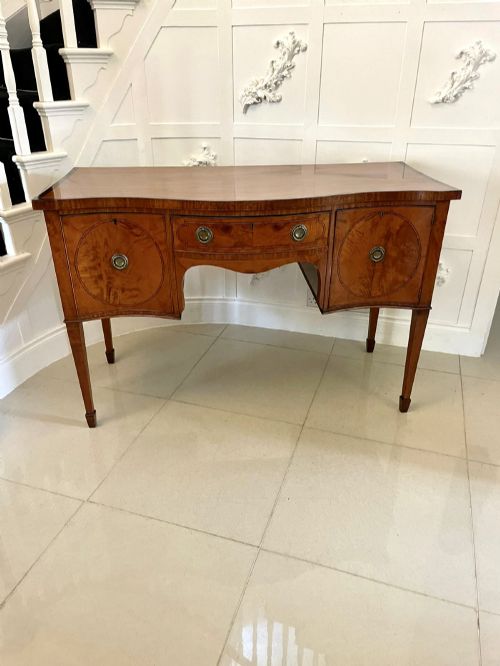
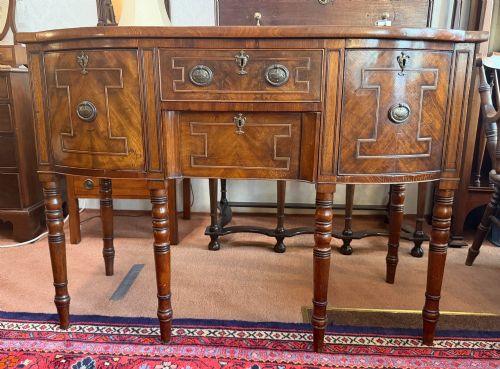
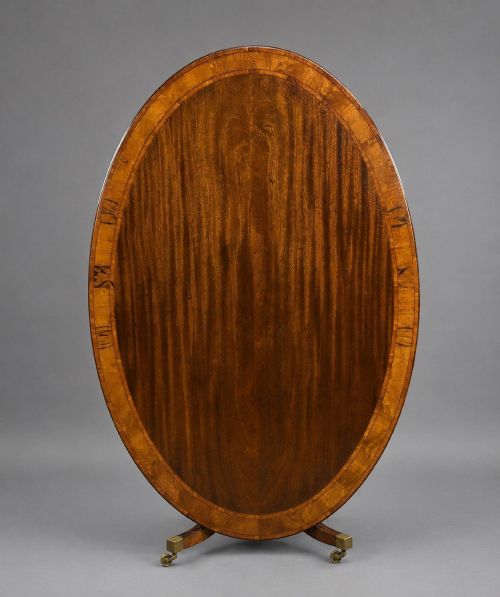
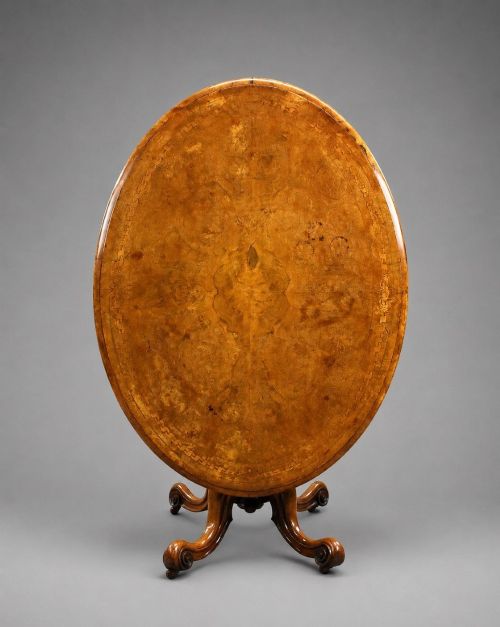
Inlaid Dining Table
An inlaid dining table brings decorative woodcraft into the primary room of the house.
Inlaid Dining Table
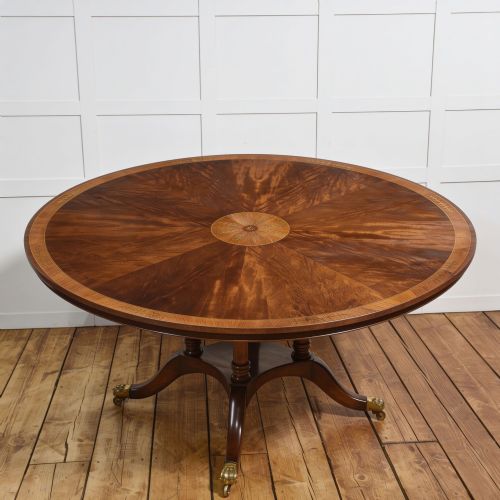
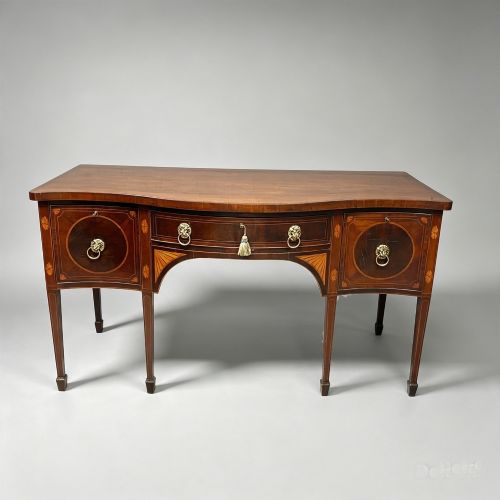
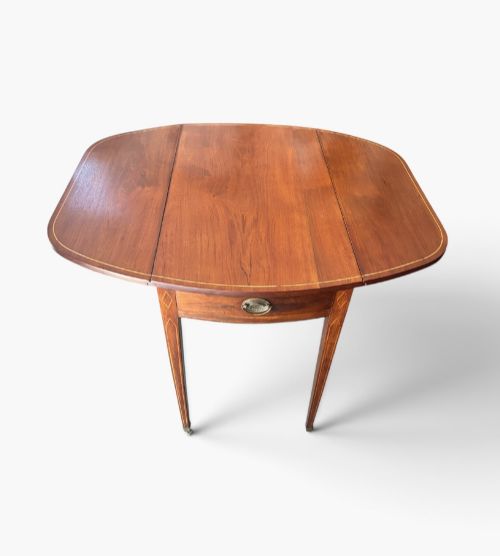
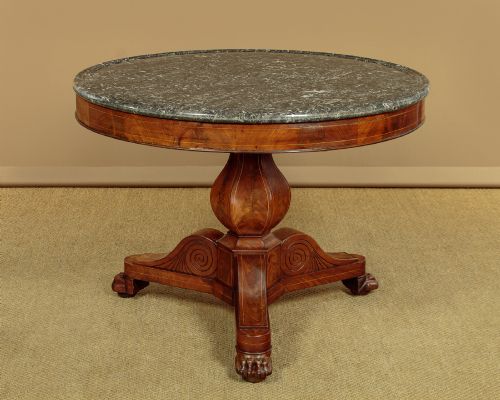
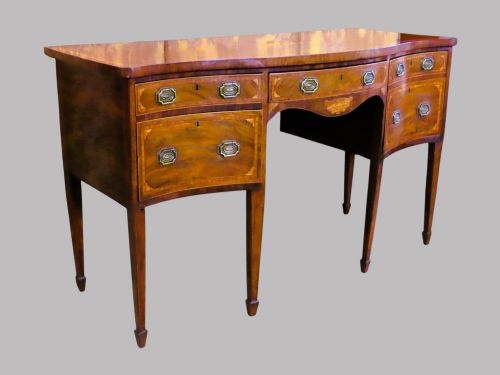
An inlaid dining table brings domestic utility together with decorative surface ornament across several historic periods. The selection spans formal Georgian pillar designs, Regency circular formats, and later Victorian and Edwardian extending variants.
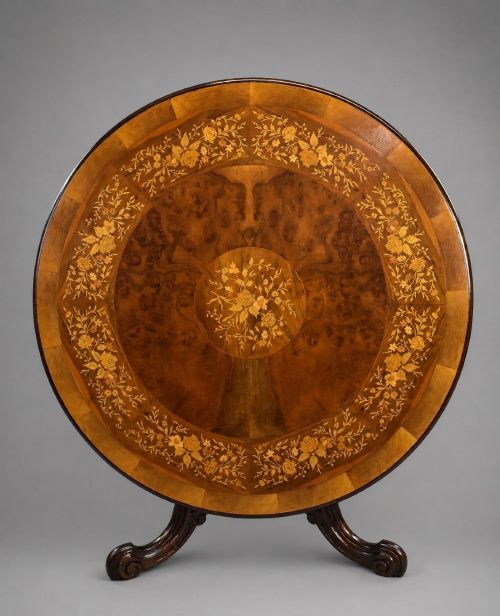
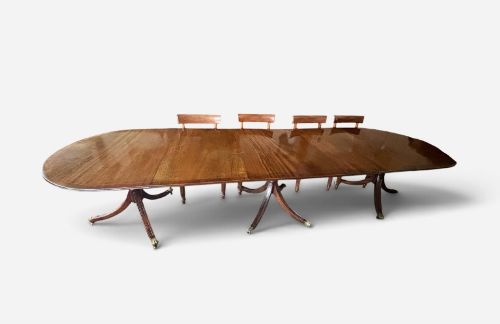
Makers utilised woods like mahogany, satinwood, and burr walnut as grounds for contrasting botanical or geometric motifs. Buyers encounter twin-pillar formats, circular loo tables, and wind-out extending tables intended for daily dining or occasional entertaining.
How they were made
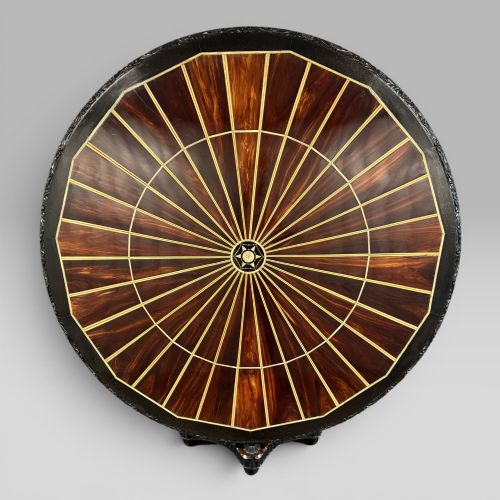
Cabinetmakers constructed the primary carcase from solid timbers and veneers, predominantly employing figured mahogany, walnut, and rosewood. Surfaces then received precise recesses cut to receive contrasting inserts of boxwood, satinwood, brass, or mother-of-pearl.
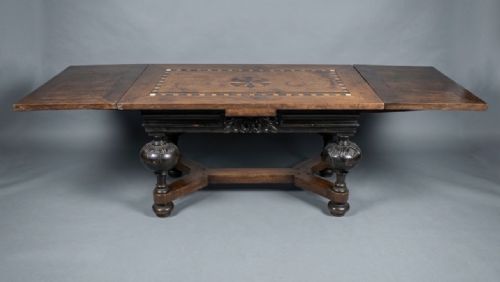
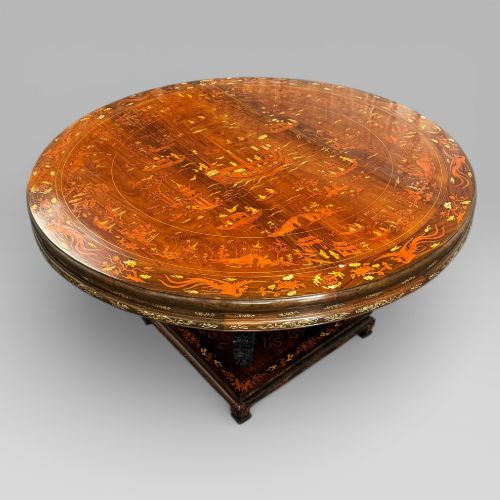
Extending mechanisms relied on heavy brass winding screws and mahogany runners to support additional leaves. Marquetry panels involved assembling tiny dyed wood veneers into pictorial compositions before gluing them onto the table top.
The documented periods span the 17th, 18th, 19th, and 20th centuries, including Georgian, Regency, and Victorian eras.
What varies in quality
The sophistication of the timber selection dictates the initial visual impact, with figured flame mahogany and richly swirled burr walnut occupying the upper tiers. Simpler pieces rely on straight-grained timber with minimal decorative banding.
Craftsmanship shows in the tightness of the joinery around the inlay work and the stability of the extending mechanisms. Superior examples maintain flush surfaces where brass or light wood strips meet the darker ground timber.
Edwards and Roberts·Holmes Baldock·Gillows
The Inlaid Dining Table Glossary
- Inlay
- The technique of inserting pieces of contrasting material into a recessed wooden surface to form a decorative pattern. This differs from veneer by sitting within the thickness of the ground wood.
- Marquetry
- Elaborate veneer work forming pictorial or decorative designs using various tinted woods and shell. It covers the entire surface rather than following simple linear paths.
- Crossbanding
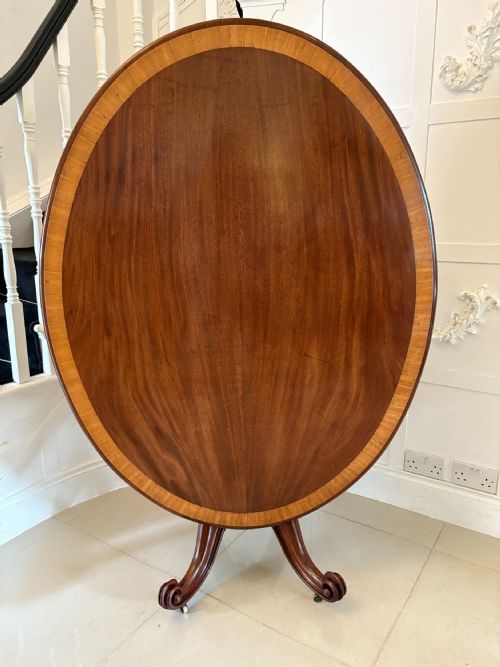
- A border of veneer laid around the edge of a table top with the grain running perpendicular to the central panel. It frames the main timber visually.
- Pillar and claw
- A pedestal base featuring a central turned column supported by three or four carved legs spreading outward. This design allows maximum legroom around the perimeter.
- Wind-out table
- An extending dining table operated via a detachable metal handle that turns an internal screw mechanism. This separates the central leaves evenly.
Inlaid Dining Table: Frequently Asked Questions
How do I care for the surface?
Keep wooden tables away from direct heat sources and strong sunlight to prevent the timber from drying out and cracking. Apply natural beeswax periodically to nourish the grain and protect the delicate inlay work.
Use coasters and placemats to prevent moisture rings and heat marks from damaging the polished finish. Avoid harsh chemical cleaners that can strip the historic polish from the wood.
How do extending mechanisms operate?
Many tables utilise a winding handle inserted into the side skirt to separate the table halves apart. Additional leaves drop into the central gap before the mechanism is wound shut to secure them.
Older pedestal formats may tilt on a snap-top pivot or rely on loose leaves supported by pull-out lopers. Check that the brass runners slide smoothly without catching on the wooden frame.
Can I seat guests comfortably?
Circular and oval tables encourage conversation by removing the strict hierarchy of traditional rectangular dining arrangements. Pedestal bases prevent table legs from interfering with diner seating positions.
Consider the diameter or length of the table alongside the placement of chairs when planning seating capacities. Extending versions offer flexibility for everyday family meals versus larger gatherings.
How do I date an inlaid table?
Examine the secondary woods used for interior framing and drawer linings, as these often reveal regional or period-specific practices. The style of the inlay, from Georgian brass stringing to Victorian floral marquetry, offers firm chronological clues.
Hardware components like screws, hinges, and winding mechanisms also point to specific manufacturing eras. Cabinetmaker stamps or labels preserved beneath the top provide definitive attribution.