

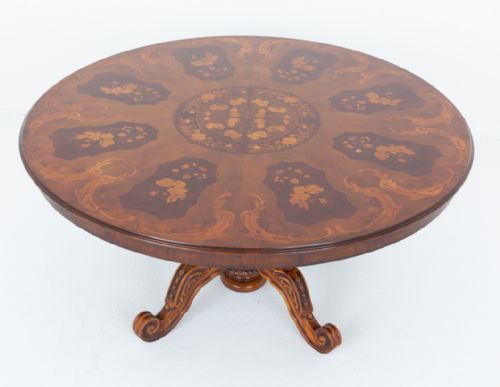


Scroll Foot Centre Table
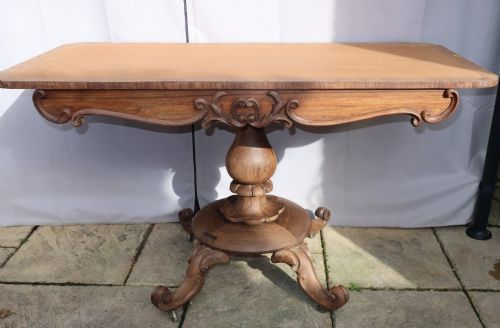
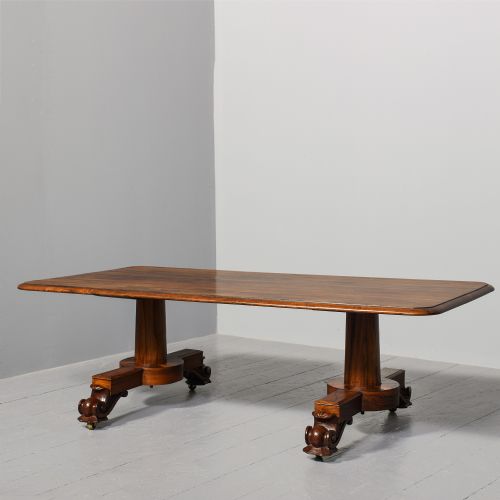
Scroll foot centre table designs anchor a room with substantial pedestals and curved timber supports, offering both dining space and stately presence.
Scroll Foot Centre Table
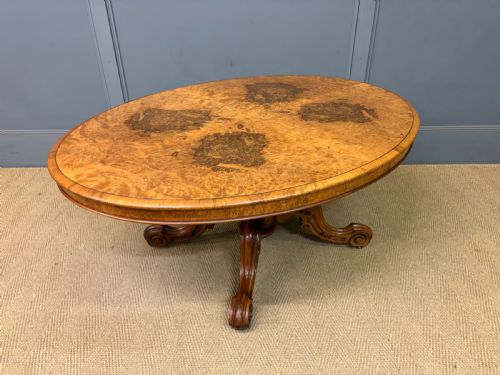
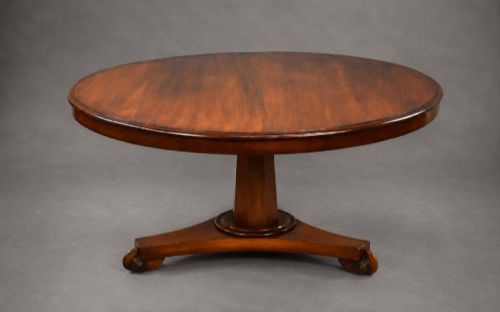
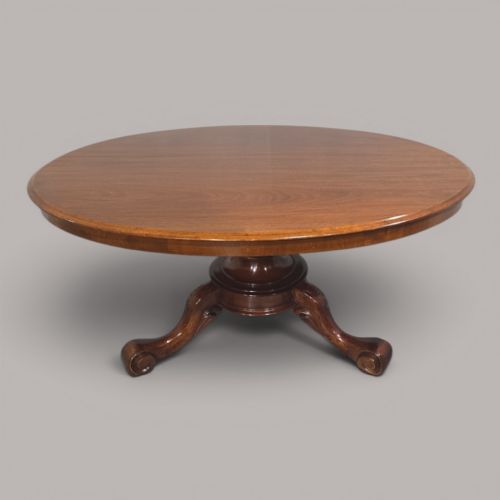
A scroll foot centre table provides a commanding focal point in a principal room, designed to stand freestanding rather than pushed against a wall. The pieces collected under the scroll foot centre table grouping span the Regency, William IV, and Victorian periods, showcasing substantial circular and oval timber tops.
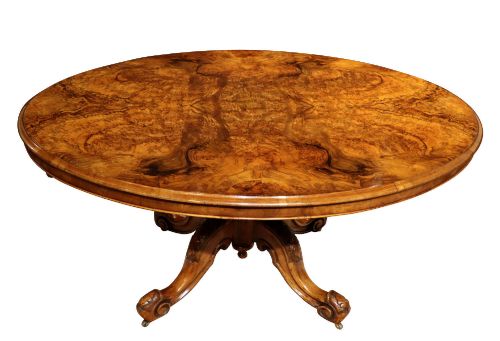
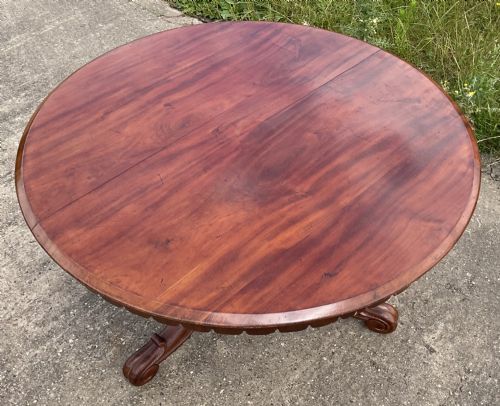
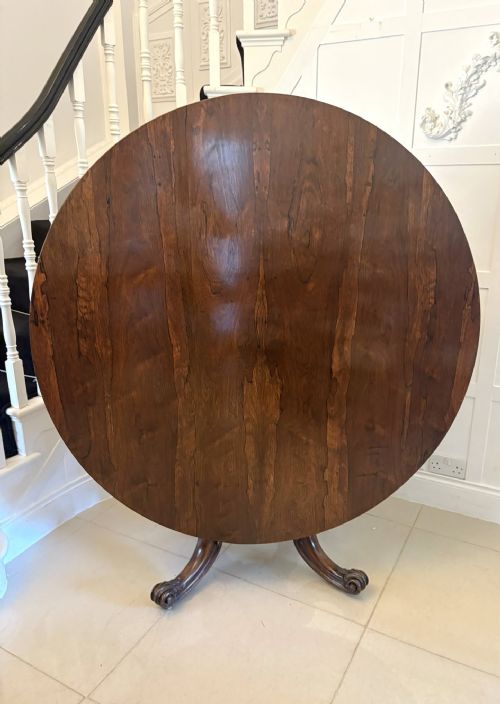
The core forms include breakfast tables, dining tables, and dedicated centre tables resting upon heavy pillar pedestals with carved quadrapod or tripod bases. Mahogany and rosewood dominate the selection, alongside figured burr walnut and exotic timbers such as gonçalo alves.
Makers of the nineteenth century utilised rich wood veneers and circular tilt-top mechanisms to combine practical utility with formal display. Buyers encounter everything from modest mahogany pedestals to expansive rosewood designs featuring elaborate scroll carvings at the floor.
Materials and Construction
Cabinet makers constructed these tables using dense hardwoods like solid mahogany and rosewood, frequently applying decorative veneers such as burr walnut and mixed wood inlay across the expansive tabletops. The structural integrity relies upon thick central pillars supported by heavy wooden feet carved into characteristic scroll shapes.
Tilt-top mechanisms appear frequently, allowing large circular or oval tops to pivot upright when not in use through brass catches and sturdy wooden blocks. Specialised touches include brass mounts and radial veneer patterns that demonstrate the precise joinery of the period.
Victorian and Regency pieces dominate the selection, utilising circular tilt-top mechanisms and substantial carved quadrapod pedestal bases.
Distinctions in Quality
Quality rests upon the selection of the timber grain and the depth of the carving on the pedestal base. Tables displaying richly figured rosewood or burr walnut with crisp, hand-carved scroll feet represent the higher tier of nineteenth-century production.
Proportion and stability dictate the merit of each piece, where heavy timber tops balance securely upon well-engineered pedestal columns without wobble. Simpler mahogany versions with plain pedestals sit at the accessible end of the scale, contrasting with elaborately inlaid marquetry surfaces.
The Scroll Foot Centre Table Glossary
- Quadrapod base
- A four-legged support structure radiating from a central pillar, commonly terminating in scroll feet. This configuration provides steady balance for large circular tabletops.
- Tilt-top mechanism
- An engineered hinge allowing the tabletop to pivot from horizontal to vertical orientation. It saves floor space when the table is not in active use.
- Gonçalo alves
- A dense exotic hardwood with striking contrasting grain patterns utilised in high-end nineteenth-century furniture. Cabinet makers prized it for decorative impact.
- Marquetry
- The art of applying decorative pieces of veneer to a structure to form intricate patterns. This technique appears on select walnut surfaces within the collection.
- Serpentine edge
- A curved table perimeter following alternating convex and concave lines. It adds visual movement to the outline of oval and rectangular tops.
Scroll Foot Centre Table: Frequently Asked Questions
Where should a centre table go?
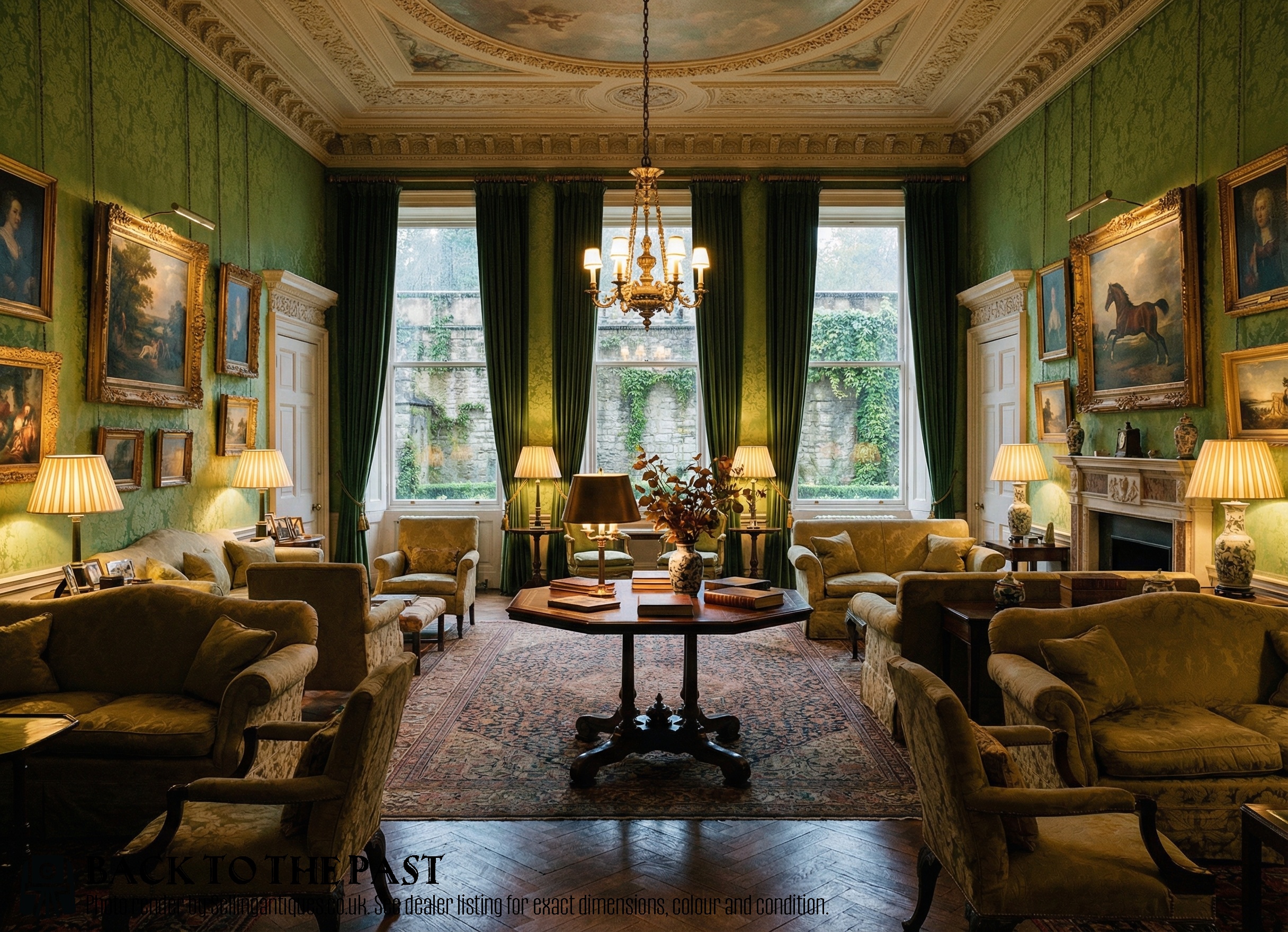
These tables belong in the middle of a spacious room where people can walk entirely around the piece. They function effectively as focal points in entrance halls, libraries, and large drawing rooms.
Positioning the table centrally showcases the carved pedestal and scroll feet from all angles while providing a practical surface for lamps or floral arrangements.
How do tilt-top tables work?
A release catch beneath the tabletop unlocks the pivot mechanism, allowing the surface to fold upright against the central pillar. This historical feature originally allowed large tables to be stored against walls.
Modern owners generally keep the top locked flat for daily use, but the pivoting function remains useful for moving heavy furniture through doorways.
What woods were used?
Mahogany and rosewood form the majority of the structural timber, valued for their deep natural colour and strength. Walnut and exotic woods like gonçalo alves appear in decorative veneers.
Craftsmen selected these dense hardwoods to support the heavy weight of large circular tops without sagging over decades of use.
How do I date a table?
Dating relies upon stylistic markers, timber choices, and construction methods characteristic of specific nineteenth-century reigns. Regency and William IV pieces often display heavier rosewood framing, while Victorian examples introduce burr walnut and serpentine outlines.
The presence of hand-carved scroll details and original brass hardware further helps narrow the period of manufacture.