

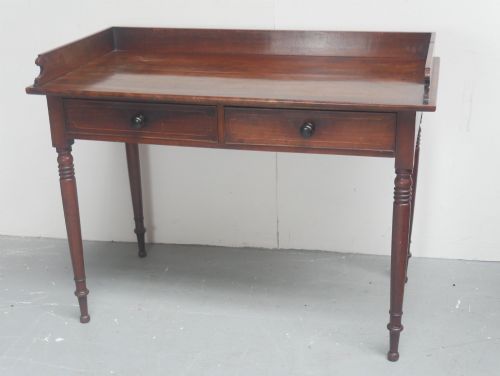

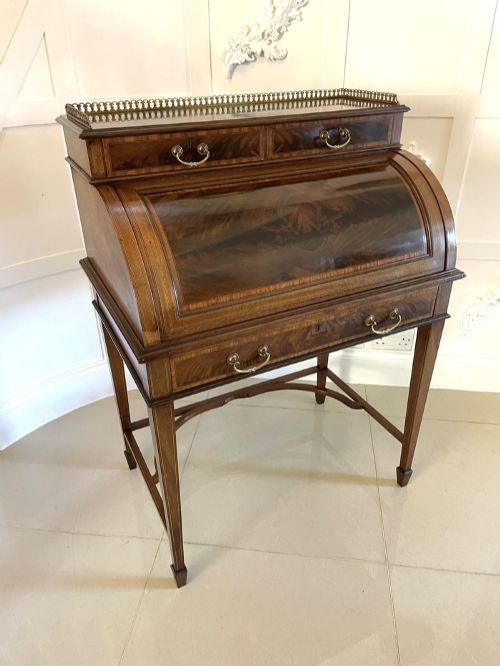
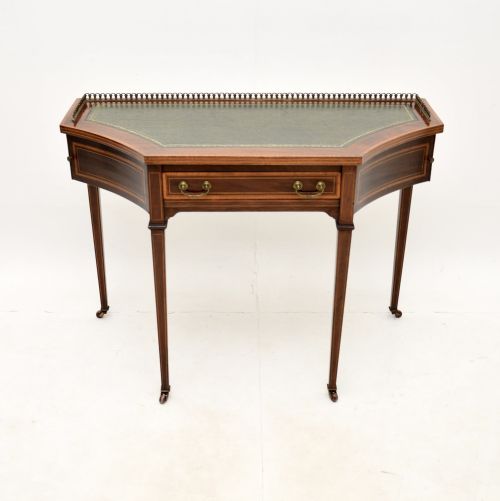
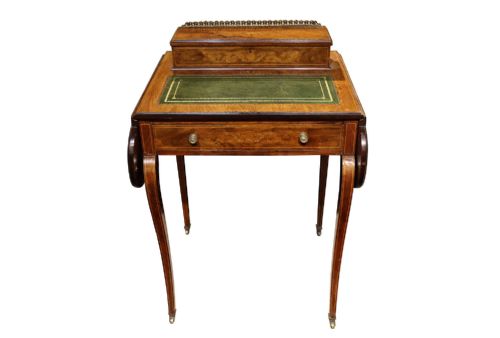



Inlaid Desk with Gallery
An inlaid desk with gallery brings together fine timbers and delicate stringing, offering a practical writing surface framed by a decorative rail.
Inlaid Desk with Gallery
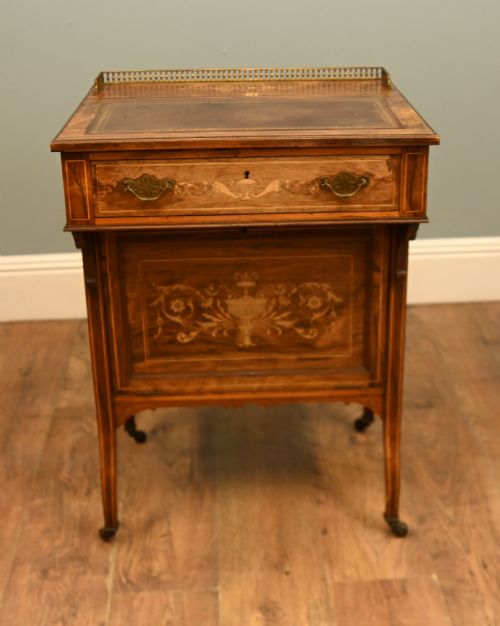
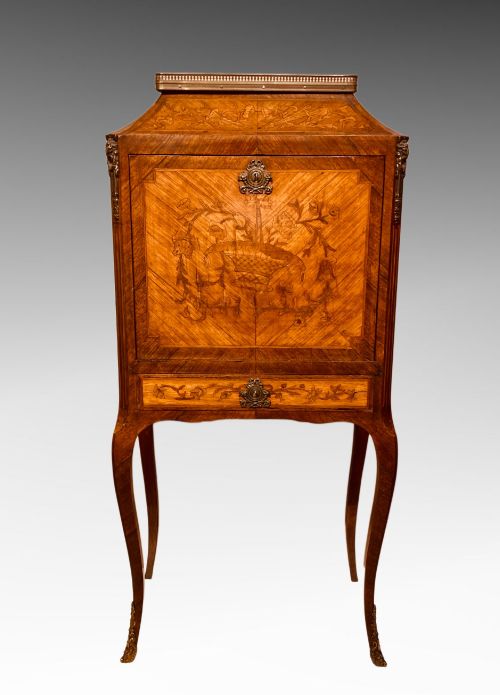
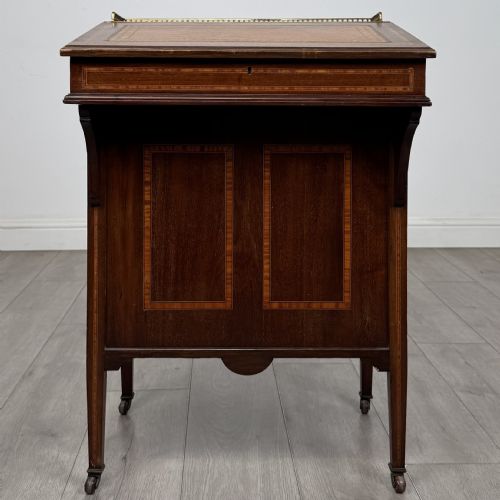
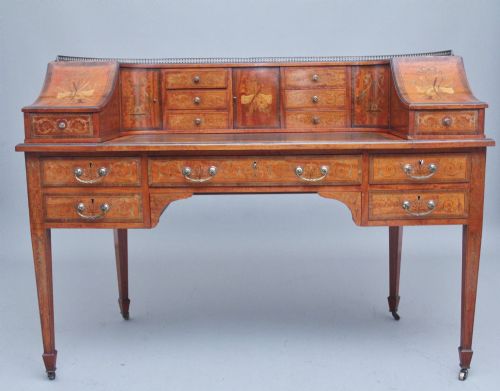
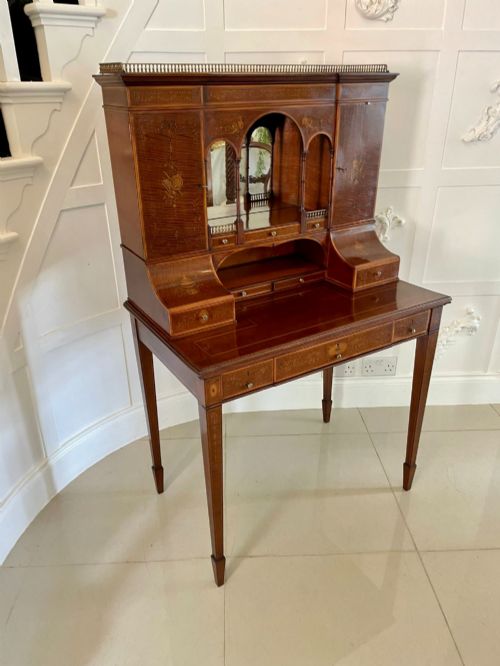
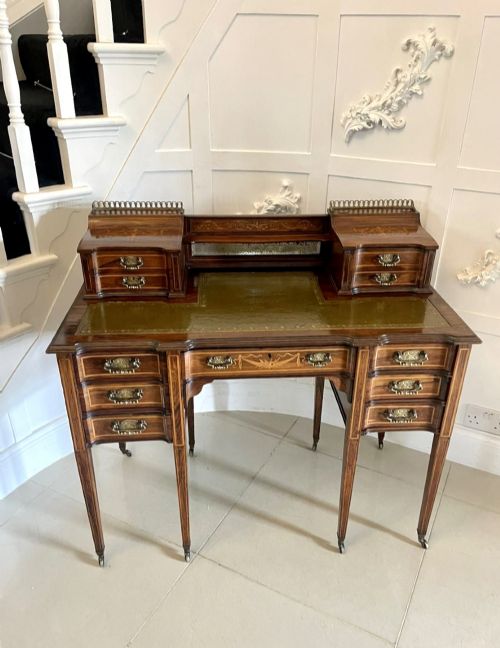
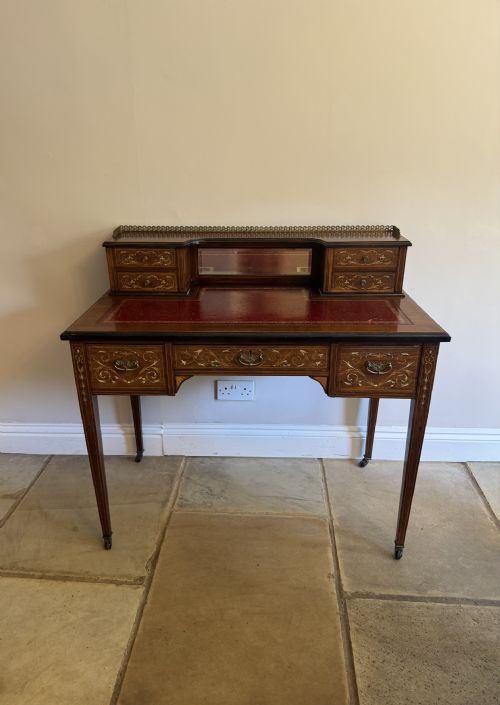
An inlaid desk with gallery unites the practical requirements of nineteenth and early twentieth century writing furniture with decorative marquetry and raised upright rails. These pieces emerge predominantly across the Victorian and Edwardian periods, frequently drawing upon Sheraton styles and Revival aesthetics.
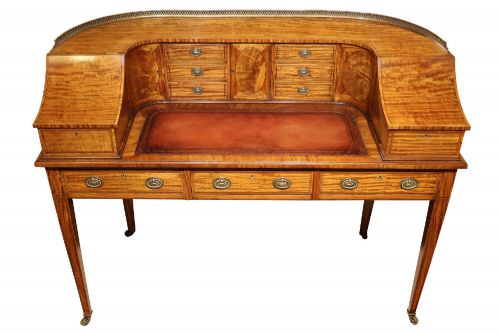
Buyers encounter forms ranging from compact ladies writing tables and bonheurs du jour to larger pedestal desks, escritoires, and Carlton House writing cabinets. Many examples incorporate fitted interiors, leather writing surfaces, and organised compartments beneath their characteristic gallery tops.
How they were made
Cabinetmakers constructed these writing pieces primarily using solid mahogany, satinwood, and walnut, often applying rosewood, kingwood, or coromandel veneers. Timber selection dictated the character of the piece, with contrasting wood grains providing natural borders for intricate inlay work.
Detailed inlay and satinwood banding adorn the drawer fronts, surfaces, and legs, while brass handles, mounts, and castors complete the hardware. Drawer construction frequently utilises secondary timbers such as oak, assembled with traditional jointing techniques.
Inlaid Desk with Gallery Retail Price Guide 2026
Typical asking prices for inlaid desk with gallery among the pieces listed under this phrase on Sellingantiques today, from the lower quarter to the upper quarter. They describe what is for sale here now, not the wider market.
The records for this search reveal a strong presence of Edwardian Sheraton Revival pieces alongside nineteenth century mahogany and satinwood forms.
What varies in quality
The distinction between standard production and superior craftsmanship rests in the precision of the marquetry and the choice of timbers. Finely executed satinwood inlay and crisp crossbanding demonstrate an elevated level of cabinetmaking skill.
Structural integrity and the preservation of original elements, including brass handles, leather inserts, and internal drawer configurations, separate well-maintained examples from heavily altered pieces.
Maple of London·Rupert Favell
The Inlaid Desk with Gallery Glossary
- Gallery
- A raised miniature balustrade or rail running along the upper edge of a desk or cabinet, designed to keep papers and writing implements from sliding off. It is often pierced or turned from brass or matching wood.
- Escritoire
- A form of writing cabinet featuring a fall-front writing flap that conceals a fitted interior of small drawers and pigeonholes. This French-derived term denotes a dedicated space for correspondence.
- Carlton House desk
- A distinctive form of writing table characterised by a curving superstructure of small drawers and compartments wrapping around the back and sides of the desk. Originating in the late eighteenth century, this layout remained popular during the Edwardian Revival.
- Crossbanding
- A decorative border technique where veneer strips are applied across the grain of the primary timber to frame a panel or drawer front. This method creates a contrasting visual boundary.
- Bonheur du jour
- A light lady's writing desk featuring a small cabinet or set of shelves mounted upon the writing surface. The phrase translates from French as delight of the day.
Inlaid Desk with Gallery: Frequently Asked Questions
How do I identify an Edwardian piece?
Edwardian desks often display lighter timbers such as satinwood, satin walnut, and lighter mahogany veneers. They frequently borrow decorative vocabulary from the eighteenth century during the Sheraton Revival movement.
Construction details, cleaner interior drawer linings, and lighter overall proportions help distinguish these pieces from heavier mid-Victorian furniture.
Where were these desks used?
These writing desks served in private libraries, drawing rooms, and private chambers for sorting correspondence and managing household accounts. Smaller variants like lady's writing tables and bonheurs du jour suited lighter residential spaces.
Larger pedestal desks and Carlton House models fulfilled formal administrative duties in domestic studies and offices.
How should I care for a wood inlaid surface?
Maintain these surfaces by keeping them away from direct sunlight and sudden changes in central heating humidity, which can cause veneers to lift. Dust gently with a dry cloth and apply appropriate furniture wax sparingly.
Avoid placing damp items or unsealed inkwells directly on the timber or leather writing panels to prevent staining.