
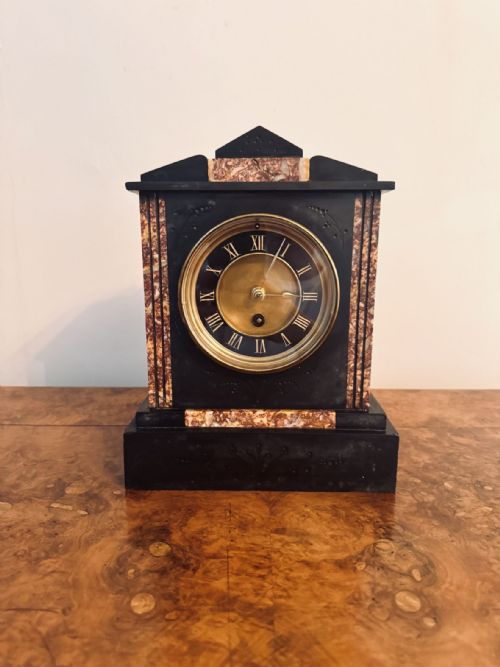
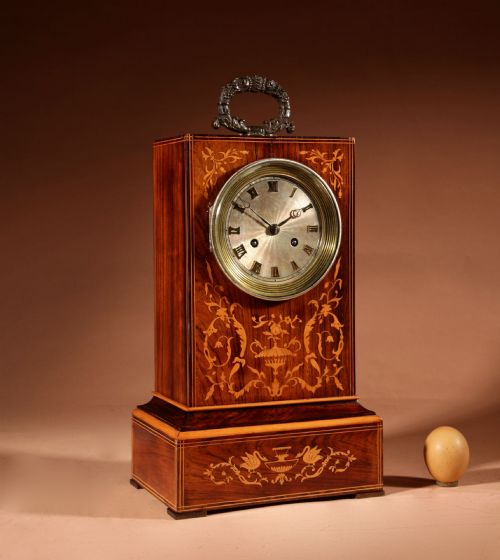
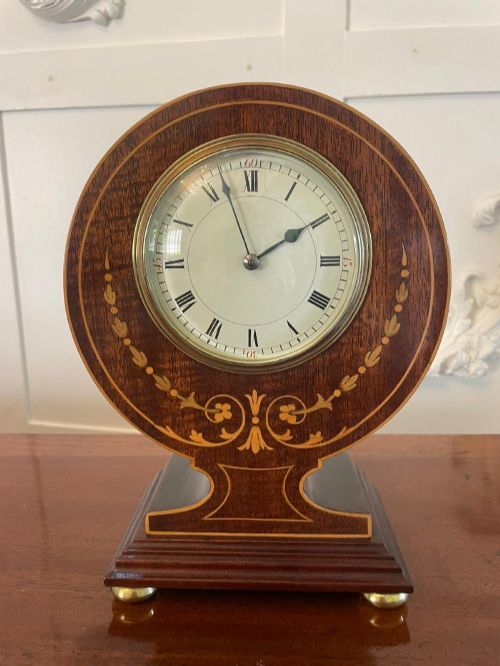
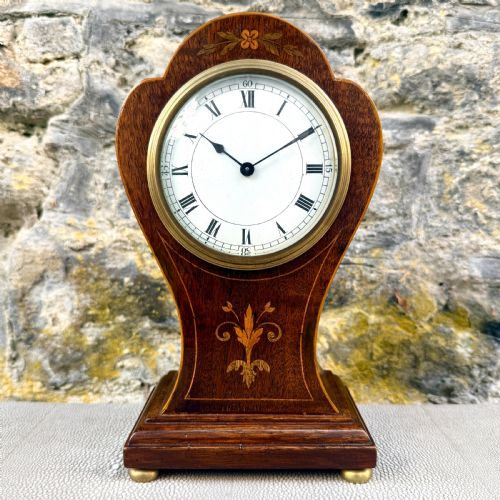




Inlaid Desk Clock
An inlaid desk clock brings precise timekeeping and fine cabinetry together in a portable form for the bureau or mantel.
Inlaid Desk Clock
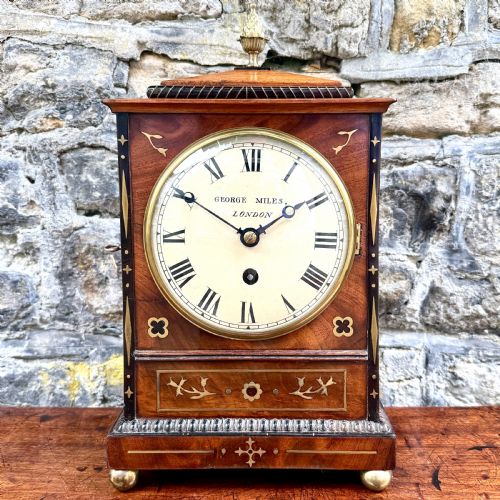
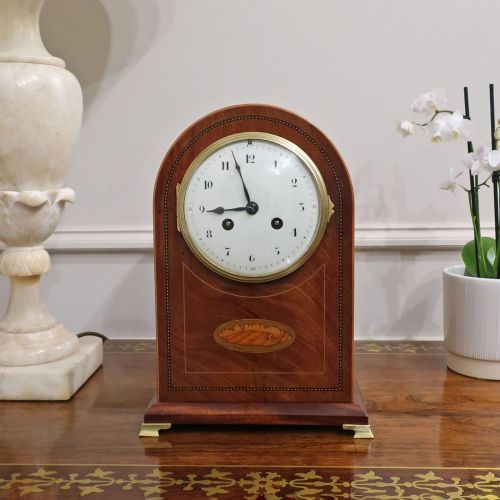
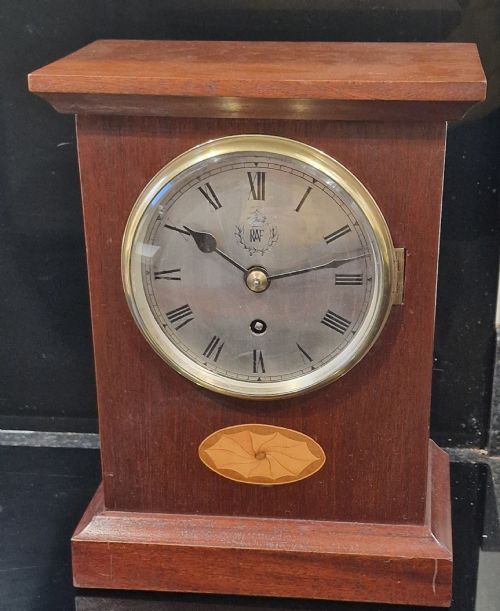
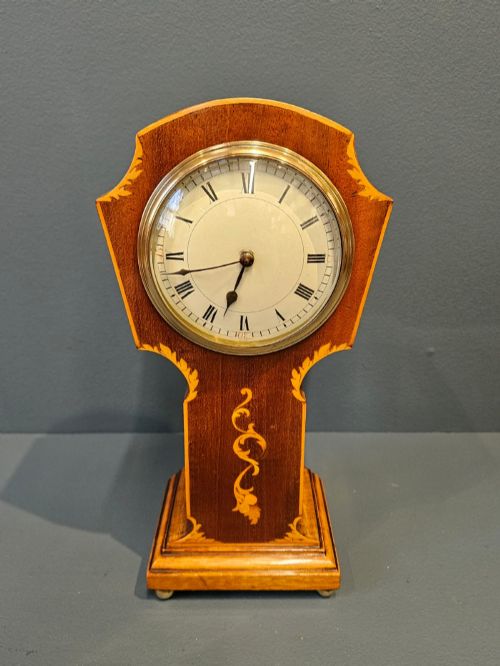
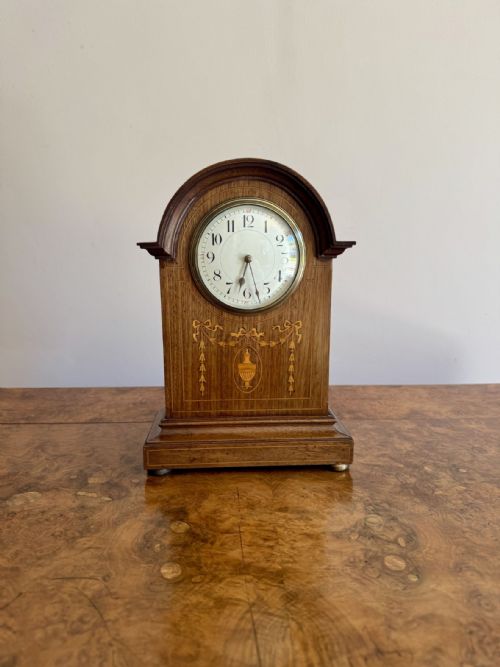
An inlaid desk clock is a compact timekeeper housed in a timber case embellished with contrasting wood or metal details. These pieces span the Regency, Victorian, and Edwardian eras, reflecting changing domestic tastes from formal library timepieces to decorative boudoir pieces.
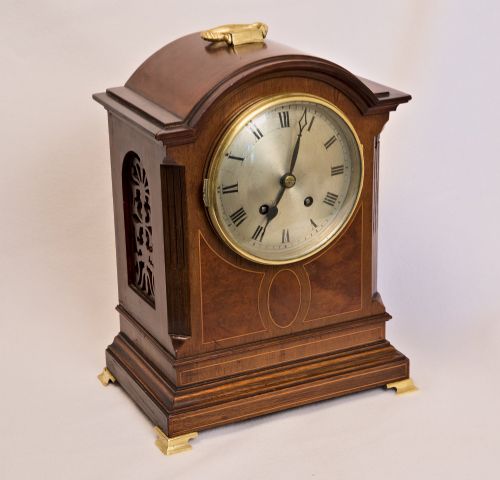
The version most commonly met on this page is the Edwardian or late Victorian mahogany case, frequently featuring delicate boxwood inlay or satinwood banding. They take various forms, including balloon shapes, lancet tops, and traditional bracket clock profiles suited for smaller surfaces.
How they were made
Maker's workshops constructed these cases primarily from solid mahogany, rosewood, or oak, often applying fine veneers over stable secondary timbers. Craftsmen then recessed contrasting materials like boxwood, brass, or tortoiseshell into the wood surface to create geometric banding or floral motifs.
Movements were housed securely within these wooden housings, utilising brass gear trains, enamel dials, and protective glass bezels. Many relied on fusee movements or eight-day spring mechanisms to maintain steady tension and accurate timekeeping.
Listings for this phrase feature materials including mahogany, rosewood, tortoiseshell, and brass inlay across the nineteenth and early twentieth centuries.
What varies in quality
The standard of an inlaid desk clock depends heavily on the crispness of the cabinetwork and the precision of the timber matching. Finer examples display immaculate flush inlay without gaps, while simpler pieces show routine production methods.
Movement quality also dictates overall merit, separating standard timepieces from robust fusee or signed mechanical works. The harmony between the dial legibility, the depth of the timber grain, and the refinement of the brass mounts defines the tier of the piece.
Bush of London·S Simpson Southampton·W. Burton·Wilkinson Leicester·Joseph Jump of London·Paul Garnier·Henry Marc·Dent of London·Walker and Hall·R Stewart of Glasgow
The Inlaid Desk Clock Glossary
- Fusee
- A conical pulley used in spring-driven clocks to equalize the diminishing power of the mainspring as it unwinds. This mechanism ensures consistent torque is delivered to the gear train for greater accuracy.
- Inlay
- A decorative technique where materials such as boxwood, satinwood, or brass are inserted into recessed cavities on the timber surface. The result sits flush with the surrounding wood grain.
- Bracket clock
- A portable domestic clock originally designed to sit on a wall bracket or desk. Over time, the term came to describe a specific style of formal wooden table clock.
- Marquetry
- An elaborate form of pictorial veneer work assembled from various wood pieces to create decorative patterns. It differs from simple inlay by covering the entire surface rather than inserting lines into solid timber.
- Garniture
- A set of matching decorative objects, typically comprising a clock flanked by matching vases or candelabra. These sets were designed to sit harmoniously upon a mantelpiece or sideboard.
Inlaid Desk Clock: Frequently Asked Questions
How do I wind an inlaid desk clock?
Most mechanical desk clocks utilise a small winding key inserted into holes on the enamel dial to tension the internal springs.
Care should be taken not to overwind the movement, stopping as soon as firm resistance is felt.
What is the difference between a desk clock and a mantel clock?
Desk clocks are generally smaller and proportioned for close viewing on a writing table or bureau. Mantel clocks are traditionally larger and heavier, designed to stand centrally on a fireplace shelf.
In practice, many smaller bracket and balloon clocks overlap between these categories.
How do I care for the wood and inlay?
Keep wooden clock cases away from direct sunlight and sudden temperature changes to prevent timber splitting or veneer lifting. A light application of appropriate wax polish helps maintain the lustre of the mahogany and rosewood surfaces.
Avoid using liquid cleaners on the delicate boxwood or brass inlay.
How can I tell an Edwardian clock from a Victorian one?
Victorian clocks often feature darker timbers, heavier architectural marble, or formal brass mounts reflecting mid-nineteenth-century tastes. Edwardian examples tend to display lighter mahogany, delicate satinwood banding, and brighter, airier inlaid floral motifs.
Movements and dial signatures also provide helpful clues to the decade of manufacture.