
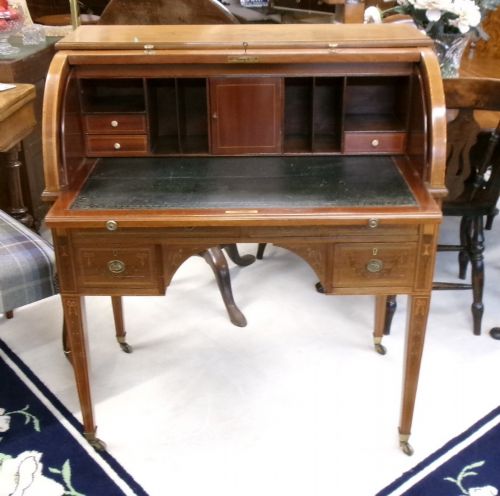
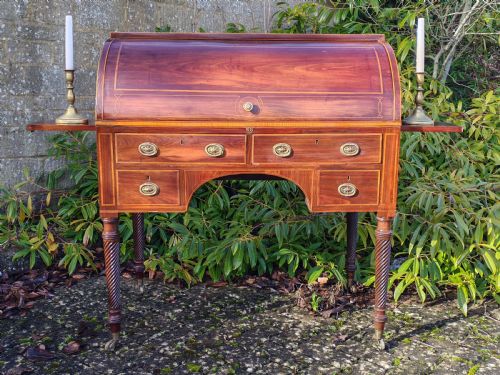
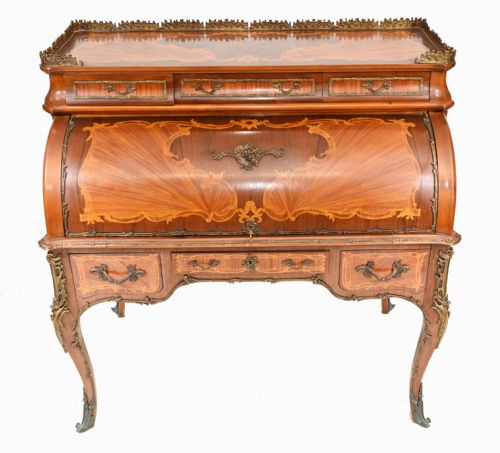


Inlaid Cylinder Desk
When you search for an inlaid cylinder desk, you seek a sophisticated writing cabinet with a curved roll top and decorative surface work.
Inlaid Cylinder Desk
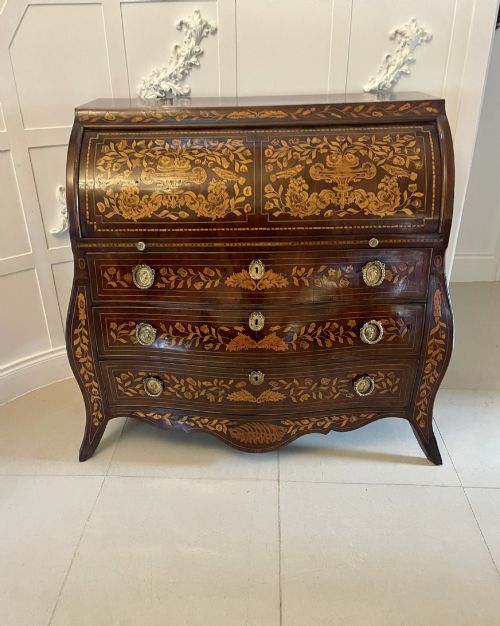
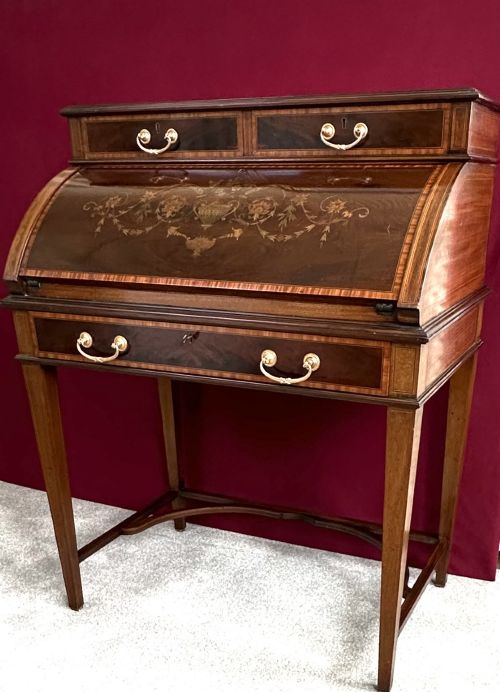
An inlaid cylinder desk combines a curved, rolling wooden shutter that conceals the writing surface with intricate decorative veneer work. These pieces provide a private compartment for correspondence while offering a polished furniture form for the room.
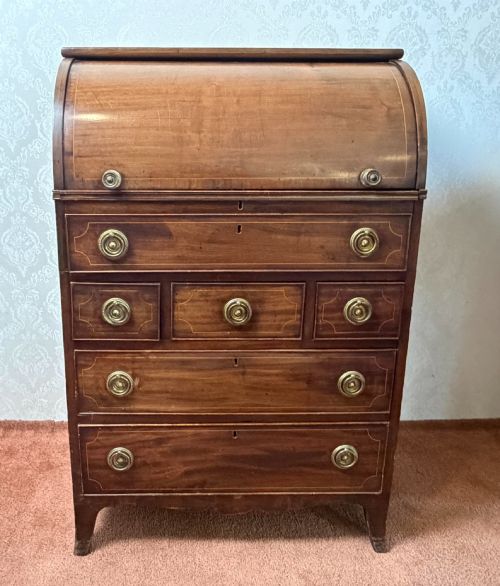
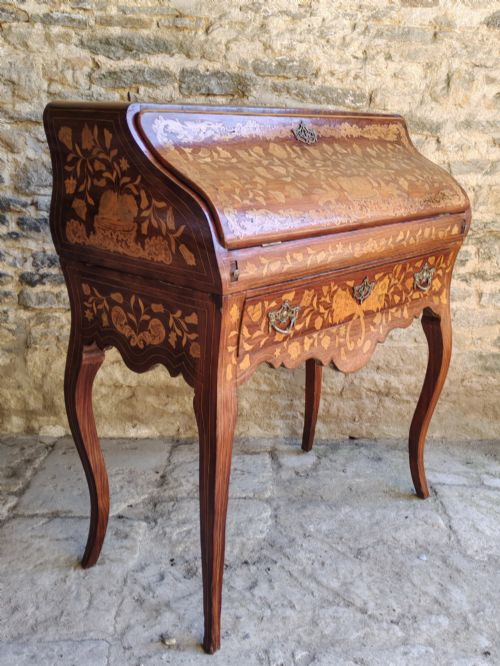
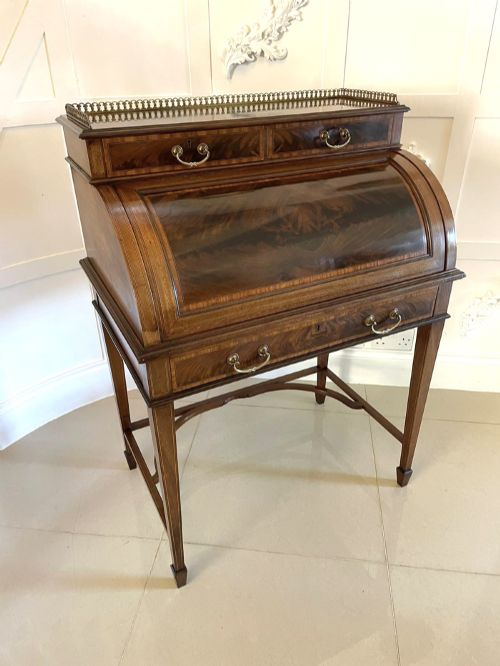
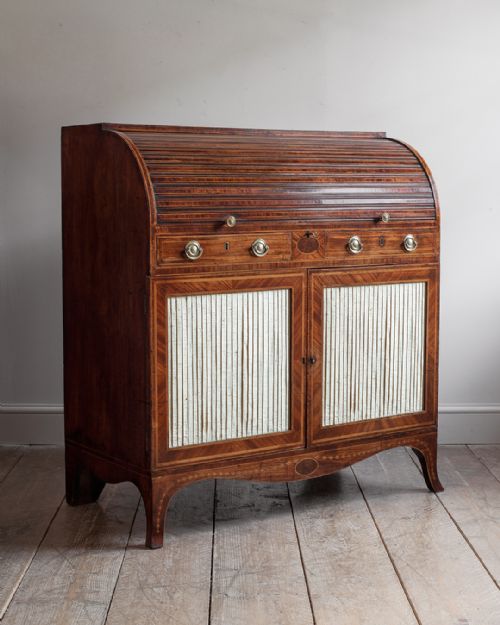
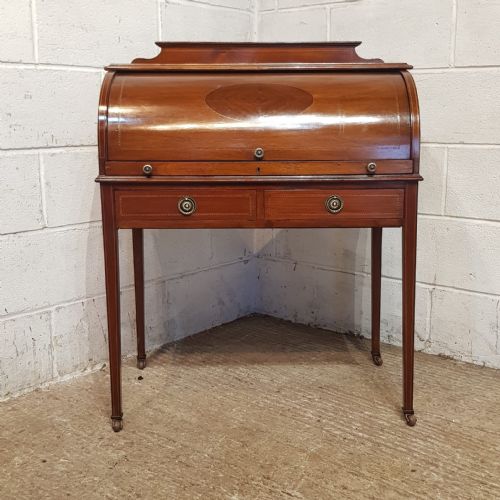
The most common examples encountered on this page date from the Edwardian period and the late Victorian era, typically constructed from mahogany with contrasting satinwood details. Earlier George III and Regency pieces also appear, alongside continental Dutch marquetry and French styles.
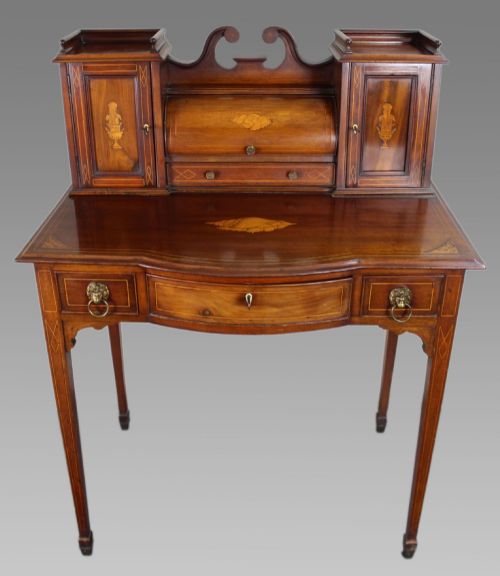
Forms range from compact ladies writing desks to larger freestanding library pieces and tall bureau bookcases. Many feature pull-out leather-lined writing slides accompanied by small interior drawers and pigeonholes.
Materials and construction
Cabinetmakers utilised dense primary timbers such as mahogany, rosewood, and satinwood, often accentuating the designs with contrasting fruitwood, partridgewood, and walnut veneers. Delicate floral marquetry and geometric inlay patterns define the visual character of the surfaces.
The rolling cylinder mechanism relies on closely fitted wooden slats glued to a canvas backing, allowing the curved shutter to glide smoothly within hidden tracks. Details such as brass ring handles, glass doors on bookcase variants, and tooled leather writing surfaces complete the construction.
Some miniature cylinder desks were built as detailed trade samples for Victorian salesmen to carry on their travels.
Distinctions in quality
Quality rests upon the precision of the cabinetmaking and the execution of the marquetry. Superior examples display tightly fitted cylinder shutters that operate without binding, alongside finely cut veneer work that maintains crisp definition across curves and corners.
The choice of secondary woods and the presence of signed maker mounts elevate certain pieces above standard production. Balanced proportions and thoughtful integration of interior fittings separate workshop standards from more ordinary output.
Maple & Co·Jas Shoolbred·Edwards & Roberts·W J Mansell
The Inlaid Cylinder Desk Glossary
- Cylinder desk
- A writing cabinet featuring a quarter-circle rolling wooden shutter that covers the desk interior when closed. Pulling the writing slide forward often retracts the cylinder automatically.
- Marquetry
- Elaborate patterns formed by fitting together contrasting pieces of wood veneer to create pictorial or floral designs on furniture surfaces. This technique requires considerable skill to execute across curved sections.
- Tambour
- A flexible sliding surface constructed from narrow vertical strips of wood attached to a fabric backing. It serves a similar function to a solid cylinder roll top.
- Secretaire
- A piece of furniture designed for writing, typically incorporating a drop-front or cylinder-enclosed writing surface with internal compartments. These often form the upper section of a taller cabinet or bookcase.
- Satinwood
- A lustrous, fine-grained timber with a yellowish colour, frequently utilised for banding and inlay work on late eighteenth-century and Edwardian furniture.
Inlaid Cylinder Desk: Frequently Asked Questions
How does the cylinder mechanism work?
The curved wooden shutter moves along a recessed track inside the cabinet sides. Flexible slats allow the solid wood appearance to bend smoothly around the quarter-circle curve.
Pulling out the leather-lined writing surface often links to the cylinder mechanism, causing the roll top to lift automatically as the desk slide extends.
What is the difference between a cylinder desk and a bureau?
A traditional bureau relies on a sloping hinged flap that folds down flat to create the writing surface. This exposes pigeonholes directly when opened.
A cylinder desk uses a rolling curved shutter that slides back into the body of the cabinet, keeping the internal drawers enclosed until the main writing slide is pulled forward.
Where were these desks placed in a home?
These cabinets served private studies, drawing rooms, and bedrooms for managing correspondence and personal accounts. Freestanding library versions often sat away from walls to display finished timber on all sides.
Smaller ladies writing variants suited boudoirs and lighter reception rooms, providing a compact writing space without dominating the floor area.
How do I distinguish Edwardian revivals from 18th-century pieces?
Georgian and late eighteenth-century pieces display hand-cut dovetailing, native timber linings, and subtle oxidation within the secondary woods. The marquetry reflects period neoclassical or Sheraton tastes.
Edwardian revival pieces, frequently produced around nineteen hundred, often show standardised machine-cut elements, brighter satinwood contrast, and maker stamps from prominent London retailers.