

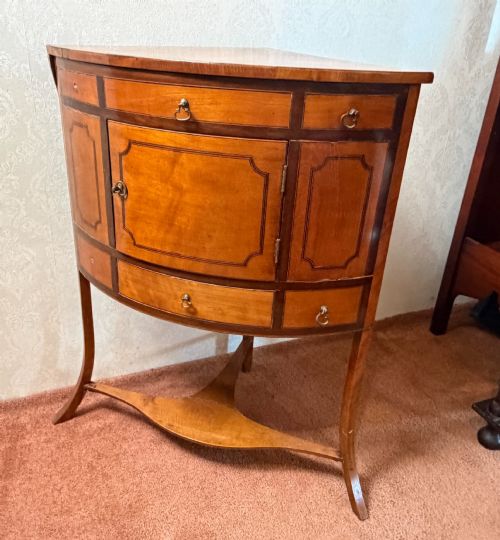
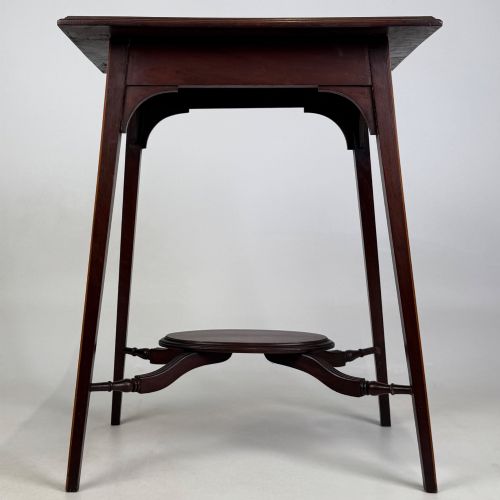
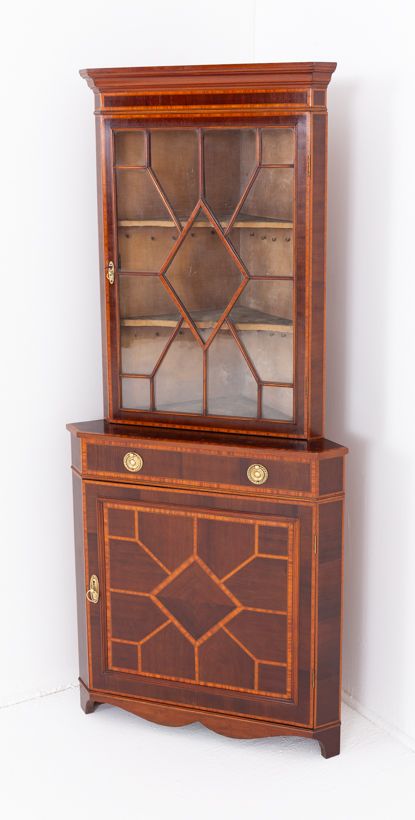
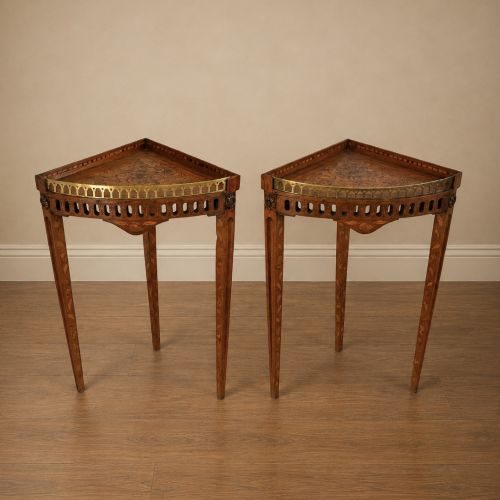

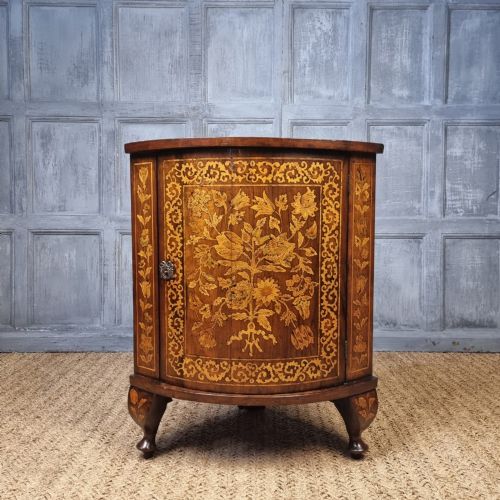
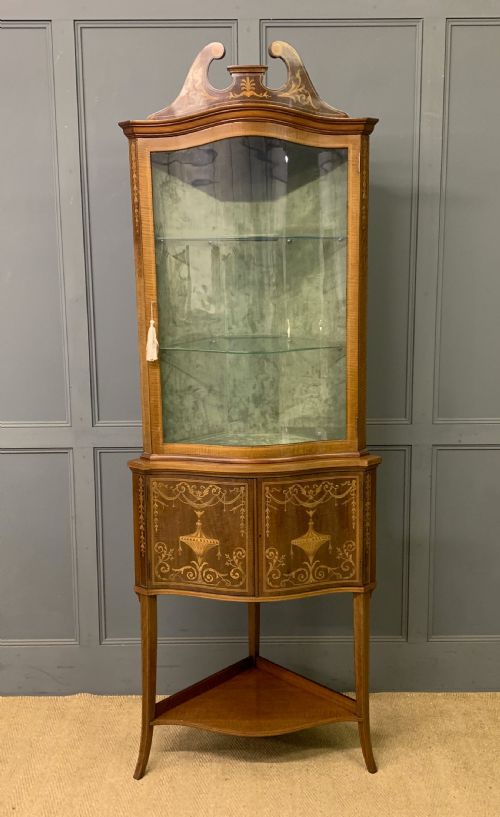

Inlaid Corner Stand
An inlaid corner stand makes clever use of neglected room perimeters while introducing refined timber and decorative motifs.
Inlaid Corner Stand
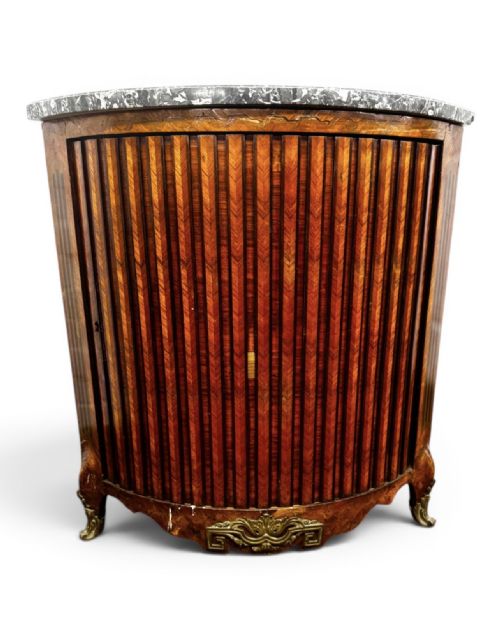
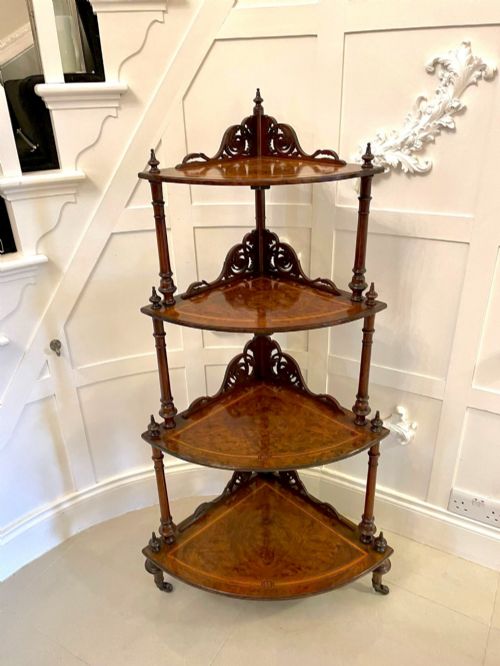
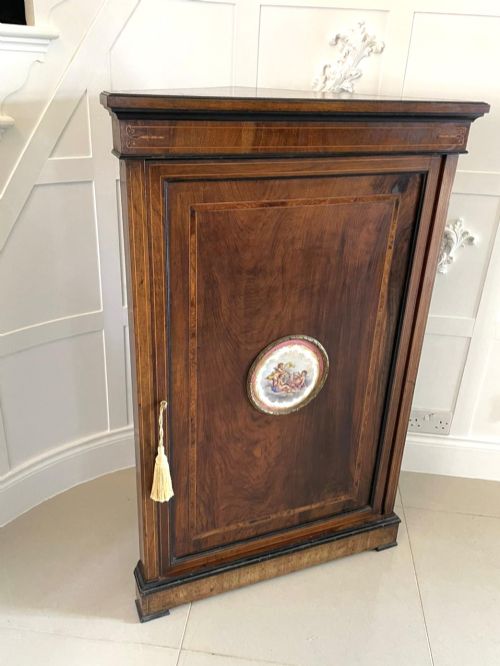
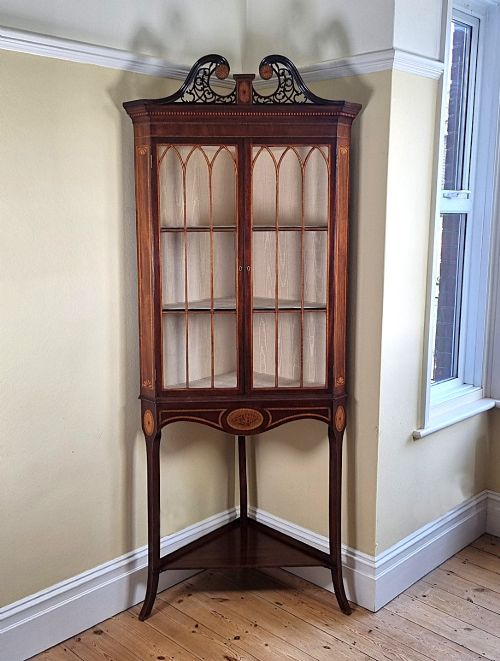
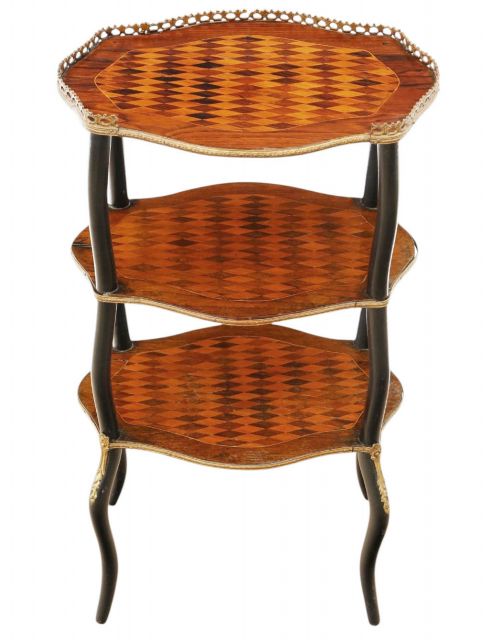
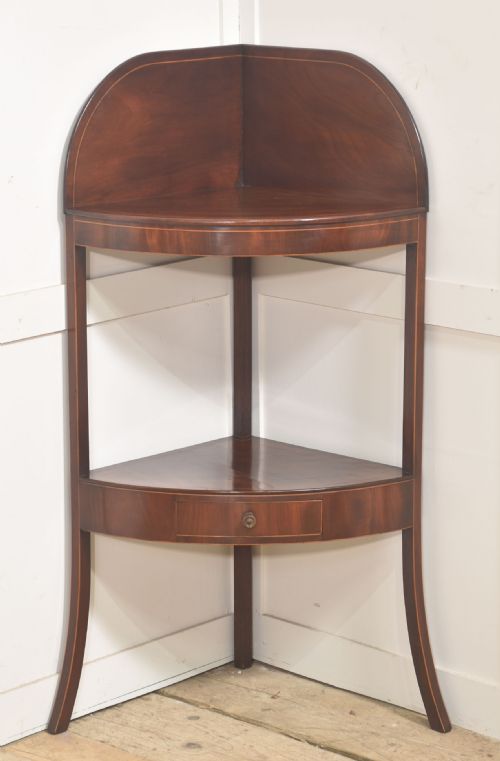
When searching for an inlaid corner stand, a buyer encounters a diverse group of space-saving furniture designed to fit neatly into domestic angles. These pieces range from compact washstands and wall-hanging cupboards to substantial floor-standing display cabinets and tiered whatnots.
The Edwardian era and the late nineteenth century contribute many of the freestanding and glazed varieties seen on this page, often channelling earlier Sheraton Revival tastes. Earlier Georgian examples also appear, offering robust mahogany or oak construction adapted for corners.
Buyers select these items to display ceramics or glassware while softening the hard junctions of a room with curved or serpentine fronts and contrasting woodwork.
Materials and Construction Techniques
Cabinet makers utilised solid timbers such as mahogany, walnut, and oak for the primary carcase, ensuring stability in a structural angle. Secondary woods provide internal shelving and framing support.
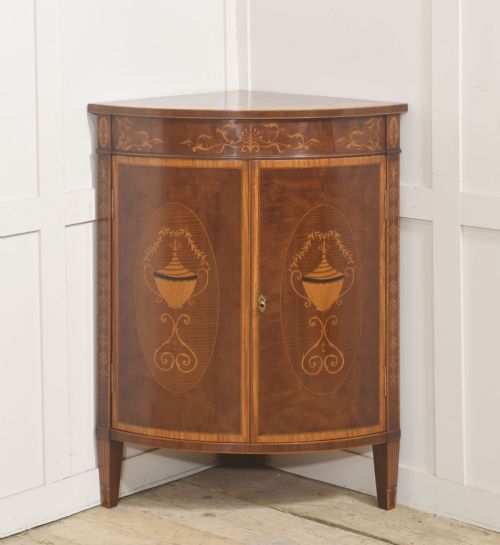
Decorative surfaces rely on contrasting veneers and detailed inlay work using satinwood, boxwood, and marquetry motifs. Brass fixtures, glass panels, and occasional ebonised details complete the construction of the finer items.
Inlaid Corner Stand Retail Price Guide 2026
Typical asking prices for inlaid corner stand among the pieces listed under this phrase on Sellingantiques today, from the lower quarter to the upper quarter. They describe what is for sale here now, not the wider market.
Glazed display cabinets and open four-tier whatnots represent the most common floor-standing formats.
Distinctions in Quality
The degree of craftsmanship shows clearly in the precision of the marquetry and the tightness of the mitre joints where the sides meet the walls. Superior examples integrate delicate stringing and symmetrical timber grains that flow naturally across the curved fronts.
Heavier standing pieces distinguish themselves through well-balanced proportions, original brass hardware, and intact glazed doors with original glass. The interior arrangement, whether shelved for display or fitted with washstand basins, reflects the original commission's intended status.
Edwards And Roberts·Maple & Co.
The Inlaid Corner Stand Glossary
- Whatnot
- A set of open shelves supported by slender pillars, designed for displaying ornaments. These items frequently occupy corner spaces in Victorian and Edwardian interiors.
- Sheraton Revival
- A late nineteenth and early twentieth century style inspired by the furniture designs of Thomas Sheraton. It typically incorporates satinwood inlay, tapered legs, and classical motifs.
- Bow Front
- A convex curved front facade that softens the sharp angles of a piece. This profile appears frequently on nineteenth-century corner washstands and display cabinets.
- Stringing
- Thin lines of contrasting wood inlay used to outline panels, drawers, and tabletops. It defines the geometric borders on mahogany and walnut surfaces.
Inlaid Corner Stand: Frequently Asked Questions
How do I use a corner stand in a modern room?
These pieces fit naturally into unused room junctions where standard rectangular furniture proves too bulky. They provide practical surface area or enclosed display space without dominating the floor plan.
Place them in hallways, dining rooms, or living spaces to exhibit ceramics, books, or decorative objects while adding period character to the corner.
How can I tell an Edwardian reproduction from an 18th-century piece?
Examine the interior construction, secondary timbers, and the nature of the drawer linings or backboards. Eighteenth-century examples display hand-cut joinery and timber characteristics appropriate to their period.
Edwardian pieces often utilise machine-sawn elements and mass-produced brassware, even when copying earlier Sheraton styles. The style of the inlay and the finish of the timber also offer reliable clues to the date of manufacture.
Are corner washstands still functional today?
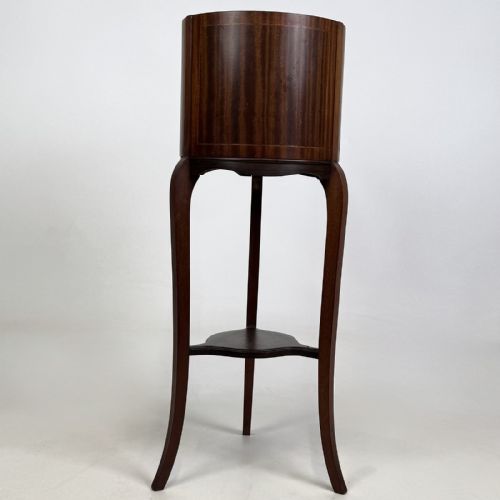
Many corner washstands retain their original marble tops, ceramic basins, or splashbacks, though their plumbing utility is rarely utilised now. They function effectively as lamp tables, plant stands, or hallway accent pieces.
The hinged tops and lower shelves provide unexpected utility for contemporary storage needs.