


Inlaid Chinese Table
An inlaid Chinese table brings dense hardwood, mother-of-pearl, and export craftsmanship into a room.
Inlaid Chinese Table
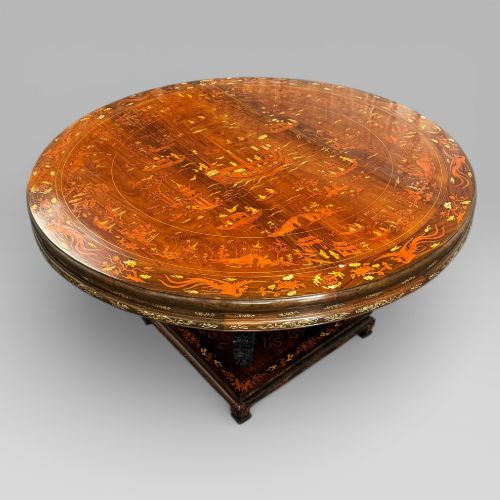
An inlaid Chinese table is a piece of furniture defined by decorative surfaces set into timber structures, primarily found in forms like centre tables, occasional tables, and console tables. These pieces date from the eighteenth century through to the early twentieth century, spanning Qing Dynasty production and Chinese Export workshops.
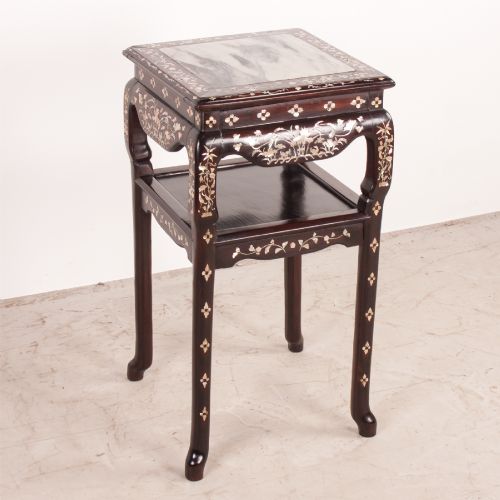
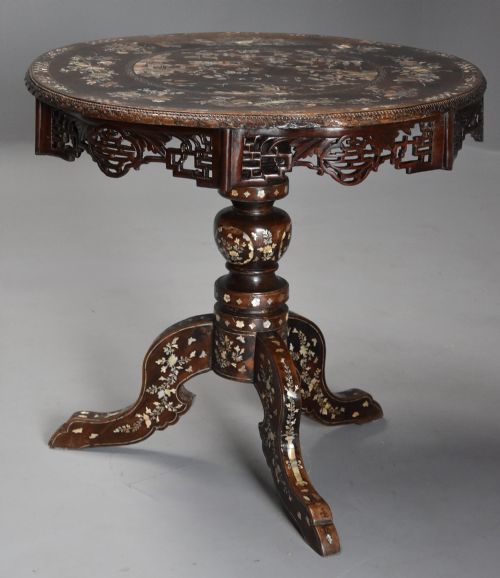
The version most commonly met on this page is the nineteenth-century hardwood occasional table or centre table. These examples frequently combine dense dark timbers with shimmering shell details, designed for display and social use within domestic interiors.
What varies in quality
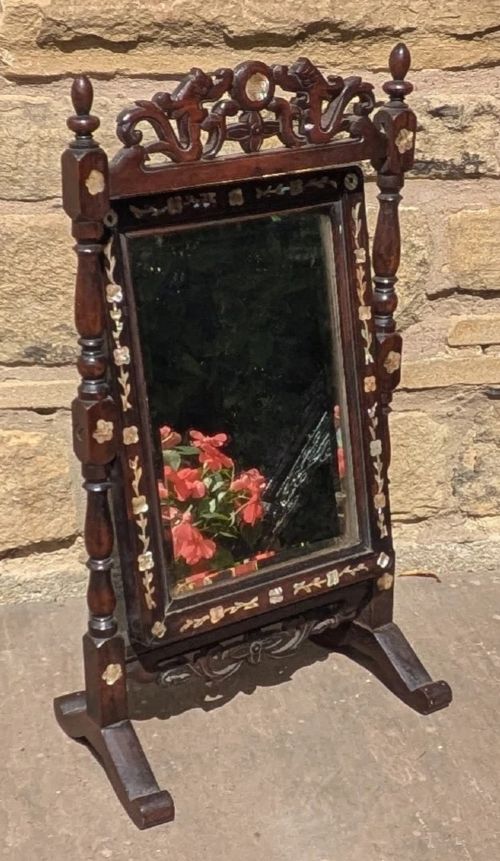
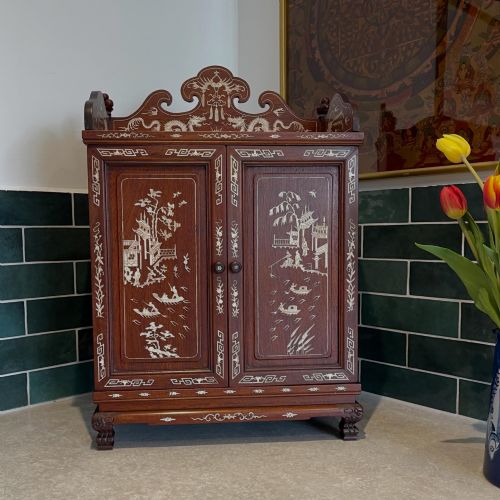
The distinction between tiers rests upon the depth and intricacy of the carving alongside the precision of the inlay work. Finer examples display tightly fitted shell or bone segments that sit flush with the surrounding timber without excessive filler.
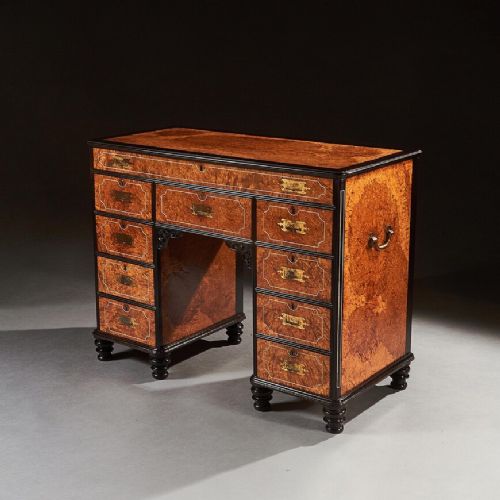
Material selection also dictates standing, with dense, heavy hardwoods and richly figured padouk commanding greater attention than simpler constructions. The complexity of form, from standard square shapes to drum-shaped barrel tables and multi-tiered occasional stands, further separates standard production from exceptional export pieces.
Drum-shaped barrel tables bring round seating aesthetics straight into the tabletop surface.
Edwards & Roberts
The Inlaid Chinese Table Glossary
- Hardwood
- Dense, slow-growing timber such as rosewood or padouk used to form the structural body of export furniture. These woods provide the dark, heavy foundation required for intricate surface carving.
- Mother-of-Pearl
- Iridescent inner shell material cut into thin sections and embedded into timber surfaces. It catches the light to form floral and geometric patterns.
- Qing Dynasty
- The imperial dynasty spanning the seventeenth to early twentieth century under which many of these export and domestic pieces were produced. It represents a major period of decorative arts manufacturing.
- Occasional Table
- A small, moveable table designed for specific, non-permanent uses around a room. They appear frequently in multi-tiered or circular formats.
- Padouk
- A heavy tropical hardwood valued for its rich reddish-brown colour and stability. It serves as a primary material for nineteenth-century export tables.
Inlaid Chinese Table: Frequently Asked Questions
What is an inlaid Chinese table?
An inlaid Chinese table is a nineteenth-century or early twentieth-century export or domestic piece built from dense hardwoods and decorated with contrasting materials. These tables range from small occasional stands to large centre tables.
They combine traditional Chinese joinery and carving styles with decorative surfaces designed for Western and Eastern markets alike.
How do I date these tables?
Dating relies upon examining the timber species, the style of the carving, and the specific inlay materials used. Nineteenth-century examples often feature dense rosewood or padouk combined with detailed mother-of-pearl work.
Later pieces from around nineteen hundred to nineteen twenty introduce different structural proportions and varied secondary woods.
Where were these tables used?
These pieces served as display surfaces and functional furniture within formal reception rooms, studies, and parlours. Centre tables occupied prominent positions in rooms, while occasional and barrel tables stood beside seating.
Export pieces were frequently shipped to European and British homes where Asian decorative arts were highly fashionable.
How do I care for the inlay?
Maintaining these surfaces requires keeping the furniture away from direct sunlight and sudden temperature changes. This prevents the timber from shrinking and loosening the embedded shell or bone segments.
Regular dusting with a dry, soft cloth preserves the polish without introducing moisture to the older glues and wood.