



Chinese Tier Table
A chinese tier table brings practical tiered surfaces and dense hardwood craftsmanship into a room.
Chinese Tier Table
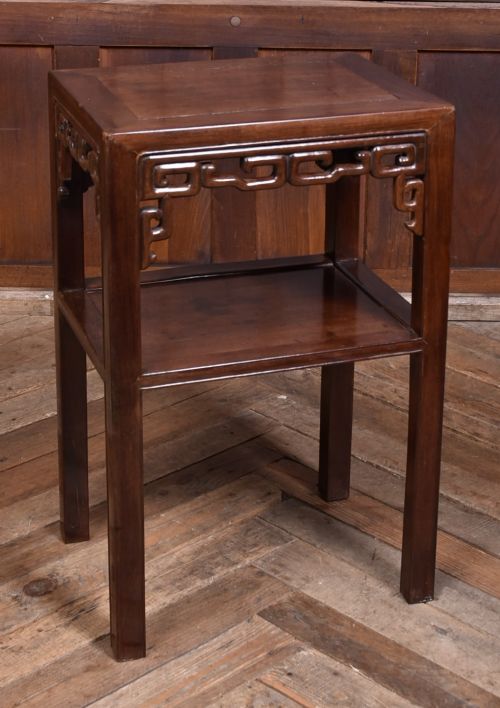
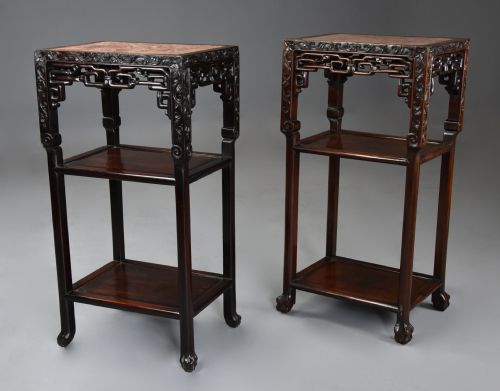
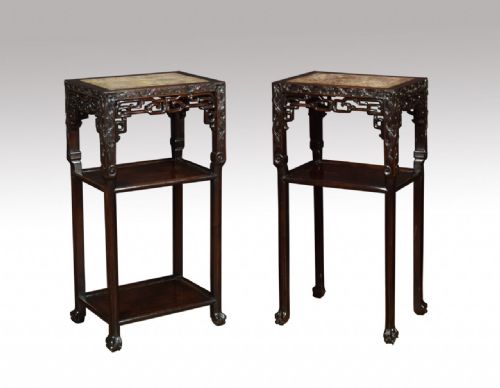
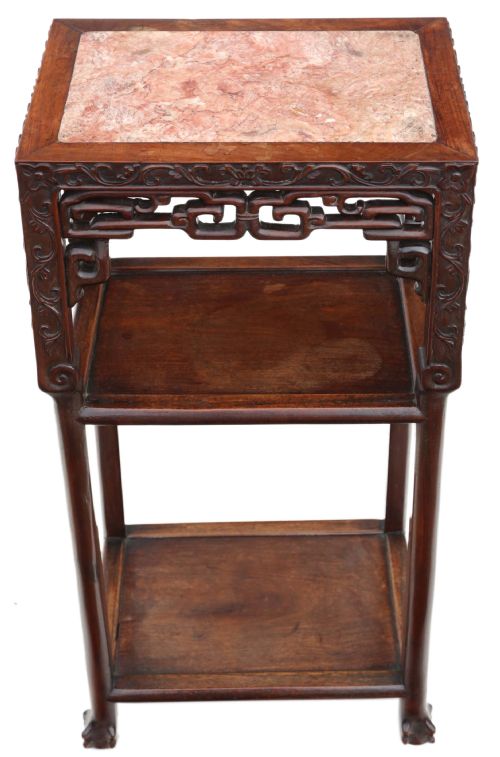
A chinese tier table is typically encountered as a two-tier or three-tier occasional piece, often taking the form of a pot stand, plant stand, or lamp table. These examples originate primarily from the nineteenth century, including the Qing Dynasty period, spanning years such as eighteen eighty, eighteen ninety, and nineteen ten.
The layout generally comprises stacked platforms connected by upright supports, designed to hold vases, urns, and jardinieres. Rectangular, square, and freestanding designs dominate the available forms, functioning effectively as side tables, bedside tables, and pedestals.
Buyers seeking this type of furniture will frequently find pieces created for export alongside domestic forms. The structure provides multiple display levels within a compact footprint.
Quality and craftsmanship
Quality rests in the density and choice of the hardwood, the precision of the joinery, and the crispness of the carved details. Superior examples display deeply articulated carving and perfectly fitted marble or wooden panels.
The integration of decorative elements such as bone and mother-of-pearl inlay further separates standard production from finer pieces. Stability across the multiple tiers indicates careful attention to original construction methods.
Some nineteenth century makers thoughtfully added marble panels specifically to catch stray drips from overzealous watering.
The Chinese Tier Table Glossary
- Hongmu
- A dense tropical hardwood frequently used in traditional Chinese furniture making. It provides a heavy, durable frame that takes fine carving.
- Jardiniere
- A large ornamental pot or stand designed for holding plants or flowers. These items often sat atop the upper tier of a tall stand.
- Mother-of-pearl
- An iridescent inner layer of shell used for decorative inlay. Artisans cut this material into delicate shapes to adorn table surfaces.
- Padouk
- A heavy, reddish timber utilised for high-quality stands and occasional tables. The wood darkens gracefully over time.
- Qing Dynasty
- The final imperial dynasty of China, lasting from sixteen forty-four to nineteen twelve. Pieces from this era often feature traditional carved motifs.
Chinese Tier Table: Frequently Asked Questions
What was a chinese tier table used for?
These tables served primarily as display surfaces for heavy vases, urns, jardinieres, and lamps.
The multiple tiers allowed households to elevate plants and decorative objects to various heights within a room.
How do I identify a nineteenth century piece?
Nineteenth century examples typically exhibit dense tropical hardwoods, traditional hand-carved Qing Dynasty motifs, and traditional joinery methods.
Evidence of age appears in the dry patina of the timber and the integration of marble or inlaid panels.
How should I care for a hardwood tier table?
Maintain the timber by dusting with a soft cloth and avoiding placement near direct heat sources or strong sunlight.
Occasional application of appropriate wax helps preserve the finish of dense hardwoods like hongmu and rosewood.