
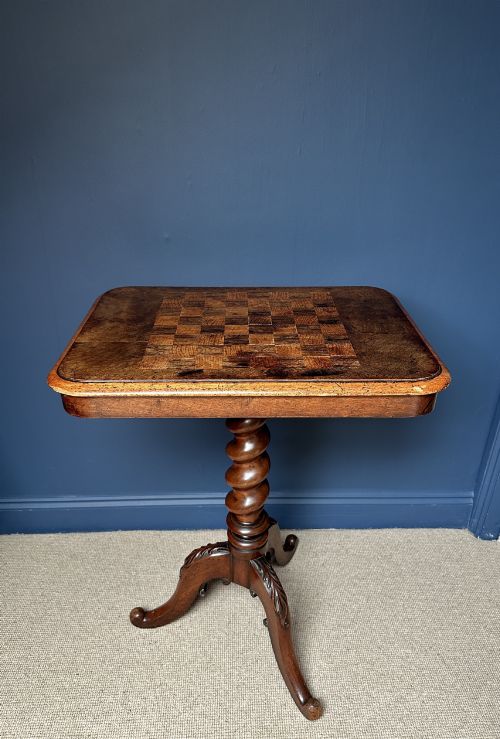
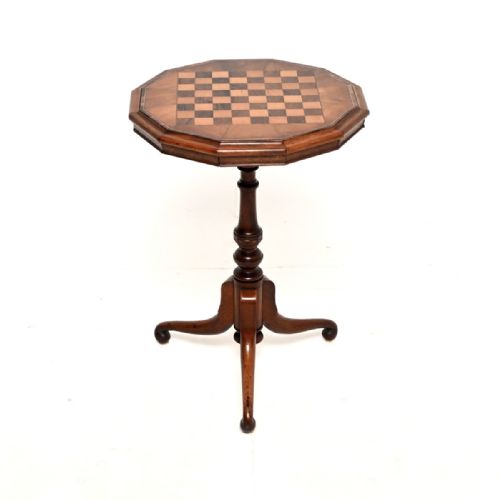


Inlaid Chessboard Table
An inlaid chessboard table is a dual-purpose piece of furniture that brings a playable surface into the parlour.
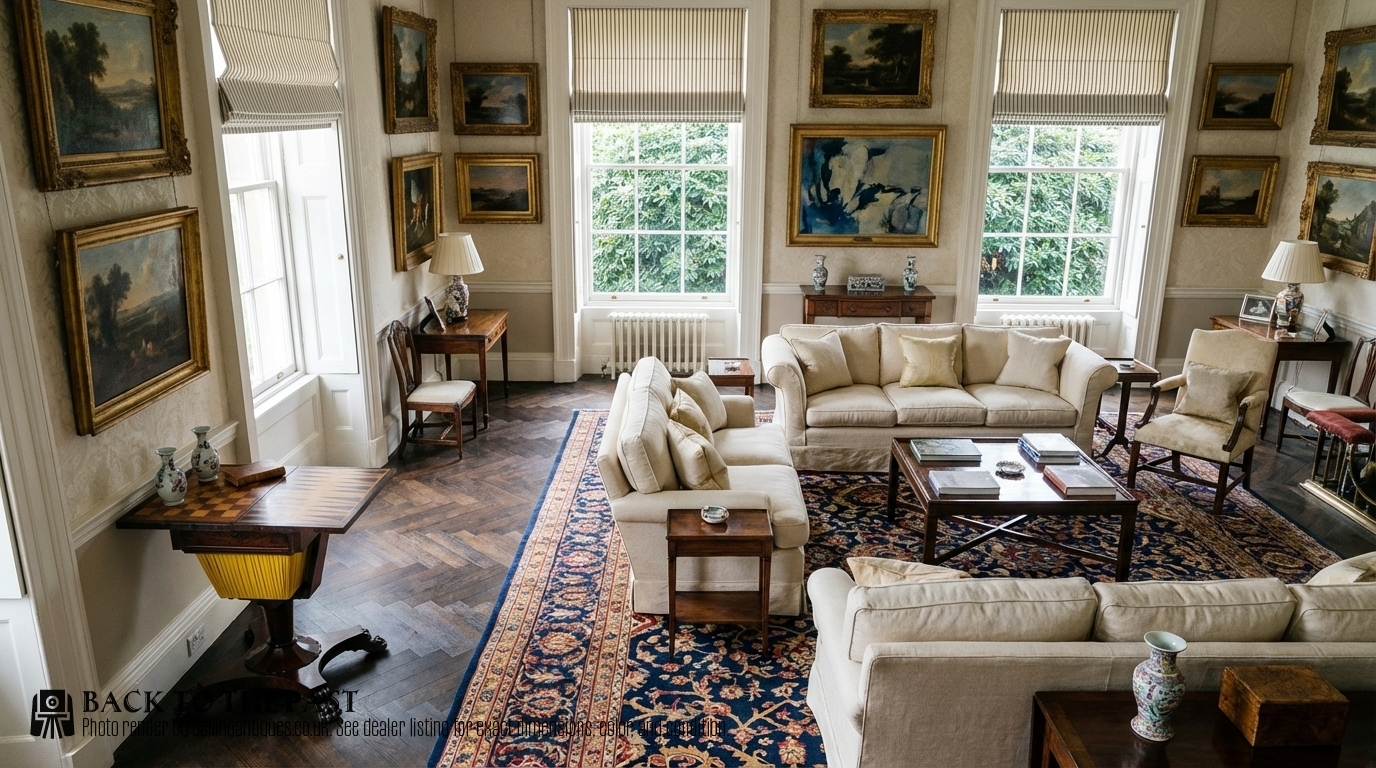
Inlaid Chessboard Table
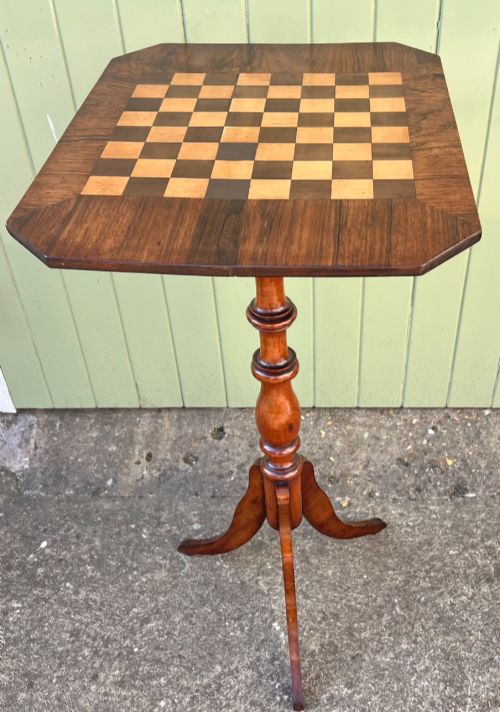
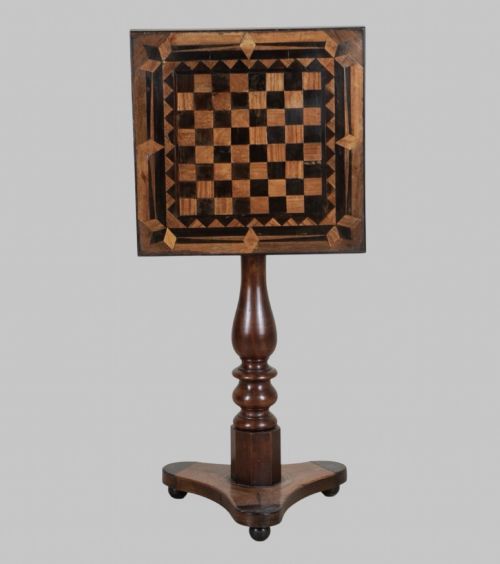
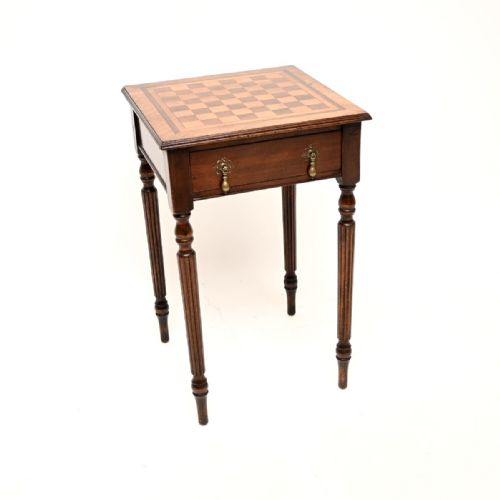
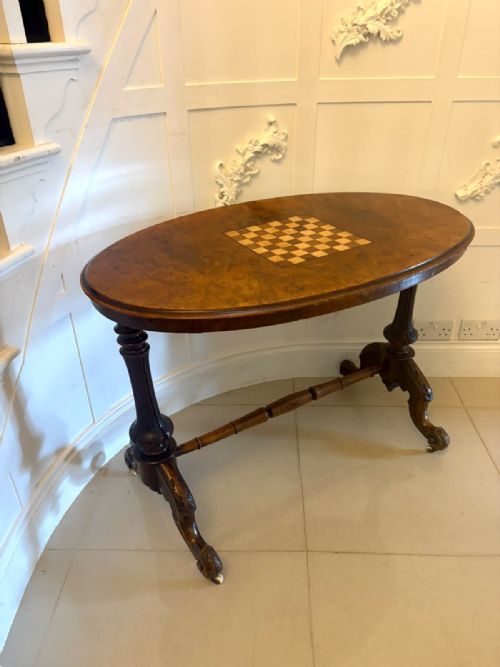
An inlaid chessboard table combines a surface for board games with domestic furniture, appearing in forms such as centre tables, tripod tables, and sewing tables. Buyers seeking an inlaid chessboard table encounter examples predominantly from the Victorian and Regency periods, alongside Georgian, Edwardian, and nineteenth-century pieces.
The construction ranges from compact folding boards to multifaceted games tables that double as work tables or compendiums. Walnut, mahogany, and rosewood form the primary bodies of these pieces, providing a sturdy foundation for the contrasting squares set into the top.
How they were made
Cabinet makers utilised contrasting timbers such as boxwood, ebony, satinwood, and birch to construct the precise grid of the chessboard. These lighter and darker woods were meticulously sawn and fitted into the solid wood or veneered surface of walnut, mahogany, or rosewood tables.
Beyond the marquetry and inlay of the board itself, makers incorporated carved supports, brass details, and functional compartments for sewing or game pieces. The integration of marble also appears in regional variants, demonstrating varied joinery and stone-working techniques.
Inlaid Chessboard Table Retail Price Guide 2026
Typical asking prices for inlaid chessboard table among the pieces listed under this phrase on Sellingantiques today, from the lower quarter to the upper quarter. They describe what is for sale here now, not the wider market.
Walnut, mahogany, and rosewood form the dominant primary timbers across the nineteenth-century listings on this site.
What varies in quality
The precision of the wood inlay dictates the visual harmony of the playing surface, separating meticulous craftsmanship from simpler production. Clean alignment between the boxwood, ebony, and surrounding timbers shows the maker's skill.
The Inlaid Chessboard Table Glossary
- Inlay
- A technique where pieces of contrasting material are fitted into a recessed surface to form a design. This method creates the flush grid characteristic of the chessboard tops.
- Marquetry
- The art of applying decorative veneer pieces to a structure to form intricate patterns. It differs from simple inlay by covering broader surfaces of the table top.
- Games compendium
- A box or table containing multiple games and playing pieces housed within dedicated compartments. These versatile objects allowed households to store chess, checkers, and other pastimes together.
- Scumbled
- A decorative paint technique used to imitate the grain of finer woods on a simpler base. This finish appears on regional tables from the Regency period.
Inlaid Chessboard Table: Frequently Asked Questions
What is an inlaid chessboard table?
An inlaid chessboard table is a piece of antique furniture featuring a permanent board integrated directly into its top surface. These tables served both a decorative function in the home and a practical purpose for playing board games.
Most examples date from the nineteenth century, encompassing styles from the Regency, Victorian, and Edwardian eras. They often combine utilitarian design with fine cabinet making.
How were these tables used?
These tables provided a dedicated surface for playing chess and other board games without requiring a separate setup. Many included drawers or compartments underneath to store pieces, and some doubled as sewing tables.
In the nineteenth-century parlour, they functioned as social hubs where family members gathered for leisure activities. Their dual nature allowed them to remain in active service as regular room tables when not in use for games.
How do I date a chessboard table?
Dating relies on observing the prevailing styles, woods, and structural characteristics associated with specific periods. Regency examples often feature rosewood and classical tripod bases, while Victorian pieces frequently employ walnut and carved pedestals.
Examining the construction methods, secondary timbers, and any incorporated mechanisms helps narrow the decade of manufacture. Comparing the inlay style to documented pieces from the same era provides further context.
How do I care for an antique games table?
Maintenance involves keeping the wooden surfaces away from direct sunlight and maintaining stable humidity levels to protect the veneers and inlay. Regular dusting with a soft, dry cloth preserves the finish without harming the historic timber.
Harsh chemical cleaners should be avoided in favour of traditional wax polishing applied sparingly. Gentle handling of drawers and folding leaves ensures the mechanical elements remain operational.