

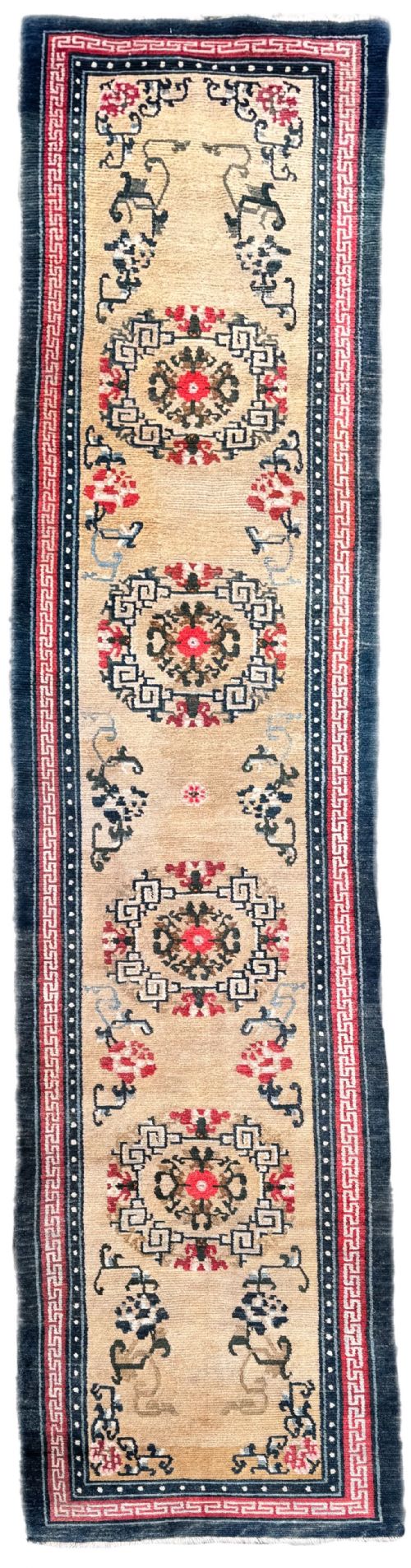
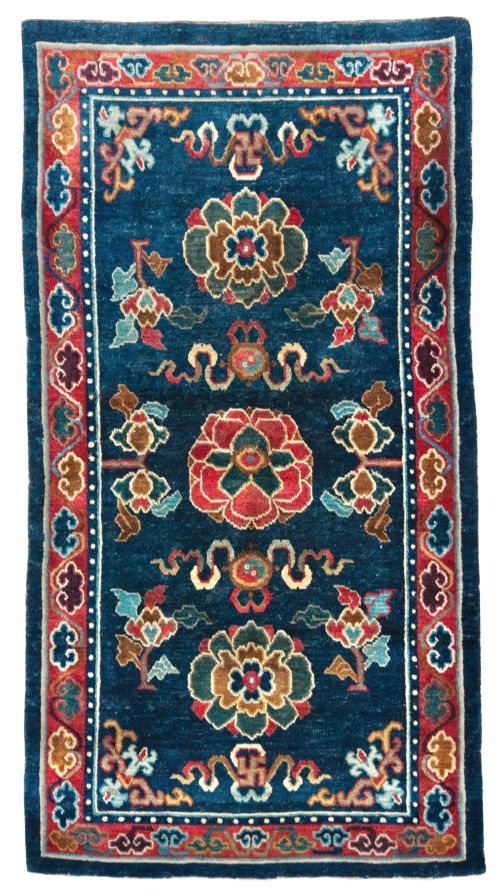
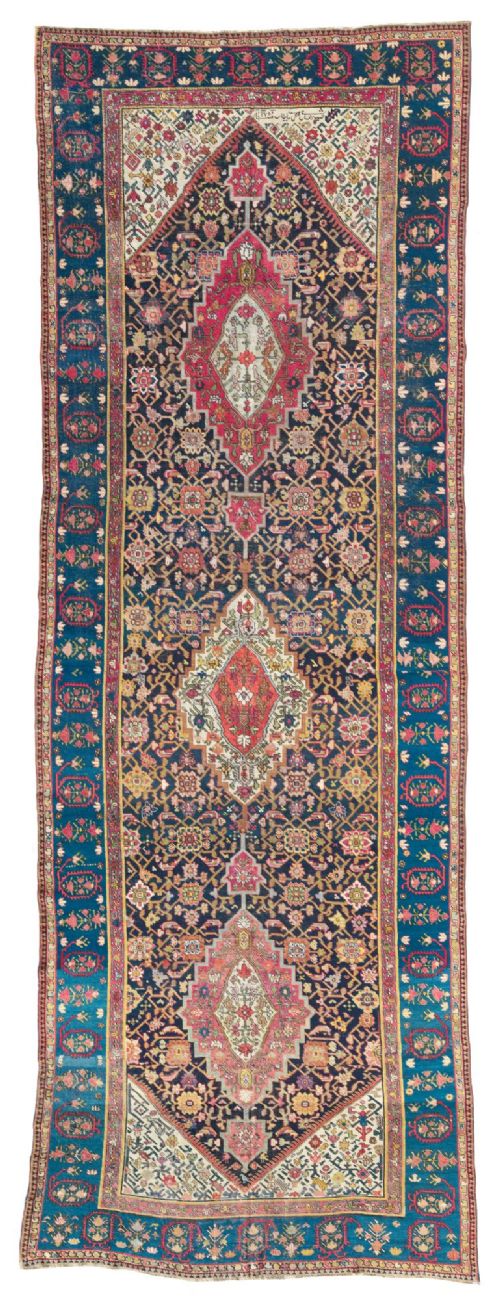
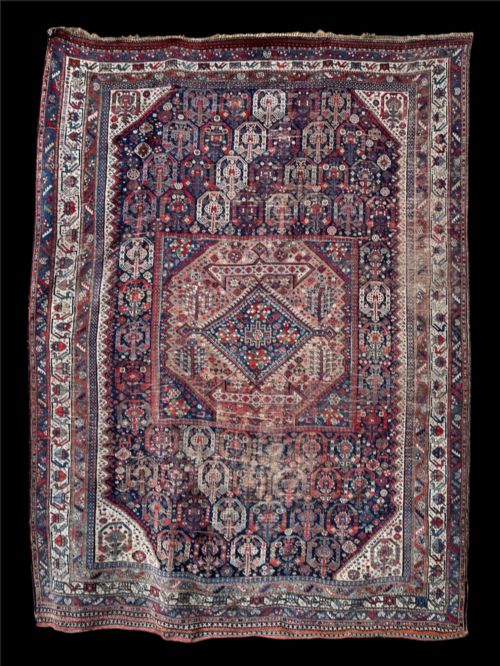




Indigo Blue Runner Carpet
These indigo blue runner carpets bring deep botanical tones and tribal geometry to narrow hallways, drawing the eye along corridors with saturated dyes.
Indigo Blue Runner Carpet
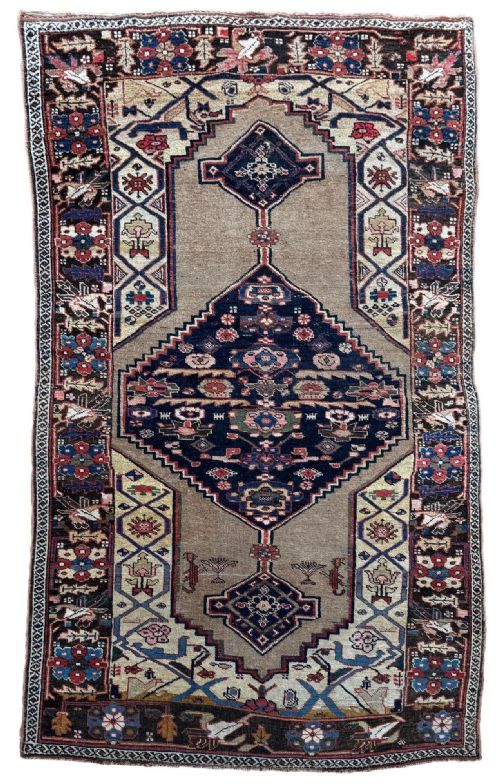
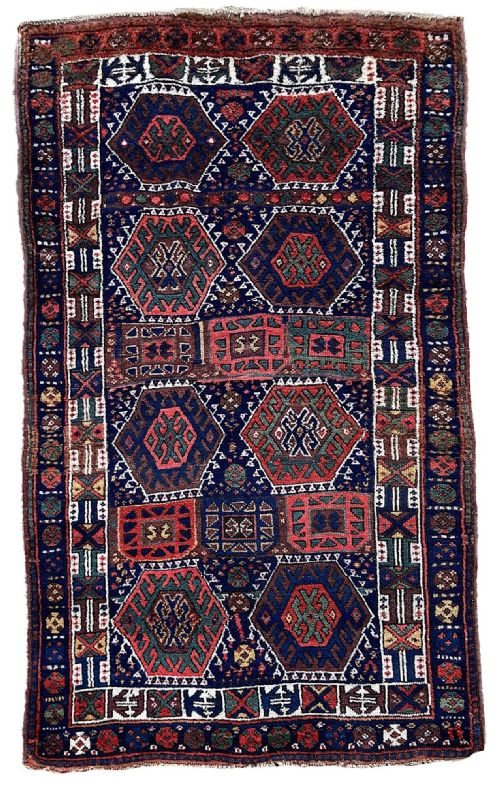
An indigo blue runner carpet is a long, narrow textile designed for corridors and passages, often woven by tribal and village makers across the Caucasus, Persia, and Anatolia. These pieces span from the mid-nineteenth century into the mid-twentieth century, utilising elongated proportions suited to hallways and stairs. The indigo blue runner carpet typically displays geometric medallions, repeating stars, or field patterns anchored by deep blue grounds.
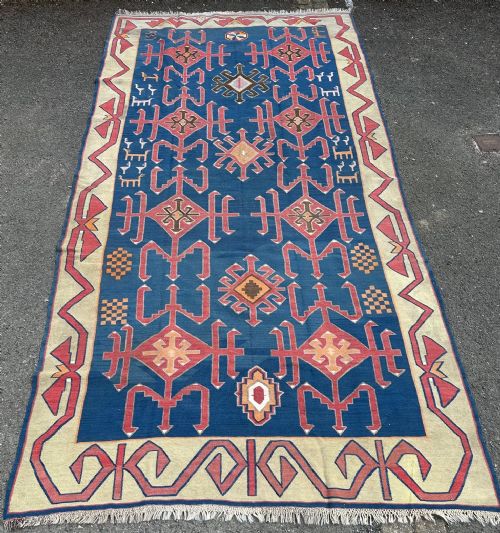
Makers from various regional confederacies and tribes, including Kurdish, Baluch, and Caucasian groups, produced these elongated formats using traditional knotting and flat-weave techniques. Surviving examples reflect the utilitarian need for floor coverings in high-traffic areas combined with distinct cultural motifs. Buyers encounter both piled rugs and flat-woven kilims sharing these deep blue colourways and narrow dimensions.
How they were made
These textiles rely principally on wool for the pile and foundation yarns, sometimes incorporating cotton or goat hair for structural strength and contrast in the weave. Natural dyes provide the palette, yielding deep indigo blues from plant sources alongside earthy reds, yellows, and browns. Weavers constructed the pieces on vertical or horizontal looms, utilising hand-knotted pile or flat-weave tapestry techniques depending on the tribal tradition.
Structural methods vary from single-weft and double-weft construction to multi-strip assembly, as seen in panel kilims joined together before finishing. Edge finishes, such as overcast selvages and braided ends, secure the foundation threads against fraying in daily use. The interplay of natural wool and plant-derived indigo creates a tactile surface that patinas with age.
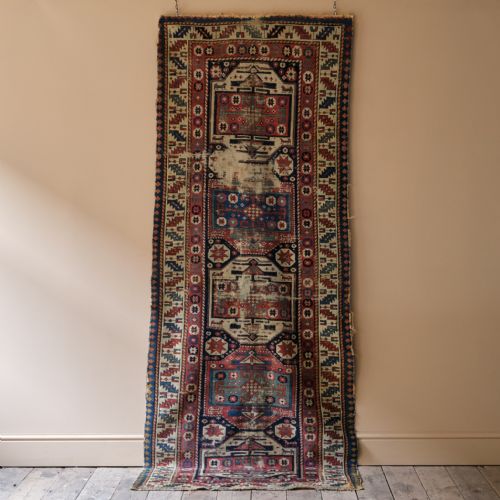
One remarkably honest Kazak runner proudly embraces the nickname crooked, reminding us that humans wove these with a cup of tea nearby.
What varies in quality
Quality in these runners rests on the density of the weave, the clarity of the design drawing, and the saturation of the natural dyes. Tightly packed knots or crisply executed flat-weaves indicate greater maker skill and structural resilience under foot traffic. The depth and uniformity of the indigo blue ground also distinguish finer examples from standard village production.
The integrity of the wool foundation and the preservation of original borders and ends affect the overall standing of a runner. Pieces with balanced proportions and well-rendered motifs demonstrate the traditional mastery behind the tribal or regional workshop. Minor irregularities in hand-spun wool add character, while structurally sound foundations ensure longevity.
The Indigo Blue Runner Carpet Glossary
- Runner
- A long, narrow carpet format specifically proportioned for hallways, corridors, and staircases. These pieces measure significantly longer than they are wide.
- Indigo
- A deep, durable blue dye extracted from plants of the Indigofera genus. It forms the primary background colour for many traditional Caucasian and Persian tribal rugs.
- Kilim
- A flat-woven carpet or textile made without a pile by tightly interweaving warp and weft threads. These pieces offer a smooth, reversible surface.
- Medallion
- A central ornamental design motif placed in the field of a rug. Regional weavers often repeat these geometric shapes along the axis of a runner.
- Kelleh
- A large, extended rectangular rug format traditionally positioned in the longer sections of reception rooms. They share the elongated proportions common in hallway runners.
- Selvage
- The reinforced side edges of a carpet formed by wrapping or binding the warp threads. This finishing prevents the sides from unraveling.
Indigo Blue Runner Carpet: Frequently Asked Questions
Where should I place a runner carpet?
These narrow textiles suit hallways, corridors, entryways, and narrow landings where standard rectangular rugs do not fit. Their elongated format directs movement and adds warmth to transitional spaces.
Ensure the floor beneath is clean and flat, and use a breathable underlay to keep the runner secure under foot traffic. This placement protects the flooring while showcasing the tribal designs in daily circulation areas.
How do I care for an antique wool runner?
Vacuum the carpet gently on a low suction setting without a rotating brush roll to prevent pulling the wool pile or flat-weave threads. Rotate the runner periodically to distribute wear evenly across the length.
Professional cleaning by specialists in antique textiles is recommended when the piece requires deep washing. Avoid harsh chemical spot treatments that can strip natural plant dyes from the wool.
How can I tell regional styles apart?
Caucasian runners frequently feature sharp geometric medallions, Lezghi stars, and crisp, contrasting palettes on dark grounds. Persian and Kurdish village pieces often display softer floral abstractions, box medallions, and rich tribal wool.
Examining the weave structure, fringe finishing, and border patterns helps identify whether a piece originated in the Caucasus, Anatolia, or tribal Persia.
Are these runners suitable for heavy use?
Traditional wool and goat hair construction provides natural resilience against regular household traffic. The dense natural fibres withstand daily footsteps while maintaining their structural integrity.
Placing the runner in moderate-to-low traffic corridors or using a supportive underlay helps preserve the antique foundation over time.