





Imari Ware Porcelain Dishes
These imari ware porcelain dishes bring rich iron-red and cobalt decoration to a room, offering centuries of historic Japanese craftsmanship for display.
Imari Ware Porcelain Dishes
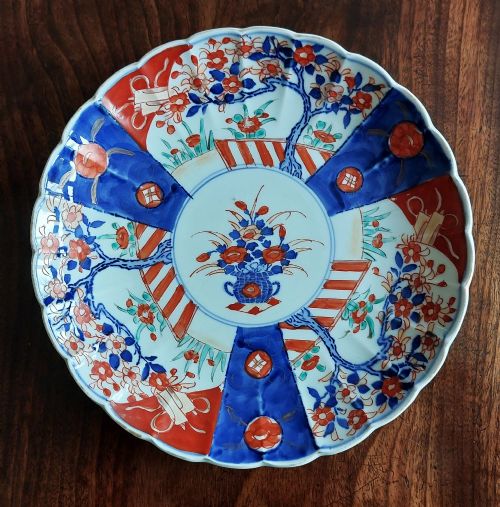
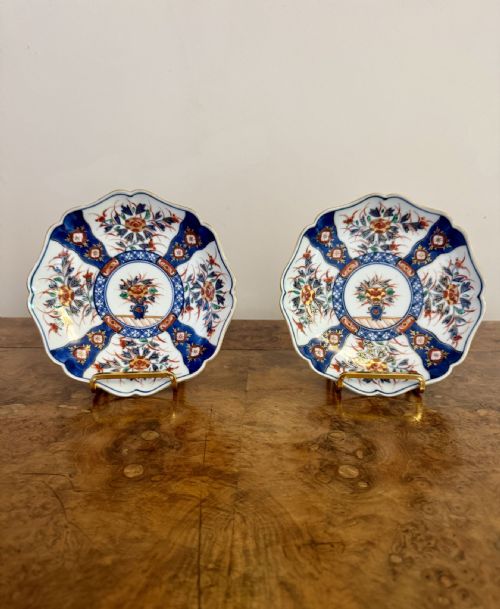
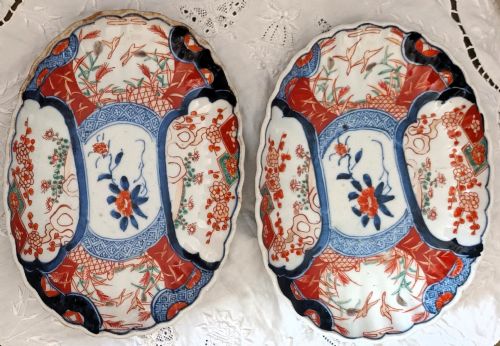
Imari ware porcelain dishes encompass a striking range of decorative plates, chargers, bowls, and shaped vessels originating from Japan. Buyers searching this phrase look for historic items that display traditional forms and distinctive palettes.
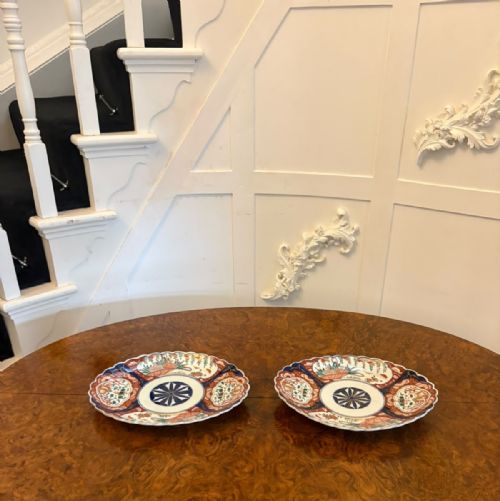
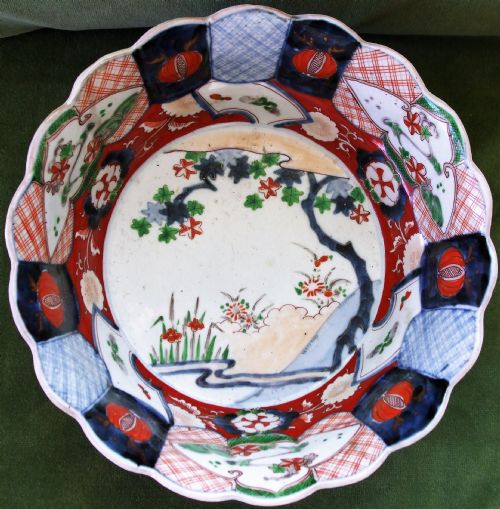
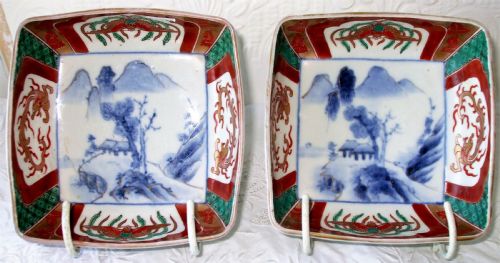
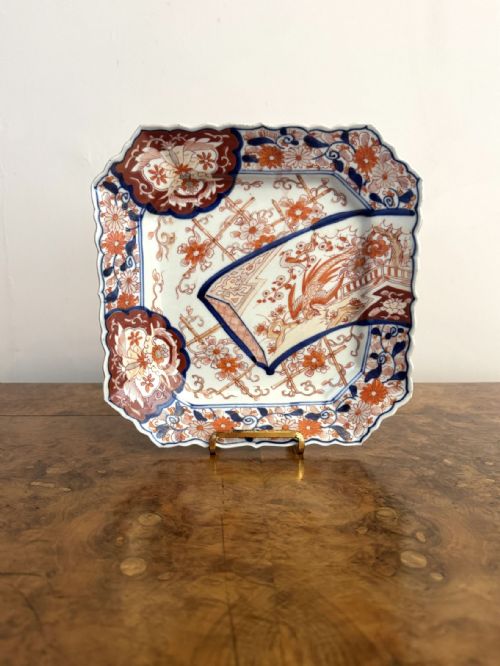
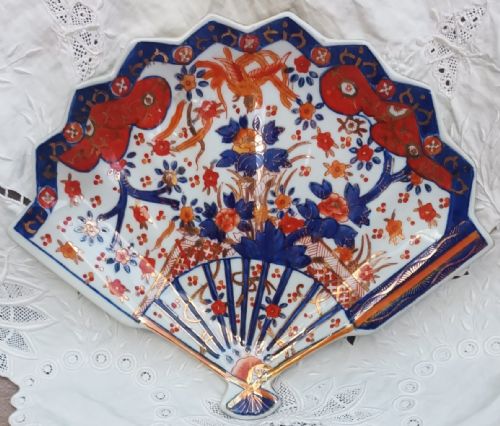
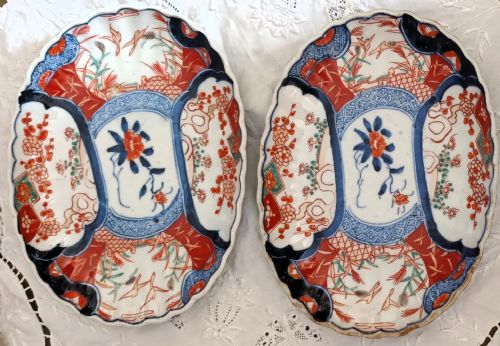
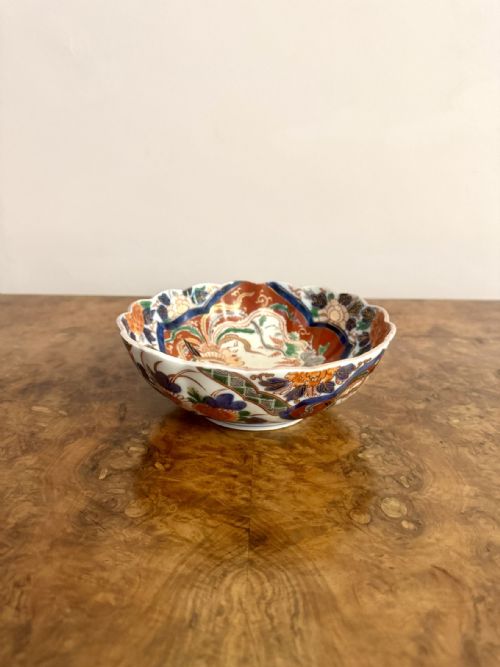
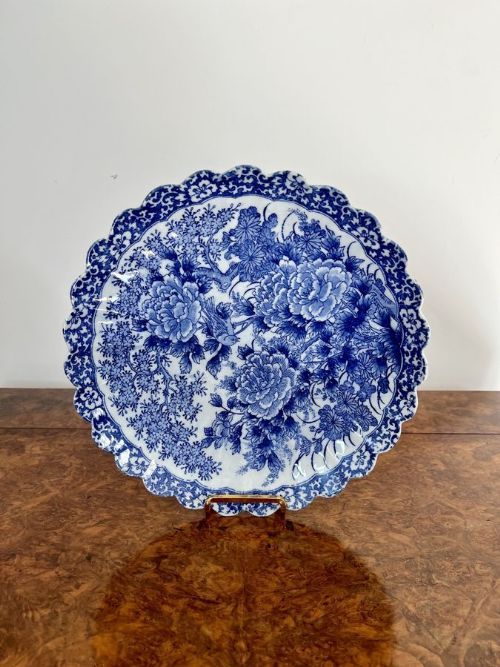
The pieces seen most often on this page date from the Meiji period and the nineteenth century, alongside earlier examples from the Edo period and the eighteenth century. Common forms include round plates, large chargers, scalloped edge dishes, and geometric shapes such as square, hexagonal, and fan-shaped vessels.
Originating primarily from Arita, these ceramics served both domestic utility and international export markets. Their robust forms and vibrant painted surfaces made them enduring favourites for interior display over successive centuries.
Materials and Techniques
Potters shaped fine porcelain bodies before applying cobalt glaze beneath the surface to create deep blue underglaze details. This foundational blue work established the architectural skeleton of the design.
Artisans then added iron-red enamel over the glaze, frequently complemented by gold leaf, gilt, and additional enamel colours. Subsequent firings bonded these surface pigments to the white porcelain base, resulting in a dense and colourful finish.
Listings feature porcelain pieces spanning from the seventeenth century through the Meiji period and into the twentieth century.
Assessing Quality
Quality rests in the crispness of the hand-painted floral, bird, and geometric motifs across the surface. Finer examples display precise brushwork and balanced compositions that integrate the cobalt blue with the iron-red and gilt highlights.
The weight and finish of the porcelain body, along with the complexity of the moulding such as scalloped, shell, or square edges, separate standard utilitarian production from exceptional decorative works.
The Imari Ware Porcelain Dishes Glossary
- Imari
- A style of Japanese porcelain named after the port from which the wares were shipped to Europe. The aesthetic typically combines underglaze cobalt blue and overglaze iron-red with gilding.
- Charger
- A large decorative plate intended for display on a sideboard or wall rather than for dining use. These substantial pieces often showcase the most ambitious painted compositions.
- Meiji Period
- A historical era in Japan lasting from eighteen sixty-eight to nineteen twelve, associated with a surge in fine export arts. Many dishes on this page originate from this productive era.
- Edo Period
- The period in Japanese history spanning from sixteen hundred and three to eighteen sixty-eight. Pieces from this earlier time often exhibit distinct potting characteristics and historic provenance.
- Arita
- The Japanese town and surrounding region where the clay was mined and fired to create these wares. It remains the historic heartland of Japanese porcelain production.
Imari Ware Porcelain Dishes: Frequently Asked Questions
How were imari dishes used historically?
Historic imari dishes served both functional dining roles and high-status interior display. Large chargers and deep bowls often adorned European and Japanese reception rooms to demonstrate wealth and taste.
Over time, collectors favoured them primarily for visual impact, placing them on walls, cabinets, and tables to bring warmth and pattern to domestic interiors.
How do I date an imari dish?
Dating relies on examining the porcelain body, the style of the hand-painted motifs, and the characteristics of the glaze. Eighteenth-century and Edo period pieces often show heavier potting and softer cobalt tones.
Nineteenth-century and Meiji period examples frequently display sharper enamel colours and more varied moulded shapes, such as fan or hexagonal formats.
Can I display these plates on walls?
Many imari chargers and plates feature proportions well suited to vertical display using appropriate brass or coated wire hangers. Their robust porcelain construction and striking colour schemes make them natural focal points in a room.
Ensure that any hanging hardware securely supports the specific weight and rim profile of the individual dish before mounting.
What shapes are available?
The selection includes traditional round plates and deep bowls alongside unusual geometric and moulded forms. Collectors frequently encounter square plates, hexagonal bowls, fan-shaped dishes, and shell-shaped vessels.
Scalloped rims and multi-lobed edges also appear regularly, adding texture and sculptural interest to the painted surface designs.