




Scalloped Imari Porcelain
Scalloped imari porcelain gathers hand-painted bowls, plates and chargers defined by lobed rims and rich palettes.
Scalloped Imari Porcelain
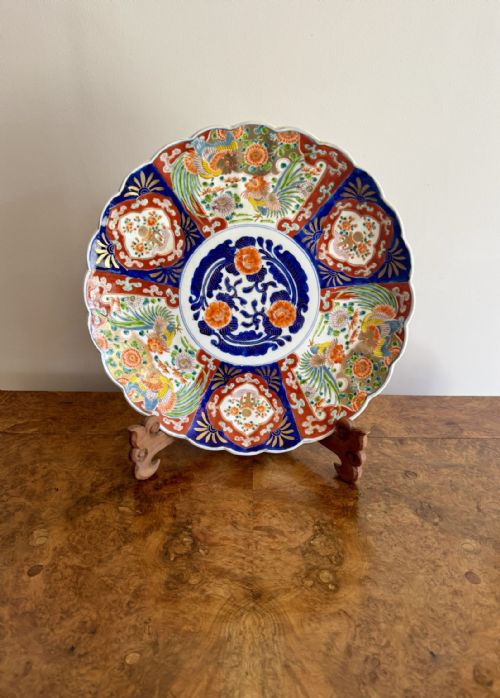
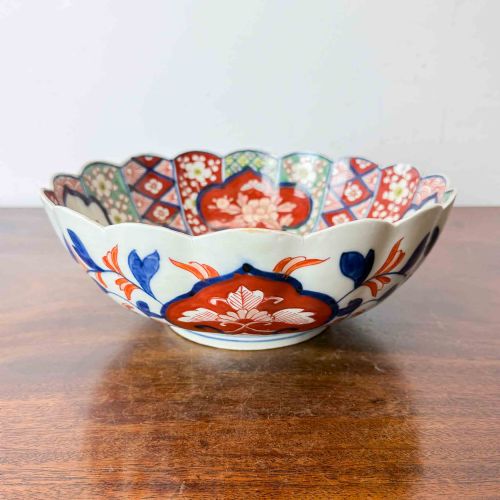
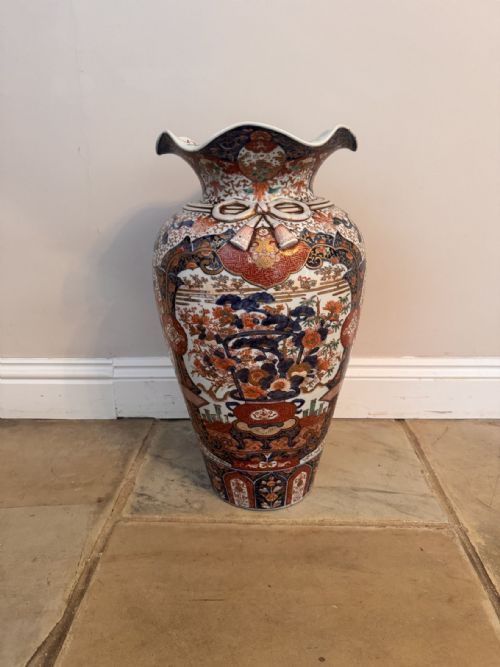
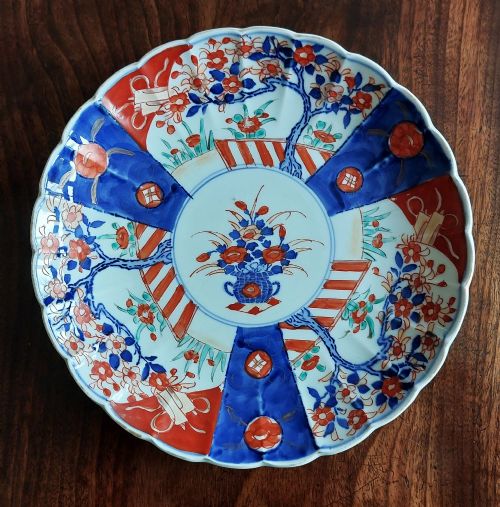
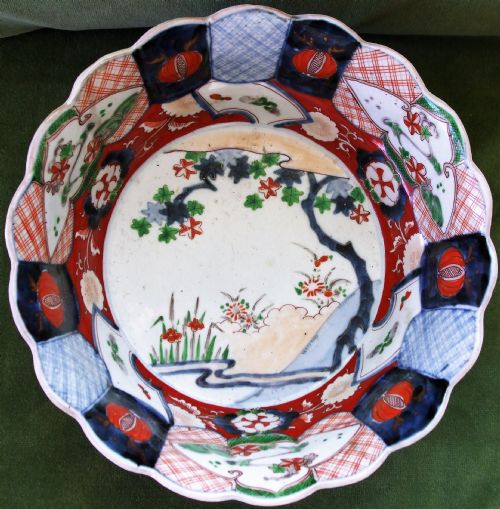
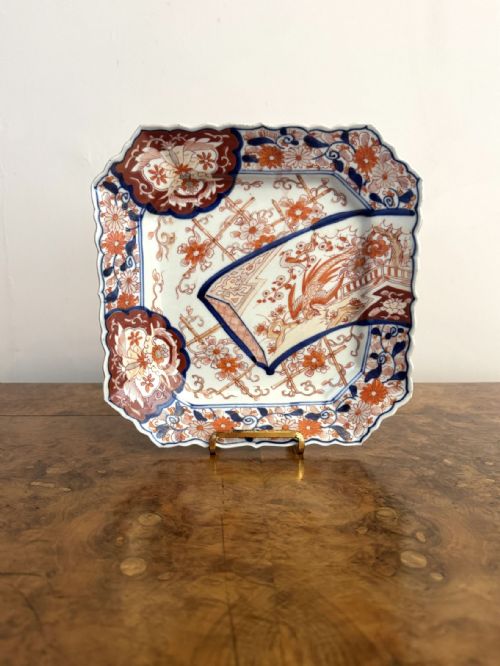
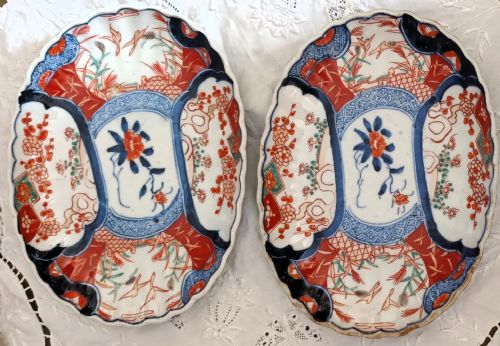
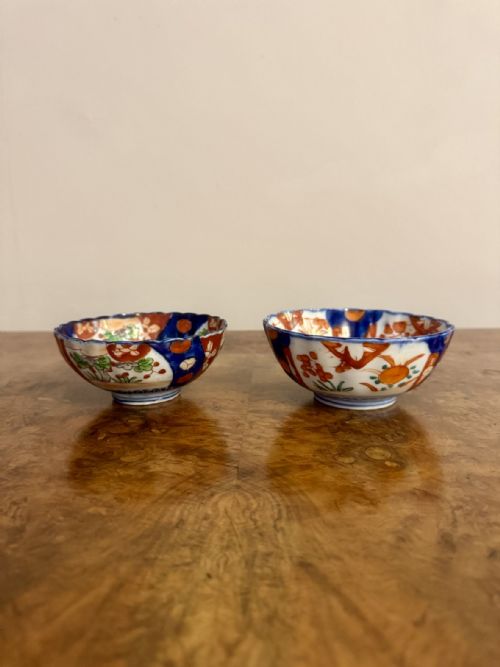
When you search for scalloped imari porcelain, you encounter decorative plates, bowls, dishes and chargers shaped with distinct lobed or fluted edges. The most common examples on this page hail from the Meiji period and the nineteenth century, reflecting traditional Japanese export manufacture alongside English adaptations.
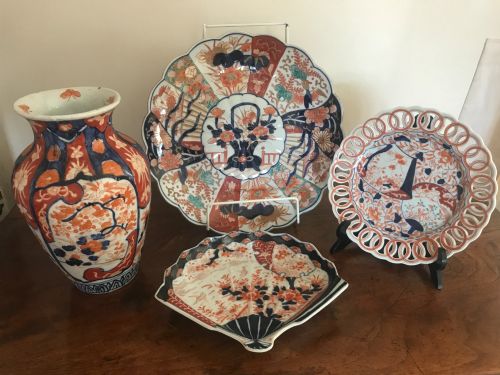
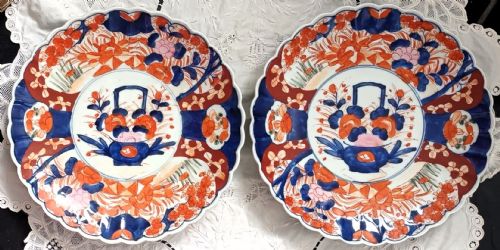
These ceramic pieces primarily take the form of wall plates, large chargers, square shaped plates and deep bowls intended for display. Many feature motifs depicting exotic birds or the seven lucky gods, executed in characteristic palettes.
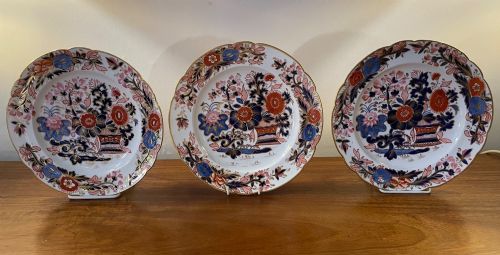
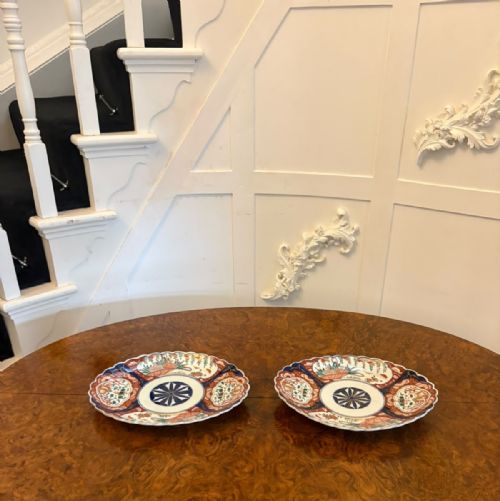
The objects span origins from Japanese Arita workshops to early nineteenth century Staffordshire potteries utilising the imari palette. Buyers meet everything from individual dishes to matched pairs and larger sets of six.
How they were made
The manufacture relies upon porcelain and earthenware bodies shaped into distinctive scallop edges and fired before receiving decoration. Artisans then applied underglaze blue alongside vibrant overglaze enamel colours.
Details often incorporate gold leaf, gilt and gilding to highlight floral patterns, bird designs and figurative scenes. The resulting surfaces combine hand-painted pigments with lustrous glazes.
Materials recorded across the inventory include porcelain, earthenware, enamel, glaze, gold leaf, gilt, gilding and overglaze enamel.
What varies in quality
Quality rests in the crispness of the lobed moulding and the precision of the hand-painted brushwork across the surface. Pieces displaying fine control over floral and avian motifs stand apart from simpler commercial output.
The application of overglaze enamel and gold leaf dictates visual depth, where richer layers and better preserved gilding elevate the status of a charger or bowl.
The Scalloped Imari Porcelain Glossary
- Imari
- A style of ceramic decoration originating in Japan, characterised by a palette of underglaze blue, iron red, and gold. It was later copied by European potteries.
- Scallop Edge
- A lobed or fluted rim shaped like a scallop shell, commonly found on decorative plates and bowls. This technique creates a distinct undulating profile.
- Charger
- A large decorative plate used for display rather than for serving food. These substantial pieces often showcase the most intricate painted designs.
- Overglaze Enamel
- Pigments applied to ceramics after the initial glaze firing, requiring a subsequent lower temperature kiln fix. This technique adds vibrant reds, greens and yellows to the design.
- Meiji Period
- The era in Japanese history spanning from 1868 to 1912, known for prolific porcelain production and export. Pieces from this time frequently combine traditional motifs with high technical skill.
Scalloped Imari Porcelain: Frequently Asked Questions
What is imari porcelain?
Imari porcelain is a style of ceramic originating from the Japanese town of Arita and shipped through the port of Imari. It is traditionally recognised by its distinctive red, blue and gold colour scheme.
Potteries in Europe later adopted this aesthetic, producing their own versions using the same palette on local earthenware and porcelain bodies.
How were chargers used?
Chargers were large decorative dishes primarily intended for display on buffets, sideboards or walls rather than for everyday dining. Their generous surface area provided ample space for elaborate pictorial and floral compositions.
In period interiors, matching pairs or single large chargers served as focal points in reception rooms.
How do I date Meiji period pieces?
Meiji period ceramics date from 1868 to 1912, aligning with the reign of the Emperor Meiji. Pieces from this era often exhibit confident hand-painted bird and floral motifs alongside refined porcelain bodies.
Comparing stylistic traits with nineteenth-century production helps narrow down the decade of manufacture.
How do I clean antique porcelain?
Antique porcelain requires gentle hand washing in lukewarm water with mild soap, avoiding harsh scrubbing or soaking. Enamel and gilt details can be delicate and degrade if exposed to abrasive cleaners.
Dry the pieces thoroughly with a soft cloth immediately after washing.