







Imari Ware Bowl
These imari ware bowl examples bring together centuries of Japanese ceramic skill, offering striking cobalt and enamel colour combinations for domestic display.
Imari Ware Bowl
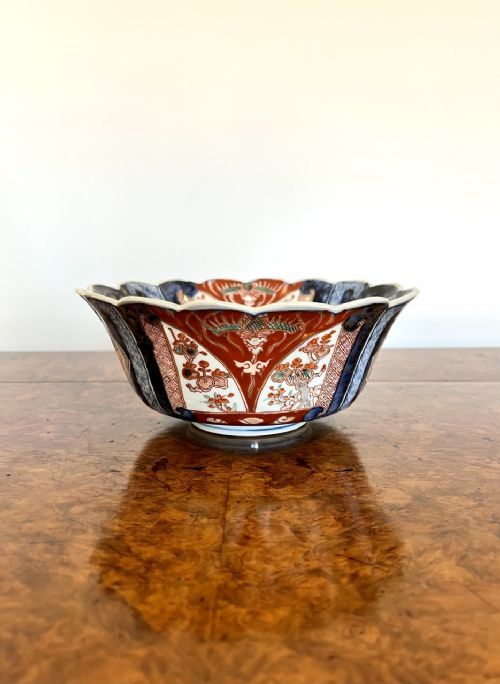
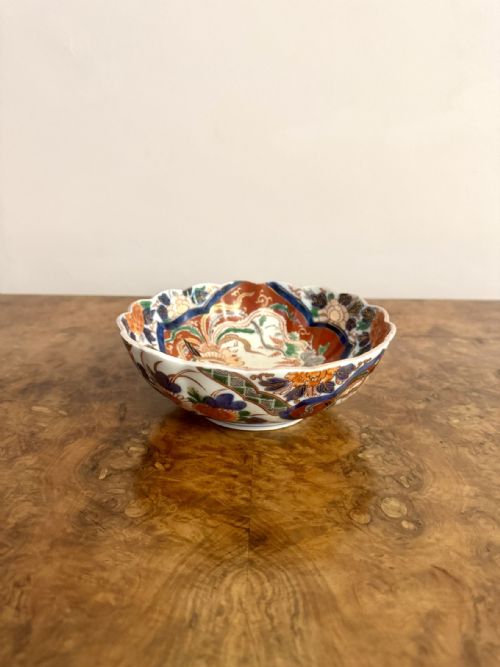
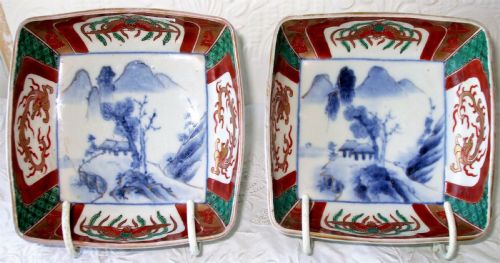
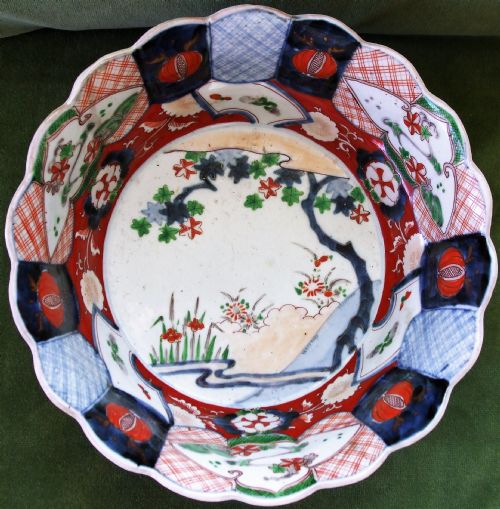
An imari ware bowl represents a tradition of Japanese porcelain and ceramic production centred in the Arita region. When exploring this selection, buyers encounter various forms such as large scalloped vessels, hexagonal shapes, and decorative dishes dating from the seventeenth century through to the early twentieth century.
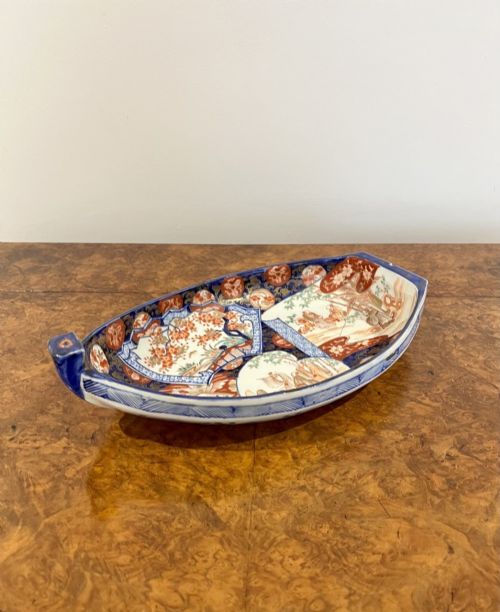
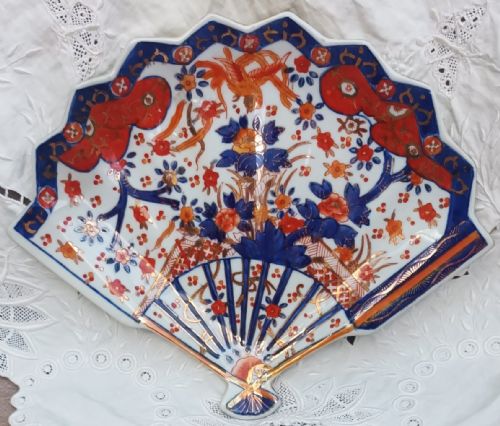
The objects span multiple historical eras, including pieces originating from the Edo period and the Meiji period. Alongside standard round bowls, the range incorporates specialised shapes like boat-shaped dishes, leaf motifs, and clam shell forms created for decorative display.
Most items appearing in the current selection originate from the late nineteenth and early twentieth centuries, reflecting the enduring export market for Japanese ceramics. These later pieces preserve the traditional palette and styling established during earlier centuries of Arita production.
How They Were Made
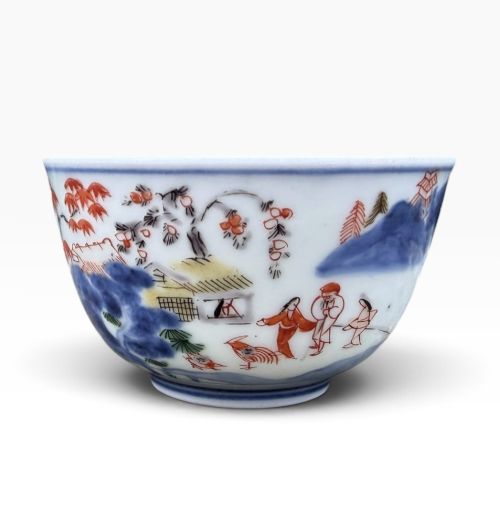
Following the cobalt application, artisans added overglaze enamel pigments and gold leaf or gilding to enrich the surface decoration. A secondary firing fused these colourful enamels and metallic accents onto the glazed ceramic body, creating the characteristic dense patterns associated with the style.
Imari Ware Bowl Retail Price Guide 2026
Typical asking prices for imari ware bowl among the pieces listed under this phrase on Sellingantiques today, from the lower quarter to the upper quarter. They describe what is for sale here now, not the wider market.
Listings feature ceramics spanning from the 17th century to the early 20th century, incorporating porcelain, enamel, and gold leaf.
What Varies in Quality
Quality differentiates through the precision of the hand-painted cobalt blue work and the complexity of the accompanying enamel and gilding details. Superior examples exhibit crisp underglaze lines and carefully applied gold leaf that remains vibrant across the decorative surface.
The ambition of the vessel form also separates standard production from finer pieces. Hexagonal geometry, intricate scallop edges, and unusual moulded shapes such as leaves or clam shells require greater skill from the potter compared to simple round bowls.
The Imari Ware Bowl Glossary
- Imari ware
- A type of Japanese porcelain originating from Arita, traditionally decorated in cobalt blue, iron red, and gold. The style was widely exported to Europe from the Edo period onwards.
- Arita
- The Japanese town in Hizen province where production of this porcelain first began. It remains the historical heartland of Japanese ceramic manufacturing.
- Edo period
- The period in Japanese history spanning from 1603 to 1868, characterised by economic growth and stability under the Tokugawa shogunate. Pieces from this era often display early traditional export designs.
- Meiji period
- The era spanning from 1868 to 1912, marked by the modernization of Japan and a significant increase in decorative arts exported to Western markets.
- Cobalt glaze
- A deep blue mineral pigment applied beneath the transparent glaze before firing. It provides the dark foundational outlines characteristic of traditional ceramic painting.
- Gilding
- The application of gold leaf or gold paint to the surface of a ceramic object. This technique highlights specific decorative motifs and adds metallic contrast to the enamels.
Imari Ware Bowl: Frequently Asked Questions
What is an imari ware bowl?
An imari ware bowl is a decorative ceramic vessel originating from Japan, traditionally painted in cobalt blue, iron red, and gold. These pieces were produced for both domestic use and international export.
Potters in the Arita region shaped these vessels into standard round bowls as well as complex forms like hexagonal or scalloped dishes.
How do I identify an Edo period piece?
Edo period pieces date between 1603 and 1868, representing the earlier centuries of Japanese ceramic production. Examining the weight, clay composition, and painting style helps differentiate them from later Meiji items.
These earlier examples often reflect the foundational techniques developed by Arita artisans before the large-scale export boom of the late nineteenth century.
Were these bowls used for food?
While originally created as functional ceramics, many surviving examples served primarily as decorative display items. Their intricate enamel and gold leaf decoration made them prized ornaments for European and Japanese interiors.
Dishes and bowls often featured specialised shapes like leaf motifs or boat forms suited for presentation rather than daily dining.
How should I display my bowl?
Displaying an imari ware bowl involves placing it in a stable environment away from direct sunlight to protect the enamel colours. Using a dedicated stand allows deeper vessels or scalloped plates to be viewed securely.
Matching the period style of the room with the nineteenth or early twentieth-century aesthetic of the ceramic enhances its visual impact.