



Imari Style Porcelain Bowl
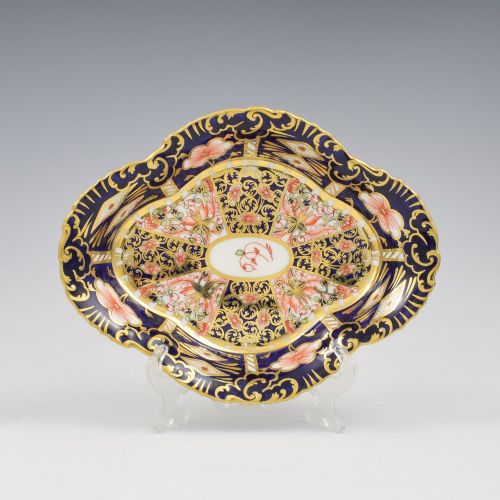
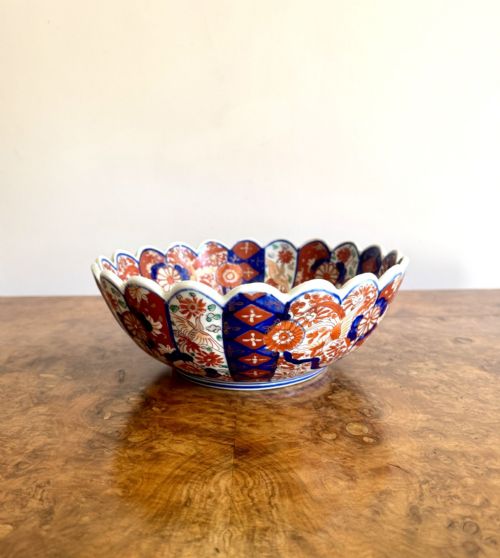
An imari style porcelain bowl brings rich palette work and complex panel decoration directly into a room, drawing the eye instantly.
Imari Style Porcelain Bowl
An imari style porcelain bowl encompasses pieces shaped as decorative vessels, footed bowls, and jardinieres originating from distinct periods including the eighteenth century and the nineteenth century.
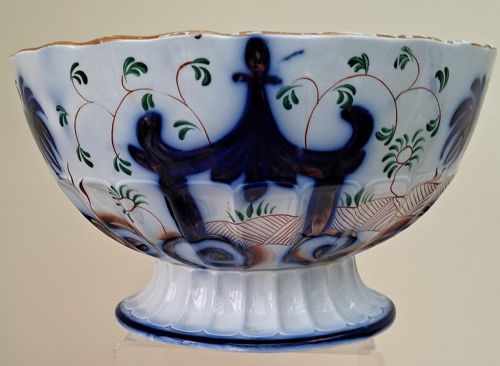
The selections on this page feature Japanese imari examples with scallop shaped edges alongside Victorian interpretations, Chinese export pieces, and ironstone variants.
Buyers encounter variations ranging from large nineteenth century Japanese scallop edge bowls to eighteenth century Chinese export porcelain jardinieres and Chamberlain Worcester productions.
How they were made
The manufacture relies upon ceramic and porcelain bodies coated in glaze, providing a smooth white base for subsequent decoration.
Makers applied polychrome enamel alongside gold leaf to build intricate compartmentalised patterns featuring motifs such as dragons and pagodas.
Ironstone and earthenware served as alternative ceramic bases for certain nineteenth century soup bowls and tureens.
Listings span the eighteenth century, the nineteenth century, and nineteen hundred, utilising porcelain, ironstone, earthenware, enamel, and gold leaf.
What varies in quality
Quality rests upon the precision of the enamel work and the crispness of the gilt detailing within the compartmentalised design.
The formation of the porcelain body, particularly in scalloped edges and deep footed profiles, distinguishes standard production from finer output.
Masons Ironstone·Chamberlain Worcester·Coalbrookdale
The Imari Style Porcelain Bowl Glossary
- Imari
- A style of ceramic decoration characterised by iron red, underglaze blue, and gold highlights, originating in Japan and later imitated in Europe and China. This palette creates a striking contrast across the surface of the vessel.
- Jardiniere
- An ornamental pot or bowl designed to hold plants or flowers. These large receptacles often feature robust porcelain or ironstone walls.
- Ironstone
- A type of heavy earthenware patented in the nineteenth century for its durability. It provides a dense body capable of holding thick glazes and enamels.
- Chinoiserie
- European artistic interpretations of Chinese and East Asian artistic traditions. This style appears frequently on export porcelain and regional earthenware.
Imari Style Porcelain Bowl: Frequently Asked Questions
Where were imari style porcelain bowls made?
These vessels originate from various workshops in Japan, China, and British factories influenced by eastern aesthetics.
British makers such as Chamberlain Worcester and Masons produced their own interpretations during the nineteenth century alongside imported originals.
How do I clean an antique porcelain bowl?
Dust the surface gently with a soft dry cloth to remove everyday particles without disturbing the glaze.
Avoid immersing pieces with gold leaf or delicate enamel in water, as moisture can degrade historical pigments over time.
Can I use these bowls for serving food?
Most antique decorative bowls and jardinieres function best as display pieces rather than active tableware.
Soup bowls and ironstone vessels from the nineteenth century were originally designed for dining, but historical glaze wear requires cautious handling.
How do I date an imari style porcelain bowl?
Examination of the ceramic body, glaze consistency, and pigment application reveals clues regarding the period of manufacture.
Eighteenth century export pieces display different paste characteristics compared to nineteenth century Victorian or Edwardian productions.