


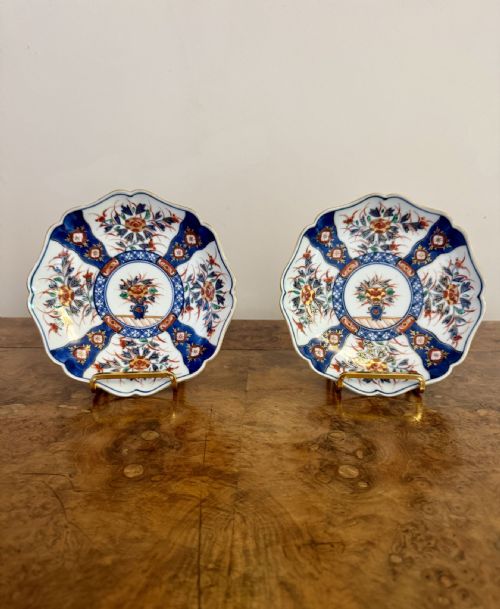
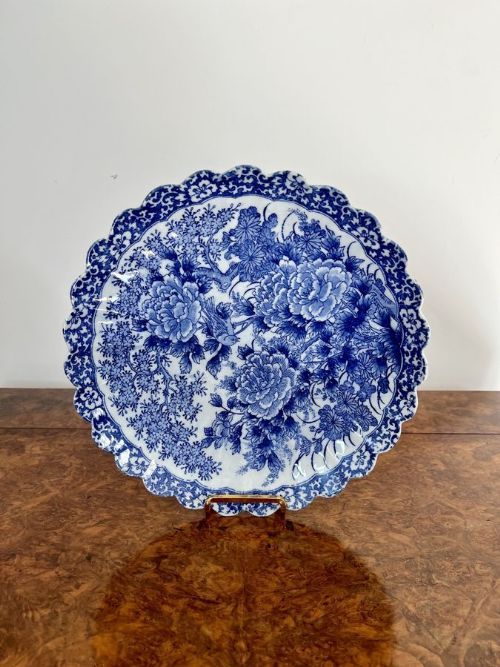


Imari Style Plates
Imari style plates bring together vibrant palettes of iron red, underglaze blue and gilt across Japanese and English ceramics.
Imari Style Plates
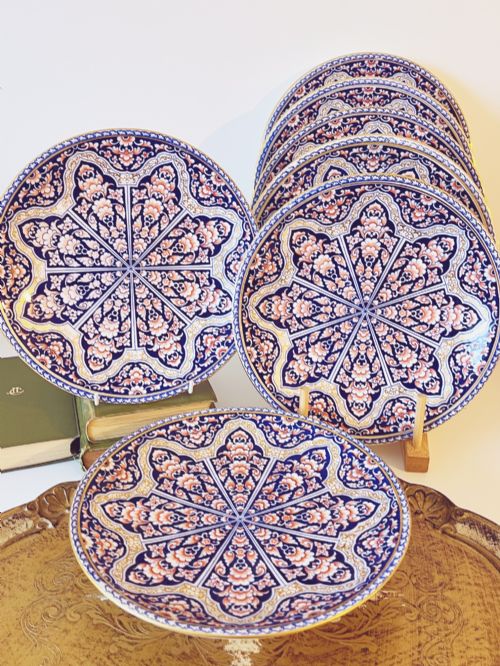
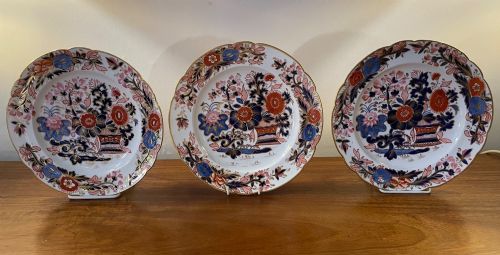
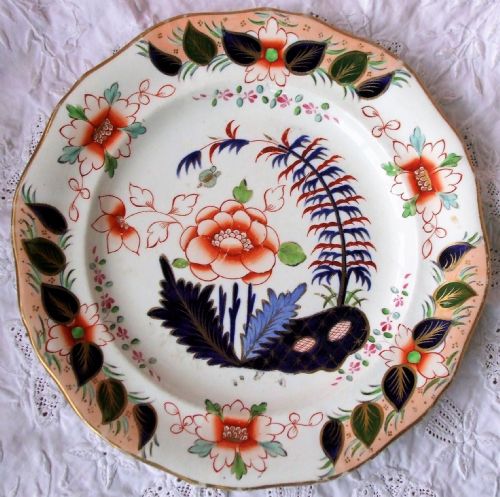
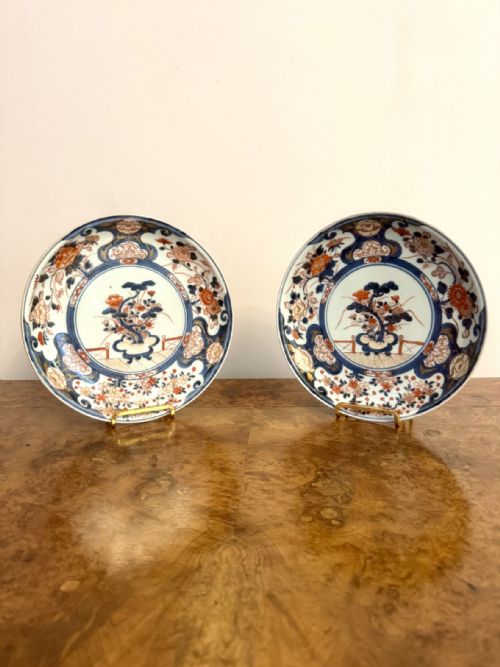
When you search for imari style plates, you encounter pieces that bridge Eastern and Western ceramic traditions from the eighteenth century onwards. The selection on this page relies heavily on Japanese Arita porcelain chargers alongside English ironstone and earthenware adaptations.
You meet forms ranging from standard dining plates and scalloped dessert dishes to large decorative chargers and multi-piece services. Japanese examples dominate the listings from the late nineteenth century, while English interpretations from Staffordshire factories appear frequently in Georgian and Victorian periods.
Materials and technique
Potters built these wares using porcelain, ironstone, and earthenware bodies shaped on wheels or pressed into moulds. Artisans applied cobalt blue under the glaze before firing, then added iron red enamel and gold leaf details over the glaze in subsequent low-temperature firings.
English factories such as Mason's and Royal Crown Derby adapted these techniques to durable ironstone and bone china bodies. Japanese workshops utilised traditional hand-painting methods on porcelain to create dense floral and geometric panels.
Listings feature porcelain, ironstone, and earthenware bodies decorated with enamel, glaze, and gold leaf across the Georgian and Victorian periods.
Assessing quality
Quality rests on the precision of the hand-painted brushwork and the crispness of the underglaze blue registration. Superior pieces display finely detailed compartmentalised motifs without bleeding of the iron red enamel or rubbing to the gilt highlights.
The weight and potting of the ceramic body also determine standard, with well-balanced edges and clean foot rims indicating skilled manufacture. English ironstone versions depend on the clarity of the transfer-printed and hand-coloured patterns, whereas Japanese chargers rely on pictorial depth.
Royal Crown Derby·John Davenport of Longport·Flight, Barr and Barr·John Ridgway·Chamberlain Worcester·Mintons
The Imari Style Plates Glossary
- Charger
- A large decorative plate or platter typically displayed on a wall or dresser rather than used for dining. These substantial pieces showcase complex Imari designs across a broad surface.
- Ironstone
- A type of durable earthenware patented in the nineteenth century by English potteries to imitate porcelain. It provides a heavy, resilient body suitable for dense enamelling.
- Kakiemon
- A style of Japanese ceramic decoration featuring asymmetric motifs, birds, and flowers in a restrained palette. Old Derby factories frequently copied this aesthetic alongside standard Imari patterns.
- Comport
- A raised dish or bowl used traditionally for serving fruit or dessert as part of a formal service. They stand on a central pedestal above the level of standard plates.
Imari Style Plates: Frequently Asked Questions
How do I date an imari plate?
Dating relies on identifying factory marks stamped or painted on the reverse, alongside ceramic bodies and stylistic shifts. Eighteenth-century examples differ markedly in potting weight and palette from late Victorian or 1900 productions.
English pieces often carry registration diamonds or specific maker ciphers that narrow down the decade. Japanese export pieces from around 1900 generally display brighter gilt and more standardised enamel work than their earlier counterparts.
Can I use these plates for dining?
Most antique imari style plates withstand careful hand washing, but antique ironstone and porcelain require gentle handling to preserve overglaze enamel and gold leaf. Chargers and large platters serve better as decorative display items.
Frequent use in dishwashers will damage the delicate iron red enamel and wear away the gilding over time. Reserve older or finer pieces for special occasions or wall display.
What is the difference between Japanese and English imari?
Japanese imari originates from the Arita kilns, utilising true porcelain bodies and hand-painted motifs developed in the Edo period. English imari represents a domestic interpretation produced by factories like Derby and Mason's.
English makers adapted the aesthetic onto ironstone or bone china to suit European dining habits of the Georgian and Victorian eras. The resulting patterns often blend traditional Japanese panels with Western floral borders.
How should I display a large charger?
Large chargers need sturdy plate hangers or dedicated display stands that support the entire rim weight. Avoid hanging heavy porcelain or ironstone pieces by wire alone.
Positioning them away from direct sunlight protects the overglaze enamels from fading over the years. Wall grouping works best when mixing different plate sizes and border shapes.