





Vintage Ironstone Tableware
Vintage ironstone tableware combines sturdy utility with striking decoration, offering practical dining pieces that anchor a traditional table setting.
Vintage Ironstone Tableware
When you search for vintage ironstone tableware, you encounter robust ceramic services designed for everyday dining and grand serving alike. The selections span the Georgian, Regency and Victorian periods, reflecting durable production methods developed to withstand heavy use.
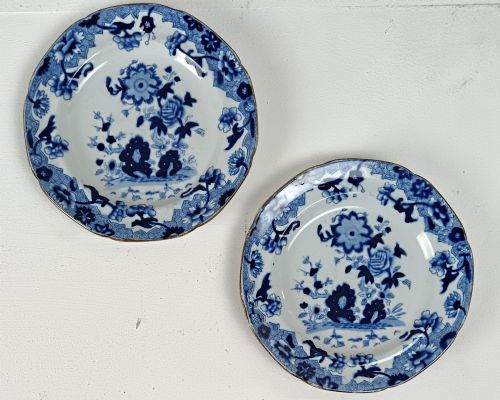
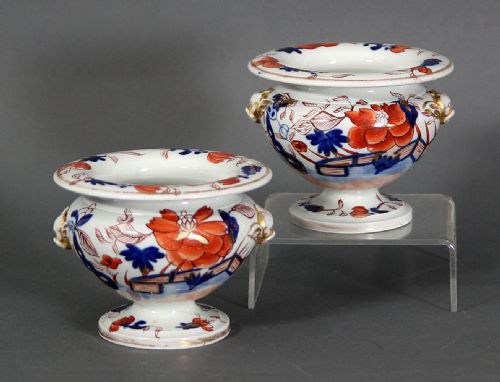
You are most likely to meet nineteenth-century examples on this page, including large meat dishes, dinner services, sauce tureens with ladles and dessert plates. These pieces often feature transfer-printed patterns or Imari palettes that bring colour to the tabletop.
The forms range from individual tea plates to fifty-nine piece dinner services and specialist items like a Royal Navy officers mess bowl. Such variety allows collectors to assemble matched settings or acquire striking single serving vessels.
How they were made
Potters produced these wares using heavy earthenware bodies glazed to create a tough, opaque surface resembling porcelain. This dense ceramic material was engineered to resist chipping far better than standard earthenware.
Decoration relied heavily on blue and white transfer printing, alongside hand-applied enamel colours and touches of gold leaf or gilding. Patterns such as the Japan basket design or transfer-printed scenes were fused to the ceramic through high-temperature firing.
Vintage Ironstone Tableware Retail Price Guide 2026
Typical asking prices for vintage ironstone tableware among the pieces listed under this phrase on Sellingantiques today, from the lower quarter to the upper quarter. They describe what is for sale here now, not the wider market.
The available selection includes pieces spanning the Georgian, Regency, and Victorian periods, alongside specific items from the year 1800.
What varies in quality
Quality in these ceramics rests on the crispness of the transfer print and the precision of the hand-painted enamels. Finer examples display sharp, detailed lines without blurring or smudging in the blue and white decoration.
The complexity of the form and the richness of the palette distinguish standard utility items from more ambitious service pieces. Rich gilding and vibrant Imari colours indicate a higher grade of production intended for formal dining.
Spode·Masons
The Vintage Ironstone Tableware Glossary
- Ironstone
- A heavy, durable ceramic patented to create a strong alternative to porcelain. It forms the dense body of these plates, tureens and bowls.
- Transfer Print
- A decoration technique where an engraved copper plate transfers a design onto paper and then onto the ceramic body. This method allowed for intricate, repeatable patterns in blue and white.
- Imari
- A decorative style borrowing from Japanese export porcelain, featuring rich iron-red, cobalt blue and gold leaf highlights. It appears on nineteenth-century plates and dessert services.
- Tureen
- A deep covered vessel used for serving soups, sauces or gravies. Many surviving examples include matching ladles and undertrays.
- Gilding
- The application of gold leaf or gold paint to highlight rims, handles and decorative motifs. It adds a formal finish to nineteenth-century services.
Vintage Ironstone Tableware: Frequently Asked Questions
What is ironstone tableware?
Ironstone is a dense, durable ceramic developed in the nineteenth century to provide a sturdy alternative to delicate porcelain. It was widely used for heavy-duty domestic and institutional dining.
Items range from large meat dishes and dinner services to sauce tureens and tea plates, all built for practical use while retaining decorative appeal.
How do I use ironstone pieces today?
These pieces function well in modern dining settings for serving main courses, side dishes and sauces. Their robust nature suits everyday use as well as special occasions.
Large platters and tureens also serve as decorative centerpieces on sideboards or open shelving when not in active use on the table.
How do I date nineteenth-century ironstone?
Dating relies on maker marks stamped into the ceramic base, stylistic clues such as Regency or Victorian motifs, and the specific palette used in the decoration. Transfer-printed patterns and Imari styles often align with distinct production decades.
Comparing the weight, glaze texture and form against documented examples helps narrow down the period of manufacture.
What patterns are common on these pieces?
Blue and white transfer-printed designs are especially prevalent, often featuring pastoral or architectural scenes. You will also encounter the Japan basket pattern and rich Imari colourways.
These motifs draw on eighteenth and nineteenth-century aesthetic traditions, combining cobalt blue with iron-red and gold leaf.