



Antique Ceramic Dinnerware
These antique ceramic dinnerware sets bring centuries of dining history to your table through durable ironstone, refined porcelain and creamware.
Antique Ceramic Dinnerware
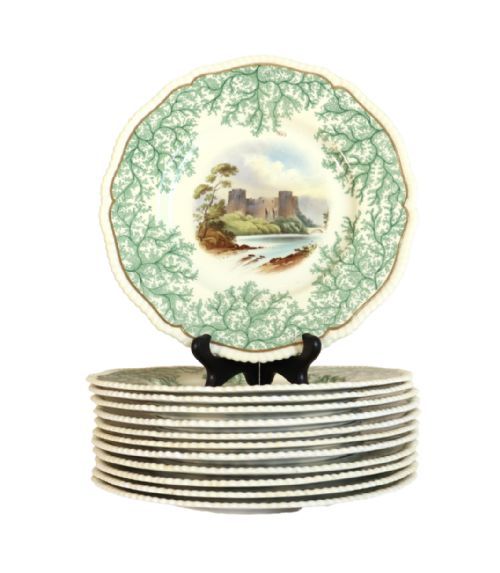
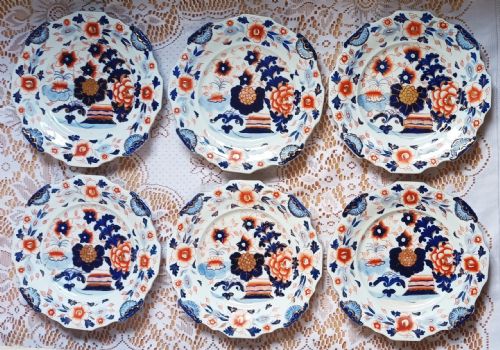
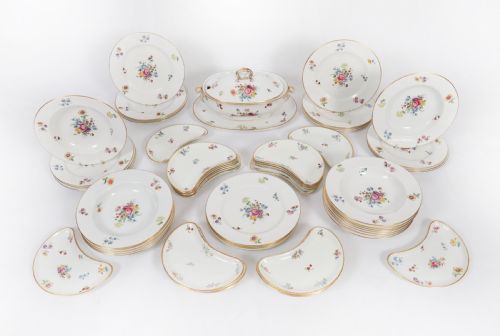
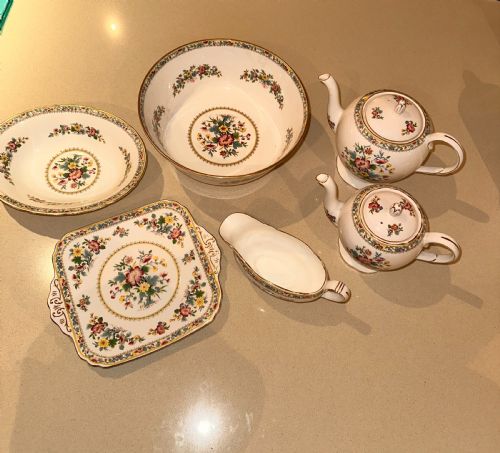
When you search for antique ceramic dinnerware, you encounter an array of serving pieces, cabinet plates and complete dinner services spanning the eighteenth, nineteenth and early twentieth centuries. The selection ranges from robust ironstone plates intended for everyday dining to delicate porcelain soup tureens and botanical dessert plates created for formal display. Pieces emerge from notable English factories alongside continental makers, offering forms that vary from large multi-piece services to children's toy sets.
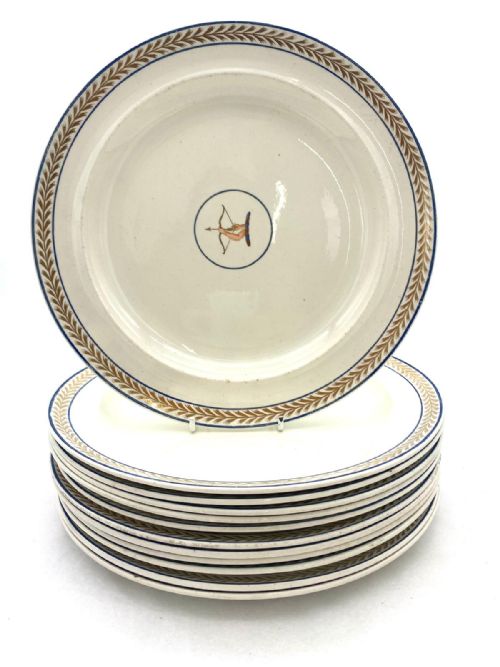
The services you meet on this page typically feature transfer-printed or hand-painted decoration reflecting Georgian, Regency and Victorian styles. Common motifs span classical armorial designs, traditional blue and white patterns like Willow and Italian, and naturalistic botanical studies. Whether you require a single set of six dinner plates or an extensive fifty-piece service, the inventory represents traditional table service from distinct historical periods.
Materials and methods of manufacture
Potters produced these items using foundational ceramic bodies such as creamware, ironstone and porcelain, shaped either on the potter's wheel or pressed in moulds. Ironstone provided a heavy, utilitarian body resistant to chipping, while porcelain offered a translucent, finer canvas for painted scenes. Creamware supplied a warm, pale yellow or cream-coloured base favoured for transfer printing.
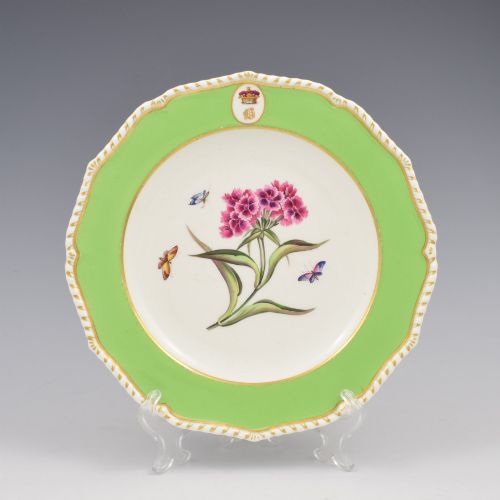
Decoration relied on underglaze blue and white transfer printing, hand-painted polychrome enamel work, and applied gold leaf or gilt detailing. Botanical and landscape scenes required skilled brushwork, often executed by specialist decorators working within established factories. Glazing sealed the ceramic body, providing a smooth, protective finish that preserved the painted or printed motifs over generations of use.
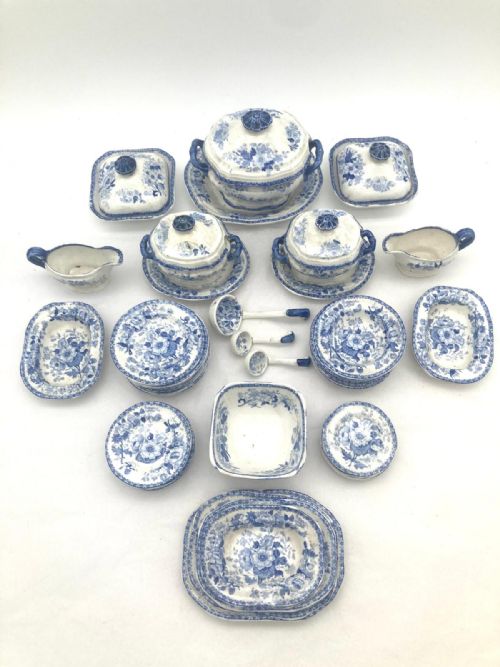
Several makers produced miniature dinner sets complete with tiny tureens, proving that Victorian children dined with extreme formality.
Distinctions in quality
Quality across antique ceramic dinnerware rests upon the crispness of the transfer print, the precision of the hand-painted enamels, and the translucency of the porcelain body. Superior pieces exhibit clean glaze application without pooling or pitting, alongside well-defined patterns that align correctly across the surface of the plate or tureen. Armorial crests and botanical studies executed by named or highly skilled decorators elevate a service above standard commercial output.
The preservation of gilt highlights and the integrity of the ceramic body also determine value and standing. Complete services matching their original factory tallies command greater interest than assembled groups or single replacement plates. Finer bodies show thinner, more refined walls while retaining the structural strength required for historical table service.
Spode·Wedgwood·Minton·Royal Worcester
The Antique Ceramic Dinnerware Glossary
- Creamware
- A fine-grained, light-coloured earthenware perfected by English potters during the eighteenth century. Its warm tone provided an ideal background for transfer-printed decoration.
- Ironstone
- A heavy, durable type of earthenware patented in the nineteenth century. It combined feldspar, china clay and flint to create a sturdy alternative to porcelain.
- Transfer printing
- A method of applying intricate designs to ceramics by engraving a copper plate, inking it, and transferring the impression onto paper then onto the biscuit ceramic before glazing.
- Armorial
- A term describing ceramics decorated with a family crest, coat of arms or heraldic insignia. These bespoke commissions were typically ordered by wealthy landed families.
- Pate sur pate
- A labour-intensive ceramic decoration technique where successive layers of liquid white porcelain slip are painted onto a coloured clay body to create a low relief cameo effect.
Antique Ceramic Dinnerware: Frequently Asked Questions
Can I use antique dinnerware every day?
While ironstone pieces were made for robust daily use, historical ceramics often feature delicate glazes and worn gilt that benefit from gentle handling.
Hand washing is recommended over modern dishwashers to preserve the original transfer printing and enamel colours.
How do I date a dinner service?
Dating relies on factory backstamps, ceramic body composition, and stylistic markers such as Regency neoclassical borders or Victorian transfer patterns.
Reference marks stamped or painted on the underside often correspond to specific operating dates of the pottery.
What is the difference between creamware and ironstone?
Creamware is a lighter, refined earthenware developed in the eighteenth century with a warm, pale body suited to detailed transfer printing.
Ironstone is a denser, heavier ceramic introduced later to withstand the rigours of everyday Victorian dining.
Are child's services rare?
Child's toy dinner services were produced in smaller quantities for educational and play purposes during the nineteenth century.
Their survival rate is lower due to the fragile nature of youth-oriented use, making complete miniature sets notable finds.