


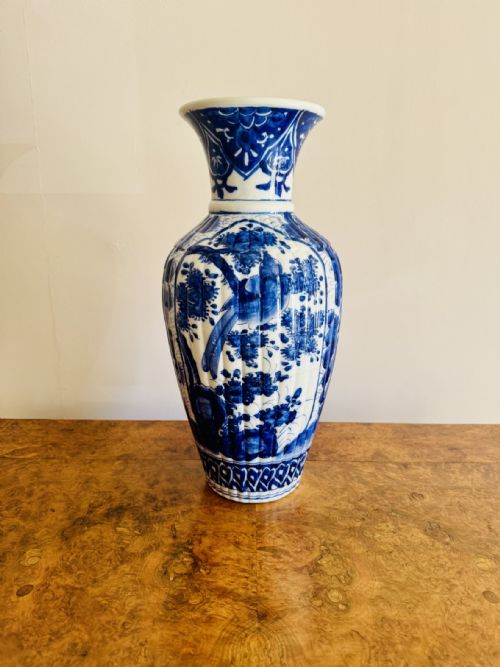
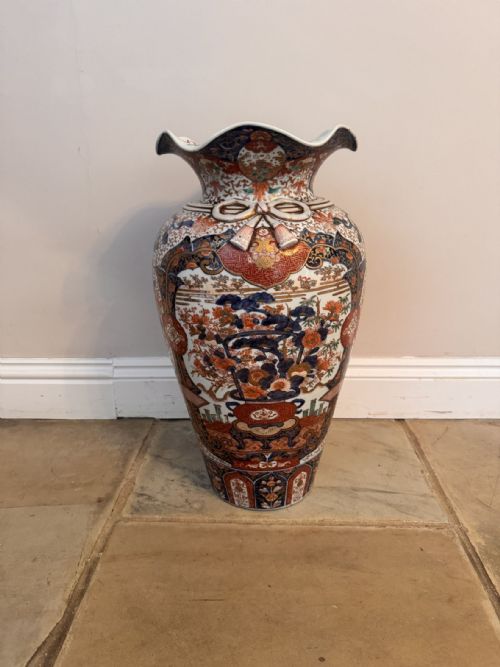
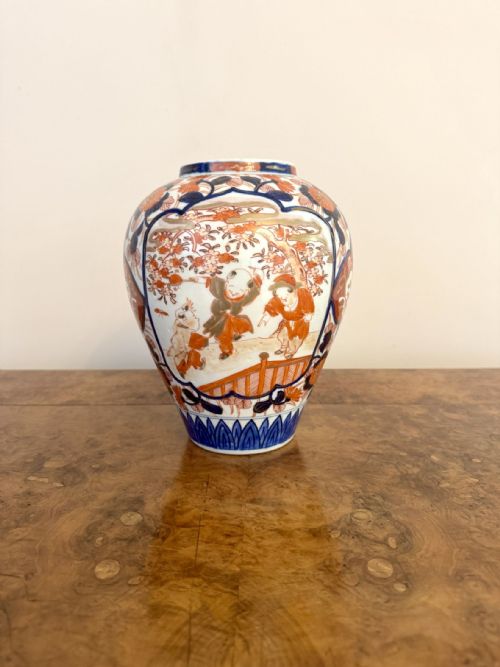
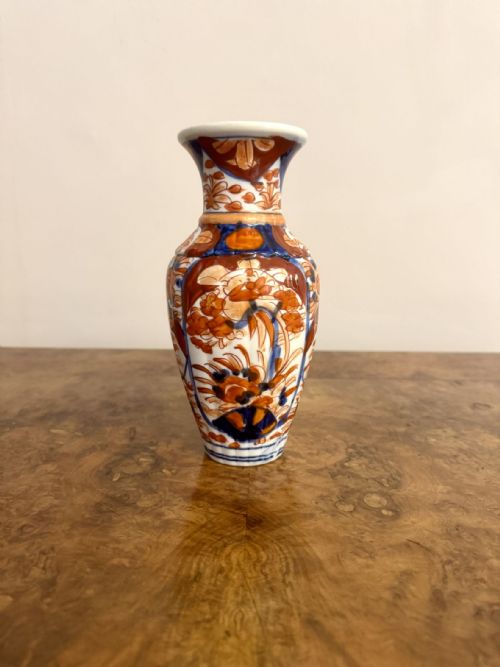


Imari Porcelain Vessel Urn
An imari porcelain vessel urn brings striking cobalt blue and iron red decoration into a room, caught between Japanese Meiji export wares and Edwardian British interpretations.
Imari Porcelain Vessel Urn
An imari porcelain vessel urn is defined by rich surface patterns, taking the form of floor-standing vases, covered ginger jars, and incense burners known as koros. The examples seen here span from the 1860s through the Edwardian era, showing both Japanese Meiji export pieces and European adaptations.
Vessels range from modest bud vases and small collections to large floor-standing floor vases and jardinieres. Most items originate from the nineteenth century, capturing the intense Western appetite for Eastern decorative arts during the Victorian and Edwardian periods.
How they were made
These items are constructed from white porcelain shaped into vases, jars, and koro covers, then finished with high-temperature glazes. Decoration relies on cobalt blue underglaze combined with iron red enamel overglaze.
Gilding, gold leaf, and gold gilding are frequently applied over the glaze to catch the light. Certain pieces incorporate gilt bronze mounts or ribbed and moulded body forms to add structural weight.
Imari Porcelain Vessel Urn Retail Price Guide 2026
Typical asking prices for imari porcelain vessel urn among the pieces listed under this phrase on Sellingantiques today, from the lower quarter to the upper quarter. They describe what is for sale here now, not the wider market.
Materials recorded across the inventory include porcelain, enamel, gold leaf, and gilt bronze mounts.
What varies in quality
Quality rests in the precision of the hand-painted enamel work and the crispness of the porcelain moulding. Superior pieces display complex panel layouts and sharply defined motifs without blurring in the cobalt underglaze.
The application of gold leaf and gilding dictates the visual richness of the object. Heavier throwing weights, well-fitted covers, and substantial scale elevate larger decorative jars and floor-standing pieces.
Royal Crown Derby·Fukagawa·Samson
The Imari Porcelain Vessel Urn Glossary
- Imari
- A style of Japanese porcelain originating from the port of Arita, characterised by a palette of cobalt blue, iron red, and gold. European factories frequently copied these distinct patterns during the nineteenth and early twentieth centuries.
- Meiji Period
- The era of Japanese history lasting from 1868 to 1912, marked by extensive export of decorative arts to Western markets. Pieces from this time often exhibit high technical proficiency in enamel painting.
- Koro
- A traditional Japanese incense burner fitted with a pierced cover. These ceramic vessels are designed to release fragrance while displaying intricate decorative schemes.
- Jardinier
- A large ornamental pot or vessel intended to hold plants or flowers. In this category, they feature characteristic Imari patterns rendered on porcelain bodies.
- Japonisme
- A nineteenth-century Western movement reflecting the strong influence of Japanese art on European design. This aesthetic appears in both imported wares and domestic European interpretations.
Imari Porcelain Vessel Urn: Frequently Asked Questions
How do I spot a Japanese export piece?
Japanese export pieces from the Meiji period typically display dense, hand-painted floral and geometric motifs using a palette of cobalt blue and iron red. The porcelain body often feels slightly heavier and denser than European earthenware.
Look closely at the base for unglazed clay rings or handwritten painter marks, which are common characteristics of nineteenth-century export kilns from the Arita region.
What is the difference between an urn and a ginger jar?
A ginger jar is a covered storage vessel with a rounded shoulder and a short neck, originally used for spices and preserved oils. An urn generally stands on a distinct foot or pedestal and serves a purely decorative function.
In nineteenth-century Imari wares, these terms sometimes overlap as European buyers adapted Asian storage forms for ornamental display on mantelpieces and side tables.
Where should I display an Imari floor vase?
Large floor-standing vases require a stable surface away from heavy foot traffic to prevent accidental knocks. Placing them in a hallway corner or beside a fireplace allows the rich gold leaf and cobalt decoration to catch natural light.
Ensure the vessel sits on a level wooden floor or a sturdy rug, as nineteenth-century ceramic bodies can be heavy and unforgiving if tilted.
How do I date an Edwardian Imari piece?
Edwardian interpretations often display British factory marks alongside patterns that imitate Japanese export designs. The porcelain bodies from this period tend to be whiter and more uniformly moulded than earlier Meiji examples.
Compare the gilding technique, as British makers like Royal Crown Derby used distinct transfer-printing and hand-gilding combinations that differ from traditional Japanese kiln methods.