






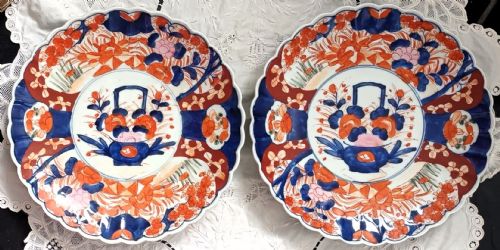
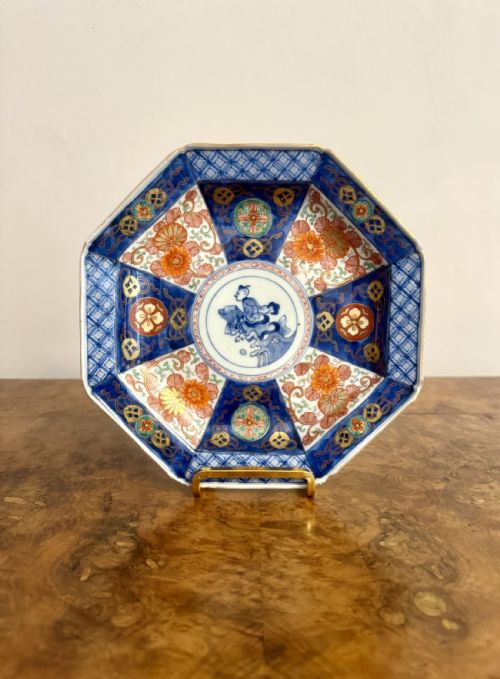
Imari Porcelain Display Plate
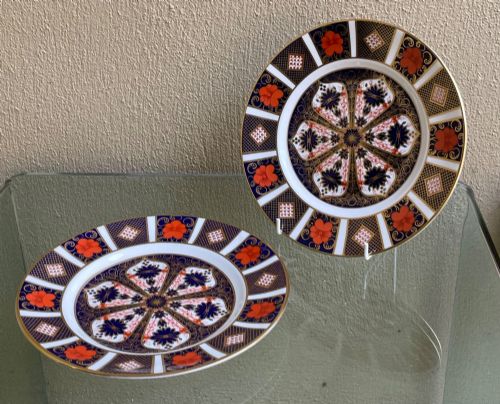
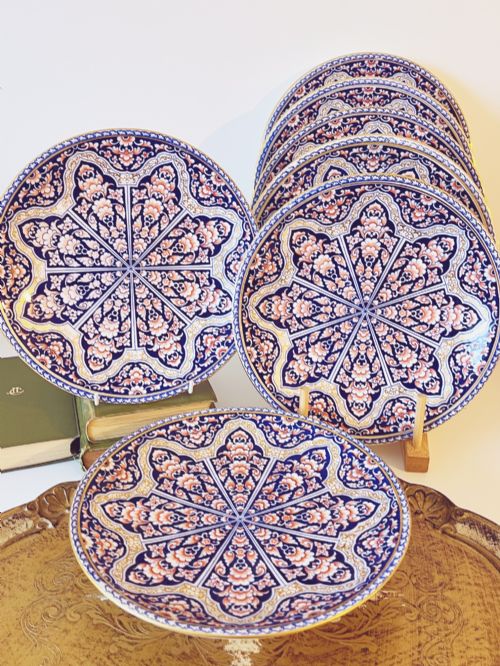
An imari porcelain display plate brings rich iron-red, cobalt blue and gilt palettes straight to a wall or cabinet.
Imari Porcelain Display Plate
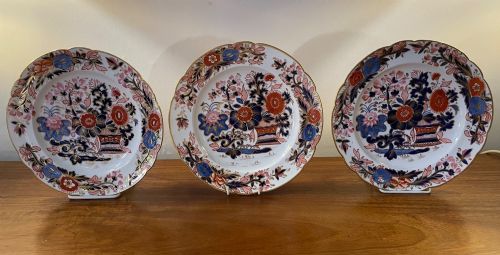
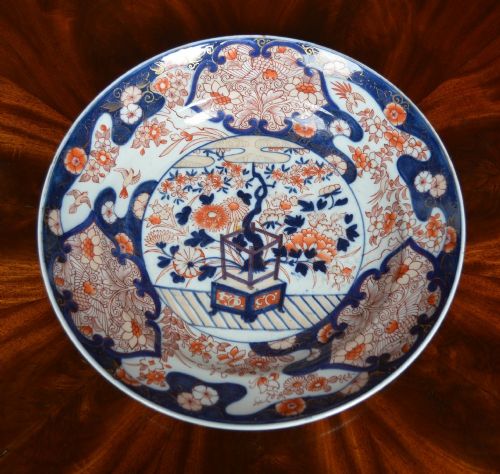
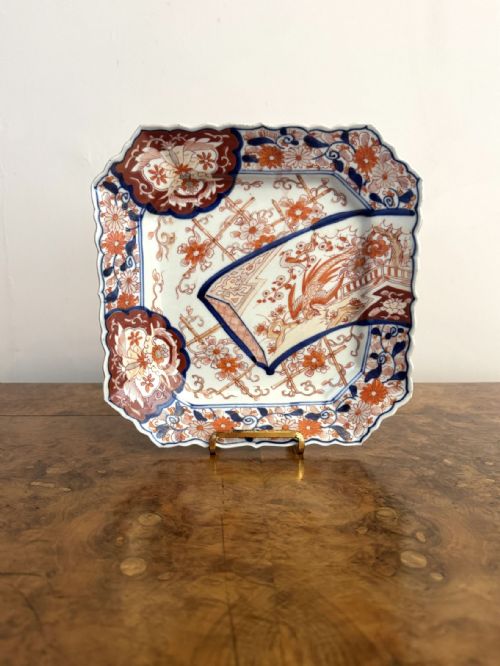
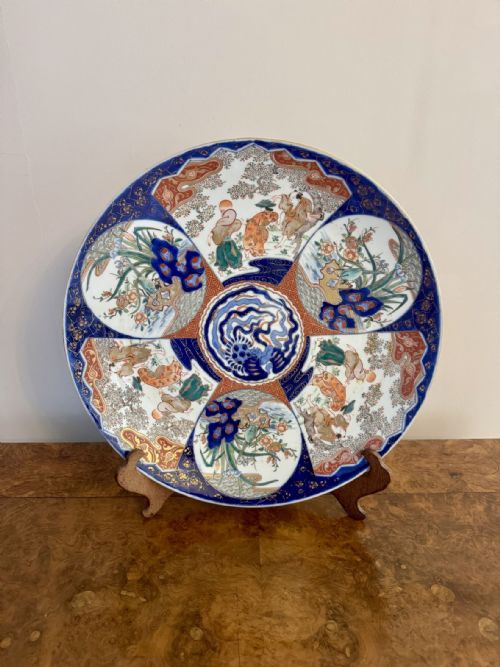
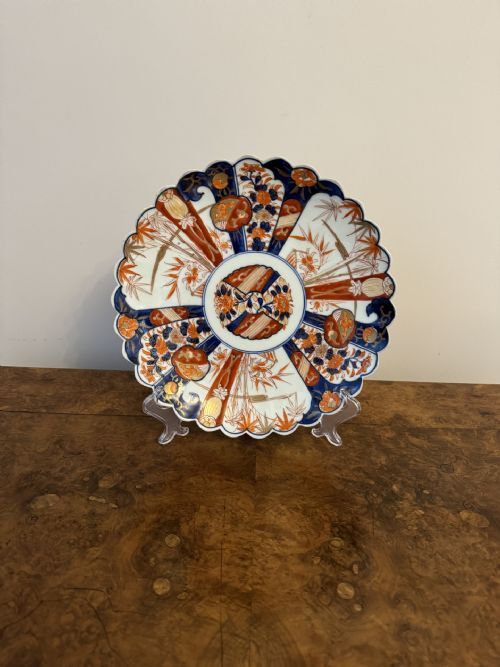
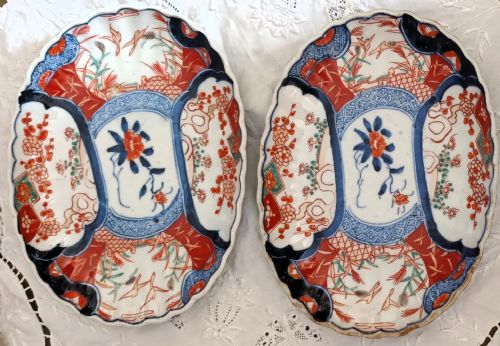
An imari porcelain display plate encompasses decorative chargers, wall plates and dessert services created in distinct regional traditions. Buyers searching for an imari porcelain display plate most frequently encounter Japanese Meiji period examples, alongside 18th century Chinese export pieces and English adaptations.
The forms range from large circular chargers and square or hexagonal plates to scalloped edge dishes. These pieces were made for ornament or service, carrying intricate floral, bird and figural motifs executed in bold palettes.
How they were made
Potters shaped ceramic and porcelain bodies, applying underglaze cobalt blue before firing. Enamel colours and gold leaf were then added in subsequent firings to build up the characteristic layered palette.
Makers utilised bone china, ironstone and porcelain to form the base bodies. Gilding and enamel decoration completed the surface, creating the durable yet decorative finish seen on these plates.
Certain plates depict the Seven Lucky Gods sharing space with exotic birds, proving that mythical deities and local fauna make excellent dinner companions.
What varies in quality
The crispness of the hand-painted brushwork and the precision of the cobalt blue underglaze separate standard items from finer works. Richness in the application of gold leaf and enamel also distinguishes superior pieces.
Unusual geometric forms, such as square, hexagonal or deeply scalloped edges, elevate certain plates above standard circular shapes. The depth and clarity of the palette define the upper tier of the range.
Royal Crown Derby·Flight Barr And Barr
The Imari Porcelain Display Plate Glossary
- Imari palette
- A decorative scheme dominated by underglaze cobalt blue, iron-red enamel and supplementary gilding. This combination originated in Japan and was later copied in China and Europe.
- Charger
- A large decorative plate intended for display on a wall or sideboard rather than for practical dining use. These items measure larger than standard tableware.
- Meiji period
- The era of Japanese history spanning from 1868 to 1912, associated with prolific porcelain production for export. Many items on the market date from this time.
- Comport
- A raised dish or bowl used traditionally as the centrepiece of a dessert service. They appear alongside matching plates in larger dining sets.
Imari Porcelain Display Plate: Frequently Asked Questions
Can I hang an imari porcelain display plate on the wall?
Many larger chargers and plates were made specifically for display, featuring sturdy construction suited to hanging with proper hardware.
Ensure that any wire hanger used is correctly sized to support the weight of the ceramic without putting stress on the rim.
How do I clean antique imari plates?
Dusting with a dry, soft cloth is usually sufficient for pieces kept on display in cabinets or on walls.
Avoid soaking or using harsh detergents, as older enamels and gold leaf can be delicate.
What is the difference between Japanese and English imari?
Japanese originals typically feature traditional Arita styling, iron-red enamels and deep cobalt blues on porcelain bodies. English makers such as Royal Crown Derby adapted these vibrant palettes onto bone china and ironstone during the 19th century.
Both traditions share the characteristic colour scheme but differ in paste composition and decorative nuances.
Were these plates used for dining?
Some plates formed part of larger dessert services intended for serving sweet courses at the table. Other larger examples were designated purely as decorative chargers from creation.
Examine the back for foot rims drilled for hanging or check the overall diameter to determine its original purpose.