
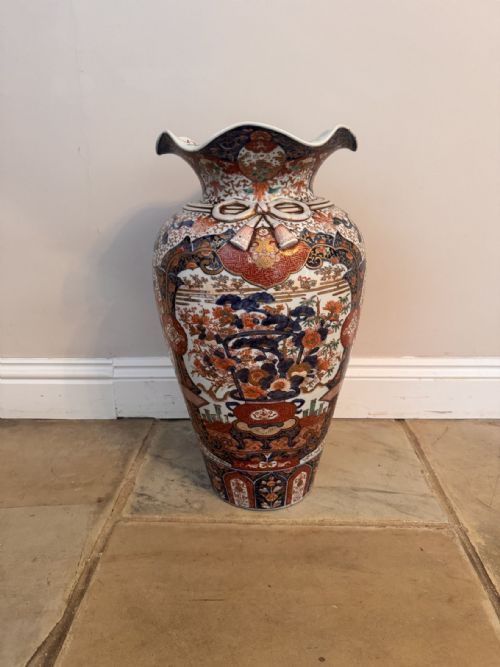
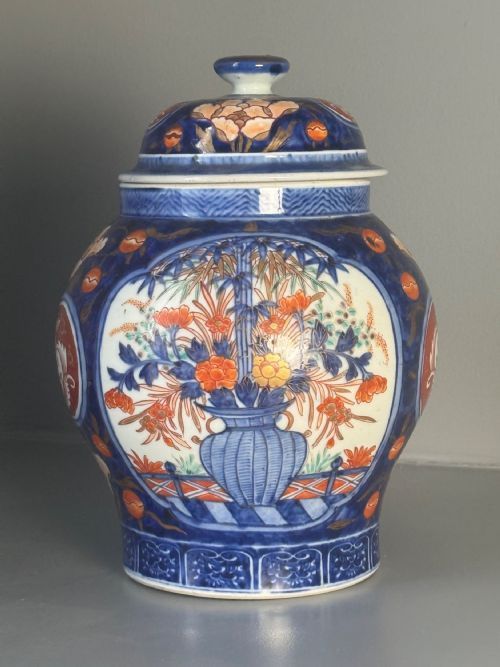
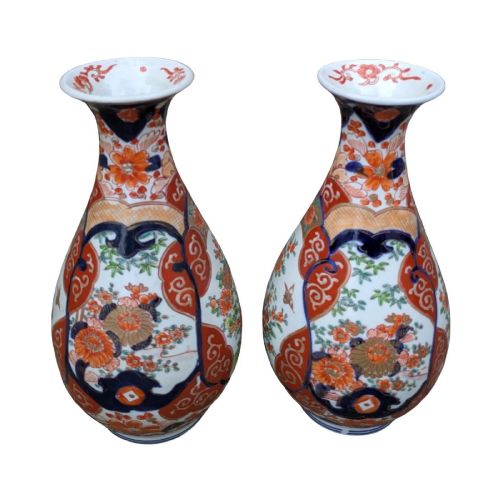


Imari Porcelain Baluster Vase
These imari porcelain baluster vases bring rich cobalt and iron red palettes into a room, offering centuries of ceramic tradition.
Imari Porcelain Baluster Vase
An imari porcelain baluster vase is a curvaceous ceramic vessel typically featuring a wide body that tapers toward the base and neck. When you search for this phrase, you encounter pieces spanning from the seventeenth century through the Edwardian era, with nineteenth-century Meiji period examples appearing frequently.
The selection includes single vessels, matched pairs, garnitures of three, and pieces mounted as table lamps. Forms range from standard baluster profiles to octagonal, hexagonal, and lidded jars designed for display in reception rooms.
How they were made
Potters shaped the ceramic body on a wheel or in a mould to achieve the characteristic swelling baluster silhouette, applying a clear glaze over the fired clay. Artisans then hand-painted the intricate designs directly onto the surface.
The characteristic colour scheme relies on cobalt enamel applied under the glaze alongside iron red enamel and gold leaf applied over the glaze in subsequent firings. Some examples incorporate ormolu mounts added in later workshops to elevate the status of the vessel.
Some vases arrived with lids that clearly spent centuries on entirely different pots, proving that ceramic matchmaking is an ancient art.
What varies in quality
The distinction between standard production and top-tier pieces rests on the precision of the hand-painted detailing and the richness of the enamel palette. Superior examples demonstrate crisp cobalt lines and lavish application of gold leaf that remain vibrant across the curved surface.
Scale and form also dictate distinction, with monumental floor-standing pieces, heavy lidded garnitures, and octagonal or hexagonal profiles requiring greater technical skill from the potter than smaller standard vessels.
The Imari Porcelain Baluster Vase Glossary
- Baluster
- A vertical architectural form with a swelling lower body that tapers upward, which defines the curved silhouette of these vases.
- Cobalt Enamel
- A deep blue mineral pigment applied under the glaze to create the foundational dark motifs of the design.
- Iron Red Enamel
- A rust-red pigment applied over the glaze to provide the contrasting warm tones characteristic of the palette.
- Garniture
- A set of three or more matched vases or jars designed to be displayed together on a mantelpiece or cabinet.
- Meiji Period
- The Japanese historical era spanning from 1868 to 1912, associated with many of the nineteenth-century export pieces.
Imari Porcelain Baluster Vase: Frequently Asked Questions
How do I date an imari porcelain baluster vase?
Dating relies on stylistic clues, potting techniques, and historical context recorded in the piece. Seventeenth-century examples often display the looser brushwork of the Edo period, while nineteenth-century Meiji pieces show denser, highly refined patterns.
Changes in the intensity of the iron red and the application of gold leaf also help distinguish earlier wares from later Edwardian or European interpretations.
Were these vases made for export?
Many of these vessels originated in the kilns of Arita specifically for trade with European markets. The distinctive palette catered to Western tastes for ornate, colourful oriental ceramics during the Edo and Meiji periods.
European potteries subsequently produced their own imari style pieces to meet the continuous demand for this aesthetic.
Can I use an imari vase as a lamp?
Several pieces are adapted or originally formed as table lamps while retaining their classic baluster shape. Converting a decorative vase involves wiring through the ceramic body, a common practice for modern interior display.
Such pieces combine historical ceramic artistry with functional lighting for side tables or desks.
What is a lidded imari vase?
A lidded imari vase includes a fitted ceramic cover that completes the symmetrical profile of the vessel. These covered jars were often produced as part of matching sets or garnitures for prominent display.
The matching lid preserves the interior and maintains an unbroken decorative surface across the piece.