
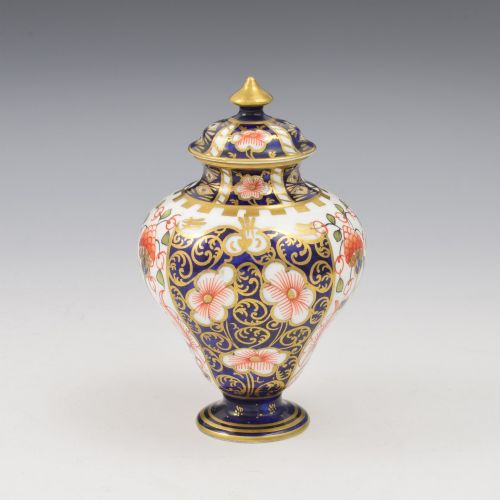
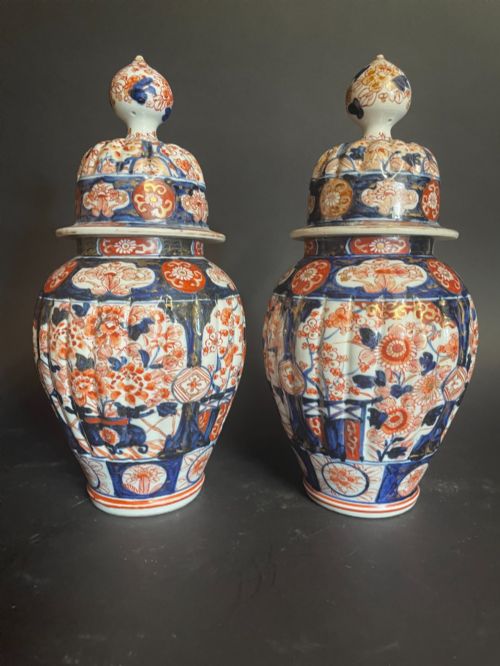
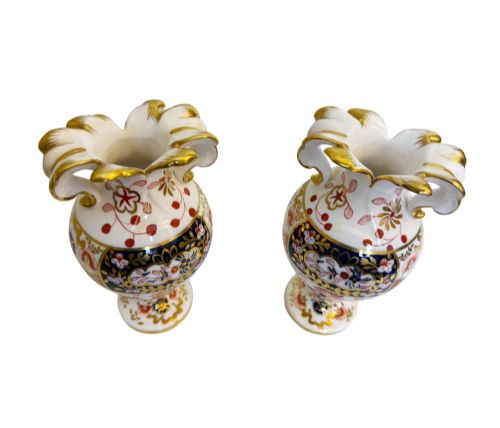
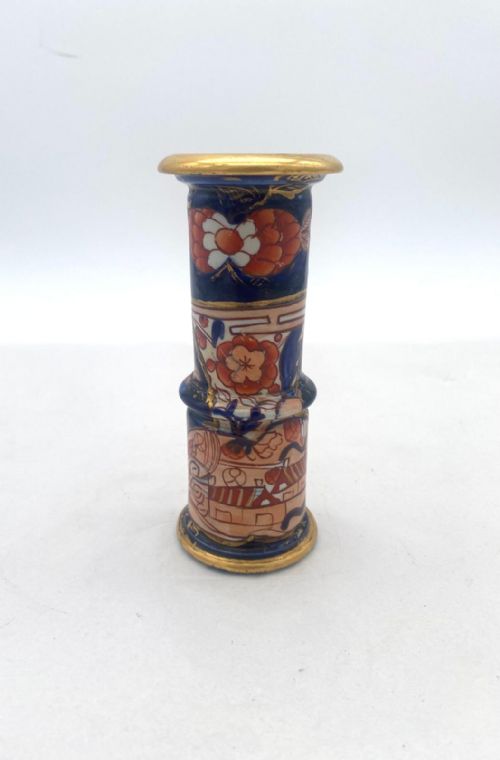
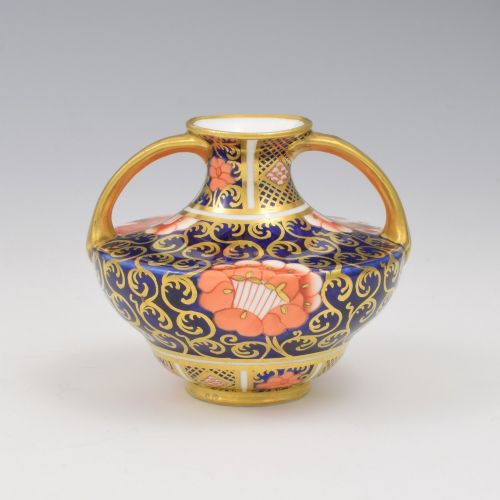
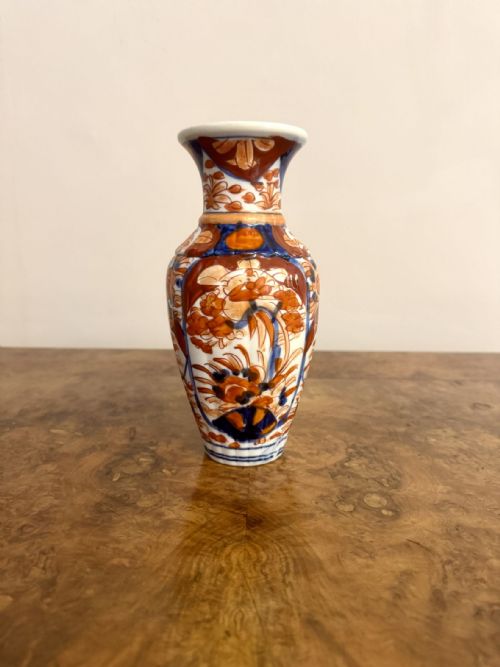
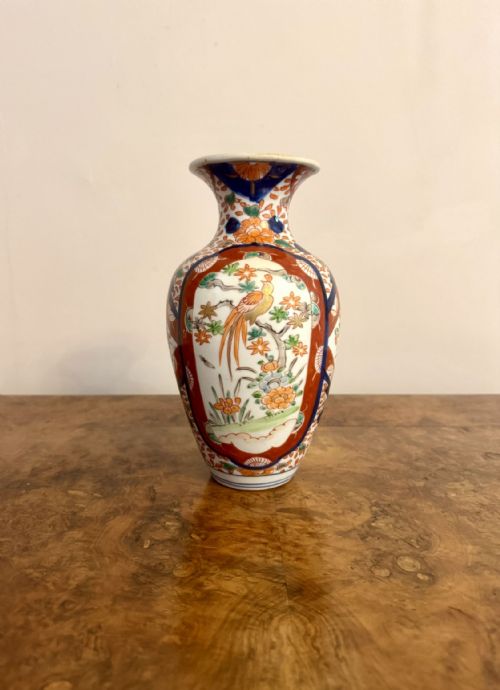


Imari Pattern Vase
When you handle an imari pattern vase, you hold centuries of a distinct palette that bridges English earthenware and Japanese porcelain traditions.
Imari Pattern Vase
An imari pattern vase spans robust Japanese exports from the Edo and Meiji periods alongside English interpretations produced by factories such as Spode, Masons, and Royal Crown Derby. You will frequently encounter nineteenth-century Japanese porcelain alongside Edwardian miniature vessels and Georgian ironstone wares.
The forms range from lidded baluster jars and octagonal shapes to spill vases, twin-handled urns, and large garnitures designed for mantelpieces. These vessels serve both as decorative centrepieces and, in some instances, converted lamp bases.
How they were made
Potters shaped porcelain, bone china, and ironstone on the wheel or pressed them into moulds to create baluster, hexagonal, and octagonal bodies. Artisans applied cobalt blue underglaze before a high-temperature firing fixed the base pigment.
Overglaze decoration followed, incorporating iron red, enamel colours, and gold leaf or gold gilding. A secondary, lower-temperature firing then bonded these metallic and enamel pigments to the glaze.
The inventory bridges Japanese Meiji and Edo periods with nineteenth-century English Regency and Victorian eras.
What varies in quality
Quality rests in the precision of the brushwork and the vibrancy of the iron red and cobalt blue pigments against the white ceramic ground. Crisp definition in the hand-painted motifs separates masterwork export pieces and premier English manufactories from simpler commercial output.
The richness and preservation of the applied gold leaf or gilding dictates the upper tier of the range. Heavier, well-balanced forms with intact, matching covers command greater regard than altered or mismatched vessels.
Royal Crown Derby·Spode·Masons·Minton·Samson of Paris
The Imari Pattern Vase Glossary
- Imari
- A style of ceramic decoration originating from the Japanese port of Arita, characterised by a palette of underglaze blue, iron red, and gold. European factories subsequently copied and adapted this distinct aesthetic.
- Ironstone
- A dense, durable type of earthenware patented in the nineteenth century by English potters to imitate porcelain. It provides a heavy, robust body for transfer-printed and hand-painted imari designs.
- Garniture
- A set of three or more matching vases or jars designed to be displayed together on a mantelpiece or sideboard. These sets often comprise a central lidded vessel flanked by smaller matching pieces.
- Baluster
- A vase form with a rounded body that tapers toward the base and swells near the lower middle section. This classic silhouette provides a stable canvas for expansive imari panels.
- Spill vase
- A small, straight-sided cylindrical vessel designed to hold taper candles or wooden spills used for lighting fires. They appear frequently in nineteenth-century English ceramics.
Imari Pattern Vase: Frequently Asked Questions
How do I tell Japanese imari from English imari?
Japanese export pieces typically utilise a finer, lighter porcelain body with slightly sandy unglazed foot rims from early firing methods. English makers adapted the palette onto bone china or heavy ironstone, often stamping or marking their wares with pattern numbers.
Closer inspection of the blue underglaze and the tone of the iron red reveals regional nuances in the hand-painting style. English versions frequently reflect Regency or Victorian interpretations of the traditional Japanese motifs.
What periods do these vases come from?
The selection spans from the late eighteenth century through the Victorian and Edwardian eras up to the early twentieth century. Japanese examples often date from the Edo or Meiji periods, while English interpretations range from Georgian ironstone to later porcelain.
Earlier pieces generally exhibit hand-poured glazes and organic potting irregularities, whereas twentieth-century examples display greater factory standardisation. Dating relies heavily on the style of the decoration, factory marks, and ceramic body composition.
Were these vases made with matching covers?
Many larger jars and baluster vessels were produced with matching domed covers as part of a pair or garniture set. Over the centuries, lids frequently separated from their bases or suffered damage, making surviving matched pairs notably desirable.
When evaluating a lidded jar, check the interior rim of the cover and the neck of the vase for signs of professional restoration or replacement. Un-lidded spill vases and open urns, however, were designed to remain uncovered from creation.
How should I display an imari pattern vase?
These vessels demand prominent placement where natural light can catch the metallic gold leaf and rich enamel colours. Pair lidded jars on a mantelpiece or anchor a room with a large floor-standing baluster vase.
Ensure the vessel sits on a stable, level surface away from heavy foot traffic due to the historical nature of the porcelain or ironstone. Avoid direct, intense sunlight to protect the integrity of the overglaze red and gilt highlights over time.