




Orange Ceramic Ginger Jar
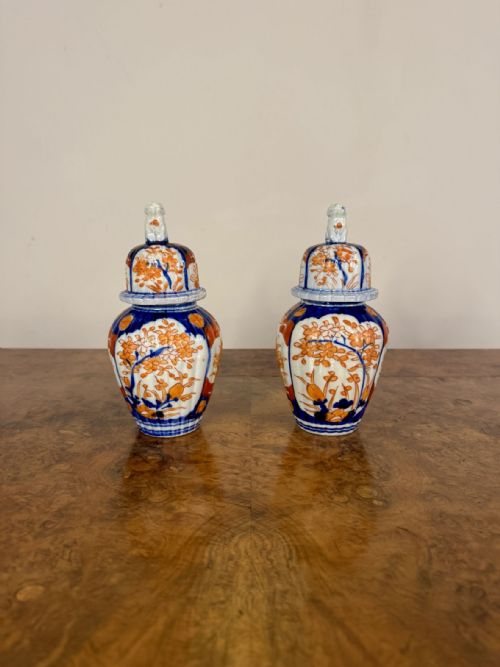
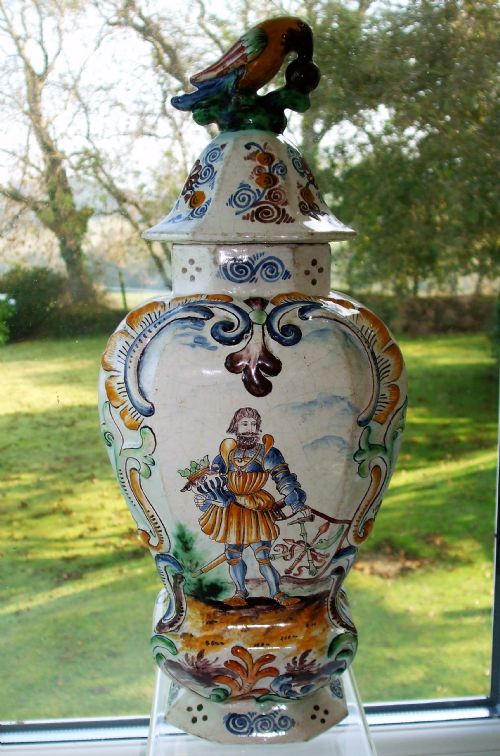
An orange ceramic ginger jar brings vibrant Japanese Imari and Dutch Delftware tradition straight into a room through bold cobalt and rust-red palettes.
Orange Ceramic Ginger Jar
When you search for an orange ceramic ginger jar, you are looking at lidded vessels spanning the eighteenth, nineteenth, and early twentieth centuries. These pieces originate primarily from Japanese kilns in Arita, alongside Dutch Delftware production and Art Deco earthenware.
The version you are most likely to meet on this page is a Japanese Imari or Kutani porcelain lidded vase decorated in iron-red enamel and cobalt blue. These forms vary from octagonal baluster shapes to large covered jars intended originally for storage but prized today for display.
The material evidence also records nineteenth-century Victorian interpretations and British Art Deco earthenware from makers such as Royal Winton. Such pieces adapt traditional Far Eastern forms into domestic European decorative objects.
How they were made
The construction relies on hard-paste porcelain, earthenware, or tin-glazed pottery shaped into baluster jars and secured with matching lids. Artisans formed these vessels by throwing clay on a wheel or moulding them into octagonal profiles before firing.
Decoration combines underglaze cobalt blue with overglaze enamel colours, frequently enriched with gold leaf details. Tin-glazed earthenware employs an opaque white glaze that takes painted pigment directly on the surface.
Orange Ceramic Ginger Jar Retail Price Guide 2026
Typical asking prices for orange ceramic ginger jar among the pieces listed under this phrase on Sellingantiques today, from the lower quarter to the upper quarter. They describe what is for sale here now, not the wider market.
Listings feature porcelain, earthenware, and tin-glazed earthenware across the eighteenth, nineteenth, and early twentieth centuries.
What varies in quality
The distinction between ordinary and exceptional examples rests upon the crispness of the hand-painted enamel and the preservation of the gold leaf. Superior pieces display precise brushwork where the iron-red orange tones remain sharp against the white porcelain ground.
Proportion and the survival of the original matching cover dictate desirability. Pieces with well-balanced baluster profiles and cleanly potted bases command greater attention than heavy or poorly aligned bodies.
The Orange Ceramic Ginger Jar Glossary
- Imari
- A style of Japanese porcelain decorated in underglaze blue, iron-red orange, and gilt. It originated in Arita and became widely exported to Europe.
- Delftware
- Tin-glazed earthenware produced in the Netherlands, typically featuring white tin enamel painted with blue or polychrome designs. It imitates imported Chinese and Japanese ceramics.
- Baluster
- A vase shape with a rounded body that tapers toward the base and swells out above. This form provides stability and generous surface area for decoration.
- Kutani
- Japanese coloured porcelain known for bold palette work often incorporating intense reds and golds. These pieces date predominantly from the nineteenth century.
Orange Ceramic Ginger Jar: Frequently Asked Questions
What were ginger jars used for?
These lidded vessels originally served to transport and store spices, herbs, and preserved ginger shipped from East Asia to Europe.
Over time, European households repurposed them purely as decorative mantel ornaments or centrepieces.
How do I date a ginger jar?
Dating relies on examining the potting technique, the composition of the ceramic body, and the specific pigments used in the enamel decoration.
Nineteenth-century Japanese porcelain often shows characteristic foot-rim wear and distinct iron-red tones compared to later twentieth-century productions.
Are lids usually original?
Many surviving jars retain their matching original covers, which share the exact clay body, glaze characteristics, and decorative palette of the base.
Replacement lids occur frequently in antique ceramics due to centuries of handling, so checking the fit and finish matters.
How do I display a ginger jar?
These jars anchor a room when placed on sideboards, mantels, or open shelving where their orange and blue colour schemes can contrast with neutral backgrounds.
Because the glaze and enamel resist normal indoor environments, they require only gentle dusting with a soft cloth.