
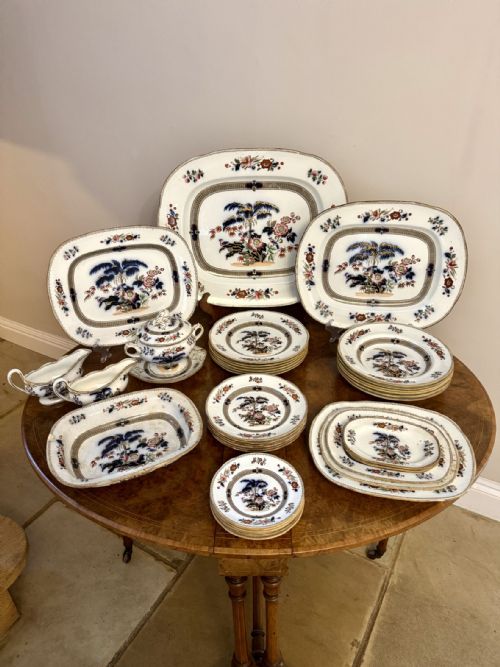
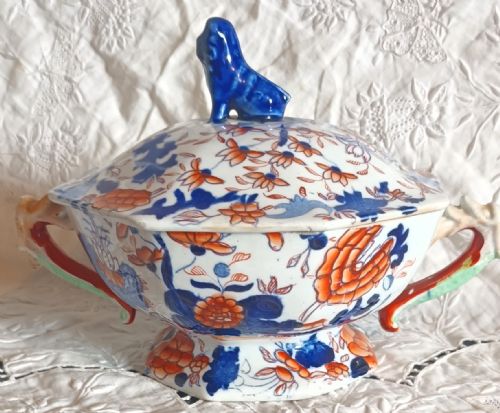


Imari Pattern Ceramic Tureen
These imari pattern ceramic tureen examples combine rich glazes and gold leaf, offering both decorative presence and traditional service history.
Imari Pattern Ceramic Tureen
When you search for an imari pattern ceramic tureen, you encounter serving vessels created during the Georgian, Regency, and Victorian periods. These pieces appear as soup tureens, sauce tureens with ladles, vegetable tureens with covers, and large covered bowls.
The versions you are most likely to meet on this page span the nineteenth century, including English ironstone and porcelain pieces alongside European porcelain examples. Makers utilise traditional forms designed for historic dining tables, ranging from large soup vessels to smaller sauce containers.
The styles encompass English Chinoiserie, Regency Chinoiserie, and broader nineteenth-century European designs. Each object carries the distinctive aesthetic associated with Japanese-inspired imari palettes applied to British and continental ceramics.
Materials and production methods
Potters constructed these vessels using durable ironstone ceramic, earthenware, and fine porcelain bodies suited to heavy tableware service. Manufacturers then applied complex underglaze and overglaze enamel decoration.
Workers integrated rich gold leaf detailing and vibrant enamel painting by hand across the surface of the ceramic. Glaze application protected the painted designs while providing a glossy finish to soup and sauce tureens.
Materials recorded across these tableware items include gold leaf, coloured enamel, glaze, and ironstone ceramic.
Assessing quality in imari ceramics
Quality separates through the crispness of the enamel painting and the preservation of the gold leaf highlights across handles and covers. Finer pieces demonstrate superior control during the high-temperature firing of the ironstone or porcelain body.
The complexity of the decorative pattern and the sharpness of the moulded handles distinguish standard table service items from exceptional examples. The depth of the glaze and the precision of the transfer or hand-painted motifs determine the overall finish.
Wedgwood·Mason·Flight Barr And Barr·Richard Ginori·Chamberlain Worcester·Coalbrookdale
The Imari Pattern Ceramic Tureen Glossary
- Ironstone
- A dense, heavy ceramic body patented in the nineteenth century for its durability and resistance to chipping. This material formed the basis for many robust dinner services and large tureens.
- Imari
- A decorative style characterised by a palette of cobalt blue, iron red, and gold leaf, originating in Japan. British and European potteries adapted this aesthetic for porcelain and ironstone tableware.
- Chinoiserie
- A European artistic style reflecting Chinese and East Asian motifs, frequently combined with imari colours on nineteenth-century ceramics. This style appears on tureens and dinner services from the Georgian and Regency eras.
- Tureen
- A large, deep serving bowl with a cover, designed for holding soup, sauce, or vegetables at the dining table. Examples range from grand soup vessels to matched pairs of sauce tureens with ladles.
- Enamel
- Coloured vitreous glass fused to the surface of the ceramic during a secondary low-temperature firing. This technique provides the vibrant reds and blues seen in traditional patterns.
Imari Pattern Ceramic Tureen: Frequently Asked Questions
What is an imari pattern ceramic tureen used for?
These covered vessels served soups, sauces, and vegetables at formal nineteenth-century dining tables. Their deep bowls and fitted lids kept food warm during service.
Today, collectors utilise them as decorative centrepieces on sideboards or dining tables, continuing their function as display objects.
How do I identify a Georgian imari tureen?
Georgian and Regency examples typically feature robust ironstone or porcelain bodies with hand-painted iron-red, cobalt blue, and gold leaf decoration. Look for early nineteenth-century forms and traditional Chinoiserie patterns.
Markings on the underside or distinctive moulded handles often provide further clues to the period and manufacturing origin.
Are these tureens safe to use for food?
While these pieces were originally created for functional dining use, antique ceramics often develop hairline cracks or lose enamel over centuries of handling. Most collectors prefer to exhibit them as decorative items rather than use them for serving.
Hand washing in warm water without harsh detergents is essential if you choose to clean them, as abrasive materials damage the gold leaf.
What is the difference between ironstone and porcelain?
Ironstone is a heavy, opaque, and highly durable ceramic developed in the nineteenth century to withstand daily dining service. Porcelain is finer, more translucent, and traditionally fired at higher temperatures.
Both materials received elaborate imari enamel patterns, but ironstone pieces generally feel heavier and thicker in the hand.