





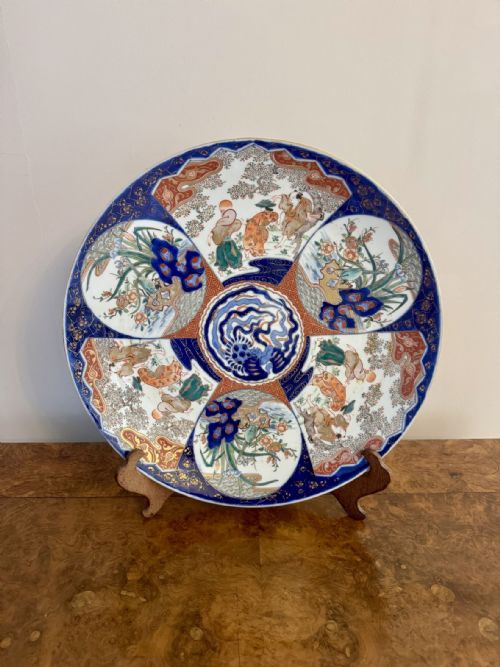
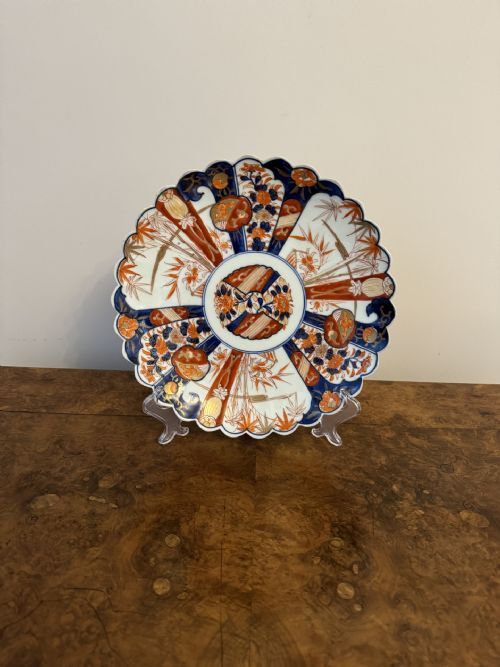

Imari Charger Plate
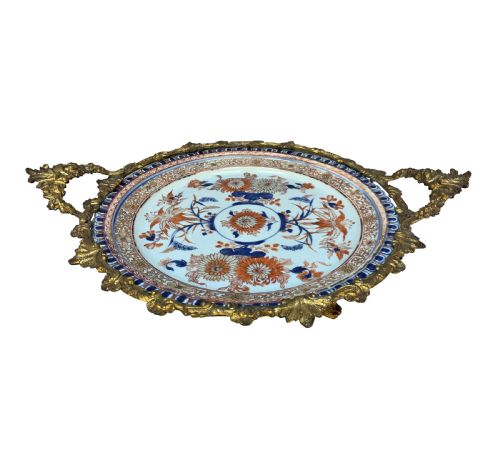
An imari charger plate is a large decorative ceramic dish defined by a vibrant palette, sought after for its bold display presence.

Imari Charger Plate
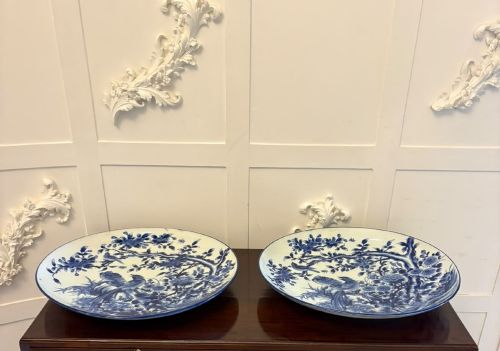
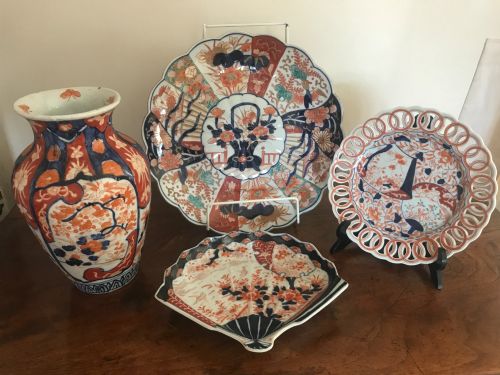
An imari charger plate is a large display dish originating primarily from Japanese and Chinese kilns, created to be mounted on walls or set upon furniture surfaces for visual impact.
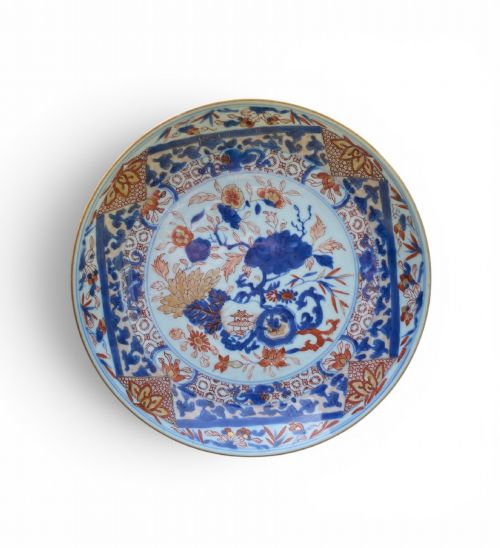
The versions most commonly met on this page date from the nineteenth century, particularly the Meiji period, alongside eighteenth century examples from the Edo period and Qing dynasty.
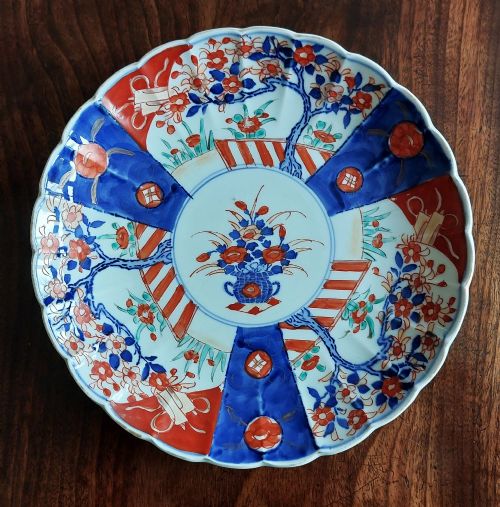
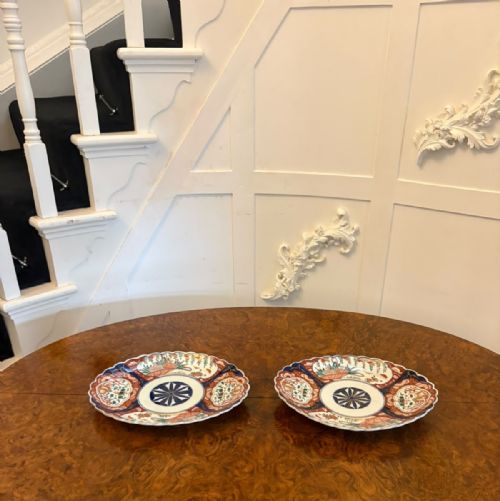
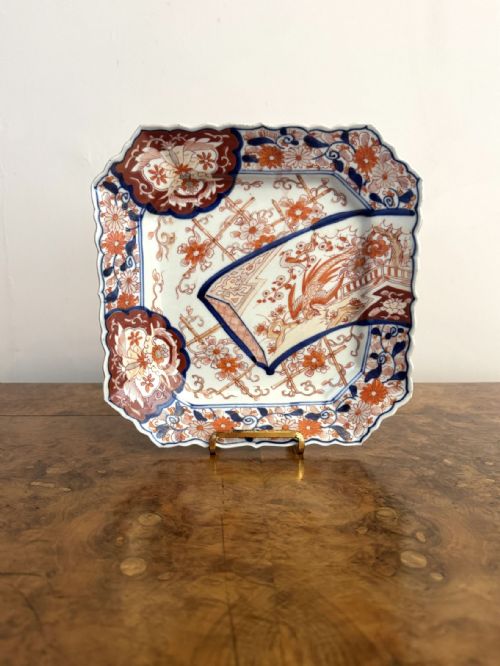
Forms vary from standard circular chargers to scalloped, square, hexagonal, and oval shapes, functioning as decorative plates, wall plates, and large display dishes.
How they were made
These pieces are fashioned from ceramic and porcelain bodies, painted using cobalt underglaze for the distinctive blue tones.
Makers layered enamel colours and gold leaf or gilding over the fired glaze to achieve the characteristic rich surface pattern.
The inventory includes square, hexagonal, oval, and scalloped plates alongside traditional circular chargers.
What varies in quality
The standard of a piece rests on the precision of the hand-painted floral and bird designs and the crispness of the porcelain moulding.
Finer examples display harmonious balance in the enamel and gilt application across complex shapes such as scalloped or hexagonal edges.
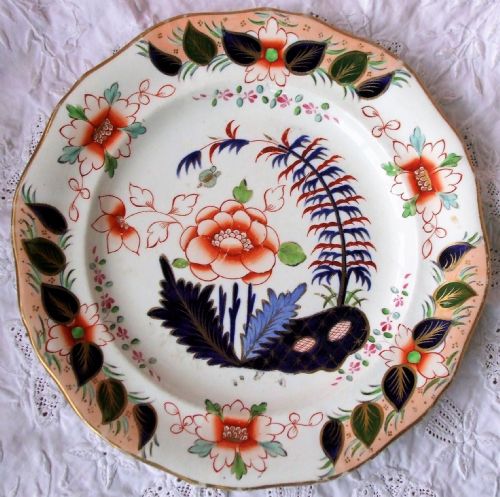
John Davenport of Longport
The Imari Charger Plate Glossary
- Charger
- A large decorative plate traditionally used for display rather than dining. These pieces measure larger than standard tableware.
- Cobalt underglaze
- A blue pigment applied to the ceramic body before glazing and firing. It provides the deep blue foundation beneath the enamel layers.
- Gilding
- The application of gold leaf or powdered gold to the surface. It highlights specific decorative motifs on the finished plate.
- Meiji Period
- A Japanese historical era spanning from 1868 to 1912. Many pieces on this page originate from these years.
- Enamel
- Opaque glass paste applied over the fired glaze. It adds bright red, green, and other accent colours to the design.
Imari Charger Plate: Frequently Asked Questions
How were imari charger plates used?
These large dishes were primarily produced for ornamental display rather than everyday dining use. Owners mounted them on walls or placed them on stands to showcase the painted patterns.
Their substantial size and vibrant palette made them central decorative elements in domestic interiors during the nineteenth century and earlier.
How do you tell Japanese and Chinese imari apart?
Chinese export examples generally date to the eighteenth century under the Qing dynasty, featuring specific tonal qualities in the cobalt underglaze.
Japanese pieces often align with the Edo and Meiji periods, utilising distinct scalloped or geometric forms such as hexagonal and square plates.
How do you display an imari charger safely?
Displaying these large porcelain dishes requires sturdy wall mountings or specialised plate stands designed to support heavy ceramics.
Placement should avoid areas of direct sunlight and high traffic to protect the enamel colours and delicate gilt surfaces from wear.
What periods do these plates come from?
The listings span several centuries, with the majority originating in the nineteenth and early twentieth centuries during the Meiji and Victorian eras.
Earlier examples trace back to the eighteenth century, encompassing pieces from the Edo period and Qing dynasty.