




Imari Ceramic Decor
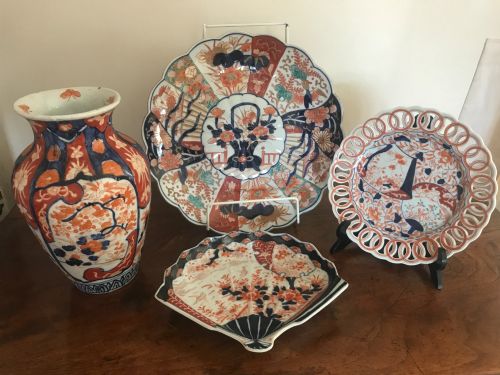
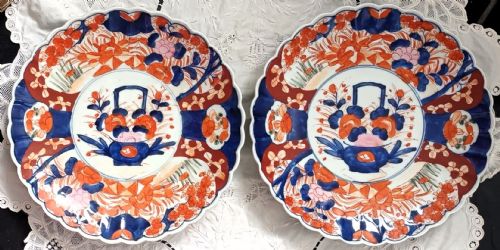
Imari ceramic decor brings striking palettes of iron red, cobalt blue and gold leaf into rooms through chargers, plates and vases.
Imari Ceramic Decor
Imari ceramic decor encompasses traditional Japanese works alongside British interpretations from the nineteenth century. Buyers exploring this page will encounter decorative plates, chargers, bowls and vases originating from the Meiji period and Victorian eras. These items span various forms including slender neck vases, bottle vases and shaped dishes.
The selection ranges from single display pieces to matched pairs and larger grouped collections of five or six items. Japanese Meiji period examples dominate the listings, frequently featuring motifs such as exotic birds. Alongside these sit nineteenth-century British ceramic chargers produced by factories like Mintons utilising the distinctive palette.
Materials and construction
These pieces are built from porcelain and ceramic glaze, providing a durable foundation for intricate hand-painted designs. Artisans applied cobalt blue underglaze followed by overglaze enamel colours to create the rich surface imagery characteristic of the tradition.
Many examples incorporate gold leaf or gilt trim, highlighting specific decorative sections and adding reflective depth to the finished glaze. Kiln firing fixed these layers onto the ceramic body, ensuring the longevity of both the enamel pigments and the gilded details.
The materials recorded across these listings consist of porcelain, enamel, glaze, gold leaf, gilt, ceramic glaze, glazed ceramic and gold trim.
Evaluating craftsmanship
Quality rests in the precision of the hand-painted brushwork and the clarity of the cobalt underglaze against the white porcelain ground. Superior examples display disciplined control over the enamel pigments and refined application of the gold trim.
Form and proportion dictate the desirability of hollowware and flatware alike, with hexagonal bowls and shell-shaped plates demonstrating greater moulding skill. The integration of the distinct colour palette across complex surfaces marks the distinction between standard production and exceptional decorative pieces.
The Imari Ceramic Decor Glossary
- Charger
- A large decorative plate intended for display on a wall or sideboard rather than for table service. These substantial ceramic pieces often showcase the fullest expression of the pattern.
- Meiji Period
- The era in Japanese history spanning from 1868 to 1912, noted for opening trade and exporting fine porcelain to Western markets. Pieces from this time frequently exhibit meticulous attention to detail.
- Underglaze
- A method of decorating pottery before applying the final glaze and firing at high temperatures. Cobalt blue is the primary pigment applied at this early stage.
- Enamel
- Opaque glass-like paint applied over the fired glaze and subjected to a subsequent lower-temperature kiln firing. This technique introduces the vibrant iron reds and secondary hues.
- Gilt
- A thin layer of gold applied to the surface of the ceramic to accent rims, borders and key design motifs. It catches the light and complements the underlying palette.
Imari Ceramic Decor: Frequently Asked Questions
How do I hang a heavy imari charger?
Displaying large decorative plates safely requires a properly fitted wall bracket that supports the base while securing the rim without causing damage. Steel spring wire hangers designed for heavy ceramics distribute the weight evenly.
Ensure the wall fixing engages directly with solid brickwork or a wall stud rather than relying solely on plasterboard. Check the mounting periodically to maintain secure placement.
Can I use these vases for fresh flowers?
Most antique imari vases are intended primarily for display and decorative purposes rather than daily floral use. The interior glazes and historic ceramic bodies can be porous or sensitive to prolonged moisture exposure.
If you do use them for water and stems, insert a small glass or plastic vessel inside to protect the historic interior. Dry arrangements avoid any risk of water damage to the porcelain.
How do I clean antique imari plates?
Dust these decorative pieces gently using a soft, dry microfibre cloth or a clean artist brush to remove surface particles. Avoid harsh chemical cleaners, abrasive sponges or immersion in water.
Dishes with extensive gold trim or overglaze enamel require particular care to prevent gradual wearing of the surface pigments. Light spot cleaning with a slightly damp cloth should only be done when necessary.
What is the difference between Japanese and British imari?
Japanese imari originates from workshops working during the Meiji period and earlier, adhering closely to traditional eastern motifs and porcelain bodies. British imari pieces, such as those by Mintons from the nineteenth century, adapt the distinctive colour palette onto domestic ceramic bodies.
Both share the signature red, blue and gold aesthetic but reflect the distinct manufacturing techniques of their respective origins. Maker marks on the underside often help identify the specific European potteries.
How should I display a collection of small vases?
Grouping smaller vessels together on a tray, shelf or mantelpiece creates a strong visual impact by highlighting variations in shape and height. Mixing bottle vases with slender neck forms adds depth to the arrangement.
Maintain adequate spacing between individual pieces to allow the detailed enamel work and gilt trim on each item to remain visible. Direct natural light should be managed to prevent fading of the overglaze pigments over time.