
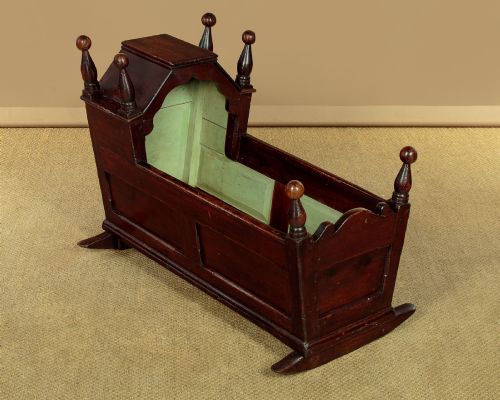


Hooded Rocking Cradle
These hooded rocking cradle pieces are timber resting beds built on curved rockers, prized for their traditional craftsmanship and rustic presence in a room.
Hooded Rocking Cradle
A hooded rocking cradle is a traditional wooden infant bed mounted on curved base rails designed to sway. The listings here centre on examples built from the seventeenth century through to the Victorian era, showing how domestic forms evolved over generations.
Most pieces encountered on this page are constructed from oak, pine, or mahogany, taking the form of panelled boxes or open frames topped with a protective canopy or hood. Surviving pieces range from simple rustic country items to more formal panelled designs reflecting periods like William and Mary or the Georgian and Victorian eras.
Buyers seek these items for their historic joinery and warm timber tones, finding that an antique cradle serves equally well as a decorative focal point or a functional storage container.
How they were made
Makers relied primarily on solid timbers such as oak, pine, and mahogany, shaping them with hand tools into sturdy panels and curved rockers. Many seventeenth-century style examples utilise traditional frame-and-panel construction with pegged joints, while later pieces incorporate turned spindles or caned panels.
Surface finishes vary from bare polished wood to original paintwork in blue, alongside occasional additions of glass, metal hardware, or upholstered interiors. These construction methods ensure the structural integrity of the curved base and the protective upper hood.
The listings span multiple centuries, uniting seventeenth-century style oak panel work with painted Victorian pine and mahogany designs.
What varies in quality
Quality in a hooded rocking cradle rests upon the integrity of the original timber and the crispness of the panel carving or joinery. Pieces featuring untouched period surfaces, such as early painted pine or well-figured oak panels, hold greater interest than heavily restored alternatives.
The sophistication of the period style - ranging from plain rustic country construction to detailed William and Mary panelling - defines the character and visual weight of each individual cradle.
The Hooded Rocking Cradle Glossary
- Hood
- A protective canopy or cover integrated into the head of the cradle to shield the occupant from drafts. This architectural feature often defines the silhouette of early wooden examples.
- Rockers
- The curved wooden rails attached to the base of the cradle that allow it to sway back and forth. They are integral to the function of nineteenth-century and earlier designs.
- Panelling
- A method of joining wooden boards using fitted stiles and rails to accommodate seasonal wood movement. It is commonly found on seventeenth-century style oak pieces.
- Cane
- Woven rattan material used for open panel inserts on specific Victorian cribs. It provides a lighter visual texture compared to solid timber walls.
Hooded Rocking Cradle: Frequently Asked Questions
How do I date a wooden cradle?
Dating relies on examining the timber species, joinery techniques, and the presence of period style markers like William and Mary panelling or Victorian turnings. Tool marks and construction methods indicate whether a piece originates from the seventeenth century or later.
Secondary indicators include original painted surfaces, hardware, and retail labels when present. Comparing these elements with documented examples helps narrow down the period of manufacture.
Were these used for sleeping?
These pieces served as traditional infant beds during the seventeenth, eighteenth, and nineteenth centuries, keeping infants close to the hearth. The enclosed hood provided protection from household drafts in older homes.
Modern buyers often repurpose them as decorative containers for items like logs or blankets once their active nursery days conclude.
How do I care for antique pine?
Maintaining antique pine and oak requires keeping pieces away from direct heat sources and dramatic humidity fluctuations that cause timber to split. Gentle dusting and occasional application of appropriate wax preserve the historic finish.
Avoid harsh modern cleaning agents which can strip original painted surfaces or patinated wax layers accumulated over centuries.
What is William and Mary style?
William and Mary style encompasses furniture produced around the late seventeenth and early eighteenth centuries, characterised by geometric panel work and sturdy proportions. In these listings, it appears on oak panelled cribs showing deliberate period revival or authentic age.
This aesthetic values visible timber grain and structured joinery over excessive surface ornamentation.