
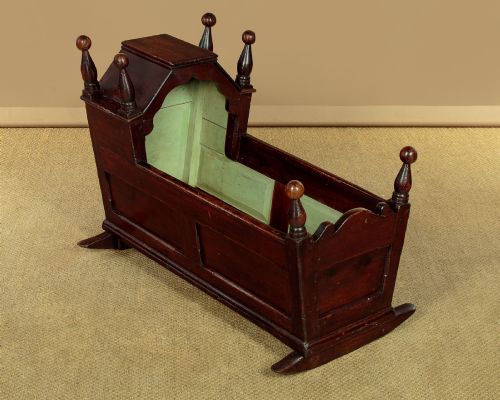


Antique Hooded Cradle
An antique hooded cradle offers a wonderful piece of social history, combining traditional timber construction with deep rocking sides to soothe infants.
Antique Hooded Cradle
An antique hooded cradle provides a sheltered sleeping space for infants, featuring a protective canopy or hood over the head end to shield the child from draughts. These pieces take the form of rocking cribs and enclosed beds designed to sit on the floor or on built-in rockers.
The examples available here span from the seventeenth century through the Georgian and Victorian eras, showing a rich variety of regional and stylistic influences. Buyers will encounter robust country pieces alongside more formal revival designs.
Most items are constructed as low rocking cradles, utilising sturdy wooden boards or framed panels to create a secure enclosure. The inclusion of a hood distinguishes these items from open cribs, creating a distinct architectural silhouette in miniature.
How they were made
Cabinet makers and country joiners built these items primarily from solid timber such as oak, pine, and mahogany, utilising traditional pegged joints and panelled construction. Oak panels are frequently fielded or carved, reflecting the prevailing joinery standards of the period.
Many examples incorporate secondary materials including cane, metal fittings, and painted finishes, ranging from original blue paint to later decorative schemes. Rockers are integrated directly into the base framework to allow smooth movement.
One robust Victorian oak example suggests a secondary life as a good log basket once its rocking days are done.
What varies in quality
The distinction between standard domestic items and finer pieces lies in the choice of timber, the sophistication of the panel work, and the integrity of the original structure. Superior examples display careful timber selection and refined decorative carving rather than basic utility construction.
The survival of original surfaces, such as early paintwork or patinated polish, significantly elevates the character of a piece. Quality also shows in the retention of original rocking mechanisms and the proportion of the protective hood relative to the body.
Heals and son
The Antique Hooded Cradle Glossary
- Hood
- A protective canopy built over the head end of a cradle to shield the sleeping infant from draughts. This architectural feature defines the silhouette of the piece.
- Rockers
- Curved wooden feet attached to the base of the cradle to allow lateral movement for soothing. These are often integral to the frame.
- Fielded panel
- A wooden panel with bevelled edges set into a grooved frame to reduce weight and prevent splitting. It is a common feature in seventeenth and eighteenth-century joinery.
- Cane
- Woven rattan material used for ventilation panels in the sides or ends of later nineteenth-century cribs. It lightens the visual weight of the furniture.
Antique Hooded Cradle: Frequently Asked Questions
What is an antique hooded cradle?
An antique hooded cradle is a low infant bed featuring an enclosed canopy over the head end and rocking feet or runners. They were designed to keep babies secure and protected from room draughts.
These pieces reflect the domestic woodwork of their respective centuries, constructed by regional joiners and major retailers alike using native timbers.
How do I date an old cradle?
Dating relies on examining the timber species, construction joints, panel styles, and any original paint or surface finishes. Seventeenth-century examples typically feature heavy oak framing and panel work, while Victorian pieces often employ pine, mahogany, or applied caning.
Changes in stylistic revival movements, such as Jacobean or William and Mary revivals, also help place the date of manufacture relative to the primary period style.
Were these used for sleeping?
These pieces served as primary infant beds in the home, placed close to the parents or near the hearth for warmth. The rocking action helped soothe young children to sleep.
Today, modern safety standards mean these historical items are generally collected for decorative display or alternative domestic uses rather than infant sleeping.
How do I style one at home?
An antique hooded cradle works well as a focal point in a living space or bedroom, often displayed with textiles, quilts, or decorative items placed inside. Some owners repurpose robust wooden examples as storage baskets for logs or blankets.
Placing the piece where the panel work and natural timber patina can be clearly seen highlights its architectural form and age.