
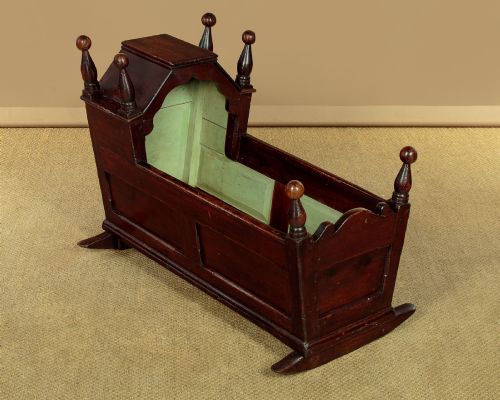
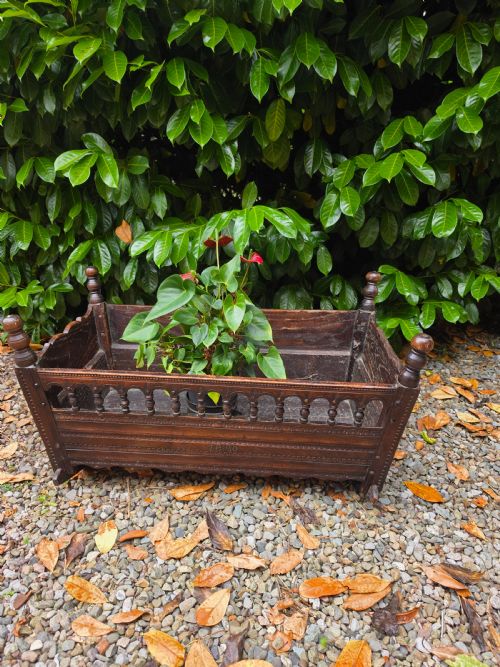


Wooden Baby Cradle
A wooden baby cradle brings centuries of tactile domestic history into a room, offering the solid warmth of traditional timber and simple rocking mechanics.
Wooden Baby Cradle
A wooden baby cradle is a domestic resting place for infants, designed primarily with curved rockers to soothe a child to sleep. When searching for a wooden baby cradle, buyers encounter sturdy forms intended for functional household use across generations.
The pieces available span from the seventeenth century through the Victorian era, showing shifts in domestic taste and woodworking capability. Early examples favour robust oak construction, while later nineteenth-century pieces often utilise pine, mahogany, or applied paint finishes.
Many of these items feature rocking mechanisms, panelled sides, or protective hoods to shelter the infant from drafts. Forms range from unadorned country pine to elaborately panelled oak constructions reflecting seventeenth-century styles.
Materials and construction
Construction relies heavily on durable hardwoods and softwoods such as oak, pine, and mahogany, chosen for structural stability. Joinery techniques in earlier pieces involve heavy panel construction, while later examples incorporate turned spindles and applied mouldings.
Surface finishes vary from polished timber to original painted surfaces, including notable examples in blue paint. Additional materials like cane, brass, glass, and metal sometimes appear in fittings, hardware, or woven crib panels.
Listings feature items spanning from the 17th century to the Victorian era, constructed in oak, pine, mahogany, and painted finishes.
Assessing quality
Quality in these items is determined by the integrity of the timber selection and the skill of the original joinery. Pieces featuring thick oak panels, pegged joints, and well-proportioned hoods represent a higher standard of period craftsmanship.
The presence of original surface treatments, such as early paint or undisturbed polish, significantly influences the character of the piece. Simpler utility items in pine contrast with more ambitious revival pieces and formal cabinet timbers like mahogany.
Heals and son
The Wooden Baby Cradle Glossary
- Rockers
- Curved wooden feet attached to the base of a cradle to allow a gentle swaying motion. They are essential for understanding how these pieces functioned in daily domestic life.
- Panel
- A flat piece of wood housed within a surrounding frame to prevent splitting as the timber responds to humidity. This construction method is common in older oak examples.
- Hood
- A protective canopy-like extension over the head of the cradle designed to shield an infant from cold drafts. They often feature decorative woodworking.
- Cane
- Woven material derived from rattan plants used to create breathable sides or bases for later Victorian cribs. It adds a lighter texture to denser mahogany frames.
- Field panel
- A raised wooden panel with bevelled edges favoured in seventeenth-century joinery for decorative depth. It gives architectural weight to the sides of early cradles.
Wooden Baby Cradle: Frequently Asked Questions
How old is my wooden baby cradle?
Dating depends on timber species, construction methods like peg joinery, and stylistic details such as panel moulding. Seventeenth-century pieces typically show heavy oak framing, whereas nineteenth-century examples often use pine or mahogany.
Examining tool marks and hardware can also help establish the period of manufacture.
Were these cradles used for sleeping?
These pieces were built as practical nursery furniture for rocking infants to sleep in domestic households. Their robust construction ensured they survived generations of daily use.
Today, many buyers repurpose them for decorative storage or display within the home.
What is the difference between oak and pine cradles?
Oak cradles generally date from earlier periods, reflecting seventeenth-century craftsmanship with heavy panel construction and pegged joints. Pine versions frequently appear in nineteenth-century country or painted domestic contexts.
Both materials served practical household roles but catered to different aesthetic traditions.
How do I care for antique wood?
Maintain antique wooden surfaces by keeping them away from direct heat sources and drastic humidity changes. Regular dusting with a soft cloth preserves the dry finish or polish.
Avoid modern chemical cleaners that might strip original patination or paint.