
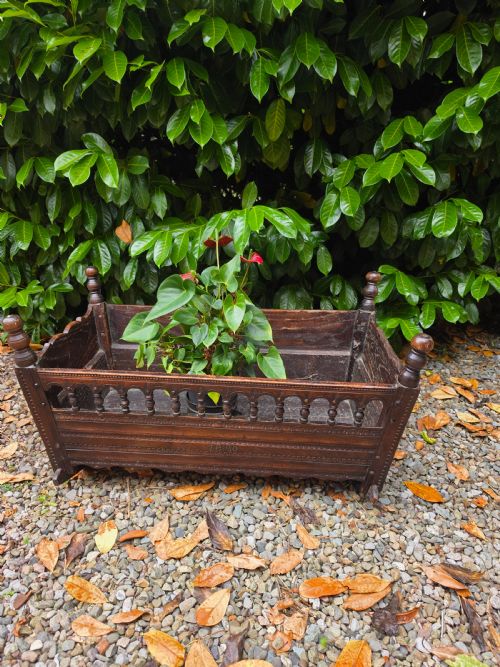


Dark Oak Crib
These dark oak crib pieces are solid timber infant beds built to rock, offering robust early domestic craft and centuries of surviving history.
Dark Oak Crib
A dark oak crib represents a heavy wooden infant bed designed for rocking, appearing across several centuries from the sixteenth to the nineteenth.
The buyer encounters forms ranging from genuine seventeenth-century joined examples and William and Mary or Charles II styles to later nineteenth-century revivals and Georgian adaptations.
Most entries on this page take the form of panelled cradles or rocking cribs, occasionally paired with fruitwood or featuring hoods and rockers.
Construction and Materials
These pieces rely primarily on oak timber, sometimes combined with fruitwood, joined through traditional panelled construction methods suited to heavy domestic furniture.
Many examples incorporate built-in rockers beneath the main body, while certain variants feature protective hoods and carved surface details.
One Victorian rocking cradle suggestion cheerfully proposes a secondary career as a good log basket.
Assessing Quality
Quality rests in the integrity of the timber panels and the authenticity of the period construction methods, distinguishing early joined pieces from later revivals.
The refinement of the carving and the original condition of the rockers and side panels define the upper tier of these examples.
The Dark Oak Crib Glossary
- Field panel
- A raised wooden panel set within a frame, commonly used in seventeenth-century construction to allow the wood to expand and contract.
- Rockers
- Curved wooden feet attached to the base of the crib, allowing the infant bed to swing back and forth.
- Hood
- A fitted canopy structure over the head end of the crib, designed to shelter the child from drafts.
- Fruitwood
- Dense timber derived from fruit-bearing trees, utilised alongside oak for contrast or structural components.
Dark Oak Crib: Frequently Asked Questions
How old are these cribs?
The selection spans from sixteenth-century Elizabethan pieces and seventeenth-century joined examples to nineteenth-century revivals and Georgian items.
Date attribution relies on construction methods, timber characteristics, and stylistic traits associated with specific periods.
Were these used for sleeping?
These wooden cradles served as infant beds within early domestic households, designed with rocking mechanisms to soothe babies.
Later Victorian examples occasionally found alternative domestic utility, such as functioning as log baskets.
What woods are used?
Construction centres on oak as the primary timber, occasionally supplemented by fruitwood for specific structural or decorative elements.
Both woods provide the necessary weight and durability for heavy panelled furniture.
How do rockers work?
Curved pieces of timber are attached beneath the base of the crib, enabling the entire structure to pivot on the floor.
This mechanism allows caregivers to gently sway the infant without moving the heavy frame.