







Hongmu Display Table
These hongmu display table pieces bring dense, figured timber and carved detail to a room, offering a solid surface for ornaments and plants.
Hongmu Display Table
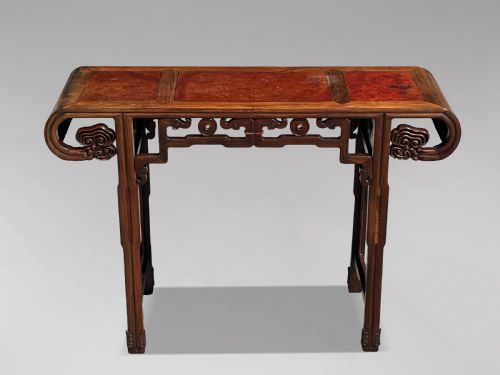
When you search for a hongmu display table, you are looking at substantial hardwood furniture originating from China during the nineteenth and early twentieth centuries. These items serve multiple domestic purposes, appearing as plant stands, pedestals, altar tables, side tables, and nests of tables.
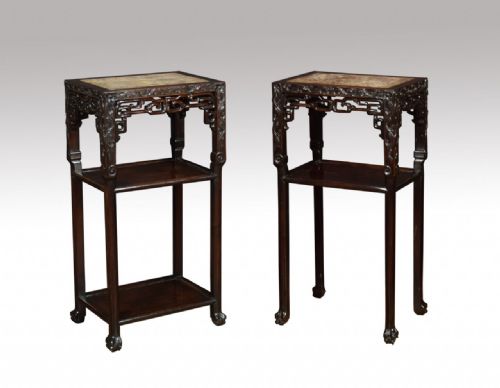
The pieces on this page span the Qing Dynasty and the Republic period, reflecting traditional forms such as inset marble-top jardiniere stands and low scholarly tables. They range from compact single-tier stools to multi-tiered urn stands.
Most examples date from the late nineteenth century, around eighteen eighty to eighteen ninety, incorporating carved hardwood frames designed to elevate ceramics and bronzes within the interior.
How they were made
Joinery relies on dense timbers including hongmu, rosewood, and amboyna wood, selected for their weight, grain pattern, and natural dark colour. Artisans manipulate these resistant hardwoods using traditional framing and mortise-and-tenon methods without relying on modern fasteners.
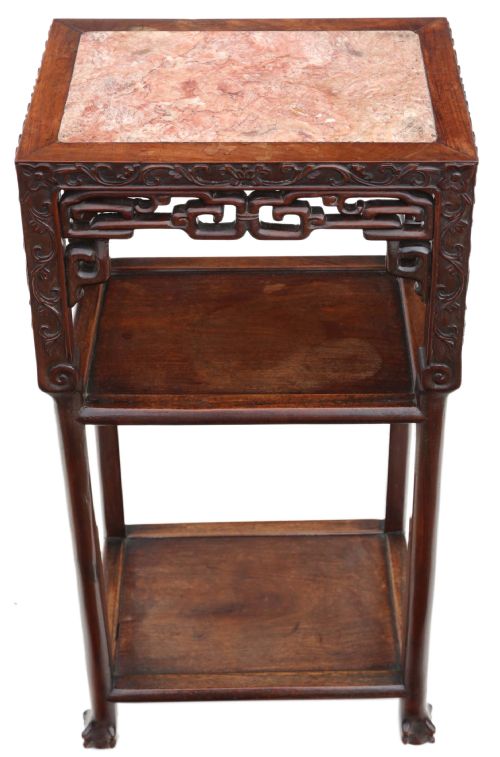
Surfaces frequently incorporate inset panels of rouge or decorative marble, contrasting smooth stone against carved wooden surrounds. Carving is executed directly into the hardwood structure, defining floral motifs, geometric aprons, and cabriole or straight supports.
Hongmu Display Table Retail Price Guide 2026
Typical asking prices for hongmu display table among the pieces listed under this phrase on Sellingantiques today, from the lower quarter to the upper quarter. They describe what is for sale here now, not the wider market.
Listings feature items from the nineteenth and early twentieth centuries, spanning the Qing Dynasty and Republic period in hard woods and marble.
What varies in quality
Quality rests in the crispness of the wood carving and the selection of the timber grain. Superior examples display deep, undercut carving on the aprons and legs, whereas simpler pieces rely on plain turned or minimal members.
The integration of the inset marble top dictates the grade of the piece, with well-fitted stone panels sitting flush within the wooden rebate. Heavier gauge hongmu and matched timber selections elevate an item from a basic utility stand to a scholar's furniture piece.
The Hongmu Display Table Glossary
- Hongmu
- A dense, heavy tropical hardwood used in traditional Chinese furniture construction. It translates to red wood and encompasses several species with rich, dark tones.
- Jardiniere stand
- A tall, narrow table or pedestal designed specifically to hold a heavy ceramic flower pot or plant container. These often feature inset marble tops to protect the wood from moisture.
- Altar table
- A long, narrow table traditionally used for ceremonial purposes, adapted in domestic interiors for display. They often terminate in upturned flanges at the short ends.
- Apron
- The decorative wooden member connecting the legs of a table just beneath the top surface. On these pieces, it is frequently carved with openwork foliage or geometric patterns.
Hongmu Display Table: Frequently Asked Questions
What is hongmu wood?
Hongmu is a general term for dense, durable Asian hardwoods valued for their dark colour and polished finish.
Craftsmen selected these timbers for heavy furniture because the tight grain resists warping and takes intricate carving.
Why do some tables have marble tops?
Marble insets provide a cool, durable surface that withstands moisture from plant pots and heavy vases.
This stone panel also introduces a contrasting texture and colour to the dark hardwood frame.
Where should I place a display stand?
These compact tables suit corners, hallways, or living spaces as pedestals for sculptures, lamps, or ceramics.
Their sturdy construction supports substantial decorative objects without dominating the floor plan.