
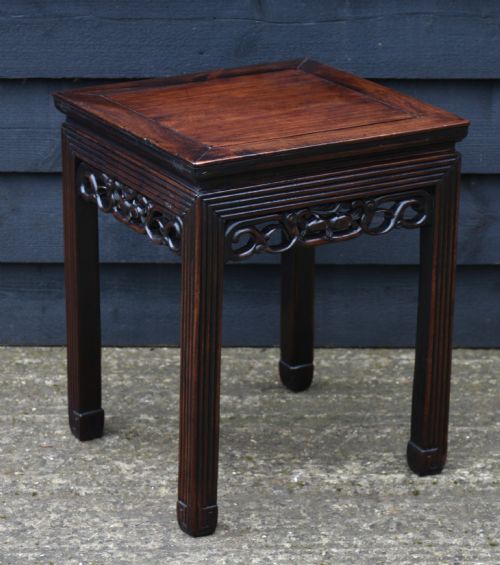


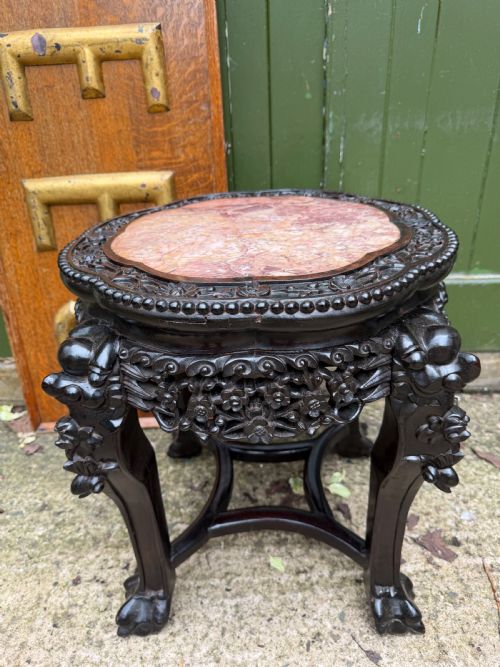


Hongmu Carved Side Table
A hongmu carved side table brings dense tropical timber and intricate Qing craftsmanship straight into a room.
Hongmu Carved Side Table
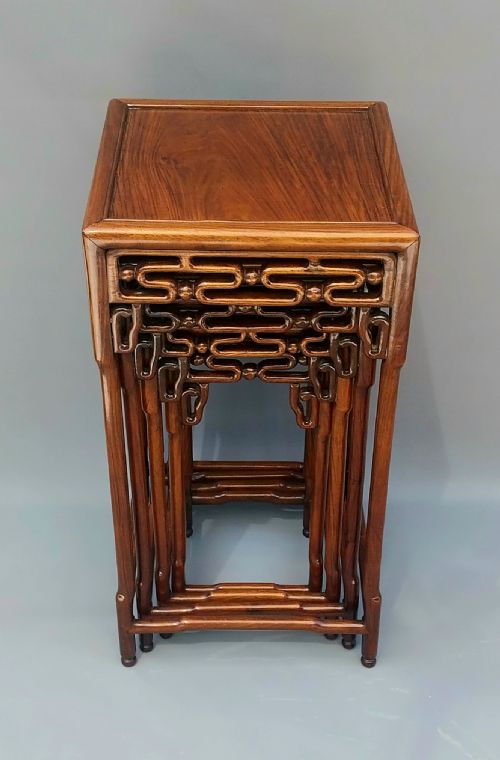
A hongmu carved side table encompasses low tables, altar tables, pedestals, and nested sets originating from nineteenth-century China and the Qing dynasty. These items serve practical functions as plant stands, urn supports, and occasional surfaces while displaying traditional carving. Buyers encounter rectangular centre tables, multitier stands, and drum-shaped barrel tables across this selection.
The materials span dense hardwoods, specifically rosewood and hongmu, often combined with inset marble panels or mother-of-pearl inlay. Such pieces emerge through nineteenth-century production methods spanning the late Qing dynasty into the early twentieth century. Makers construct these items using traditional joinery and elaborate relief carving.
How they were made
Craftsmen construct these items primarily from dense hardwoods, including rosewood, hongmu, amboyna wood, and burrwood, which provide substantial weight and dark natural tones. Artisans shape these timbers using traditional joinery techniques, building rigid frames without relying on modern metal fasteners.
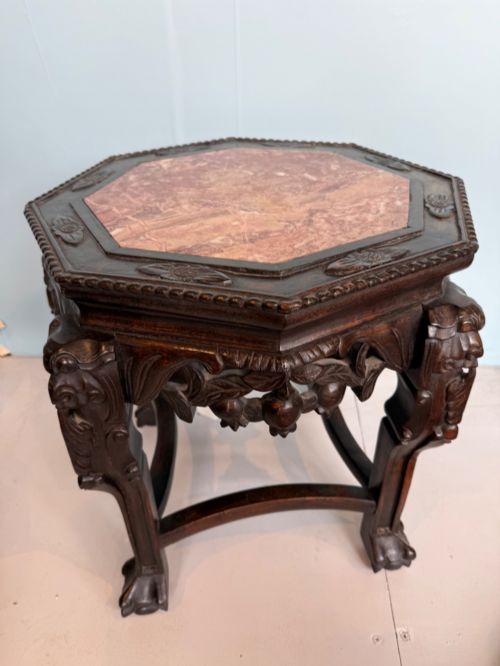
Surfaces frequently incorporate inset panels of rouge marble or variegated stone, fitted precisely into wooden grooves. Detailed embellishment involves intricate carving alongside mother-of-pearl inlay, executed directly into the dense grain of the timber.
What varies in quality
The standard of carving distinguishes superior items, where depth, sharpness, and undercut detail show deliberate hand execution rather than mechanical repetition. Timber selection also determines grade, with richly figured rosewood, amboyna, or burrwood commanding greater visual depth.
The integrity of inset marble panels and the precision of fitted joints dictate overall structural success. Tables retaining unblemished stone surfaces alongside tight, stable joinery demonstrate superior workshop origin.
The Hongmu Carved Side Table Glossary
- Hongmu
- A category of dense, heavy Asian hardwoods translated literally as red wood. These timbers provide the durable structure for traditional Chinese furniture.
- Altar table
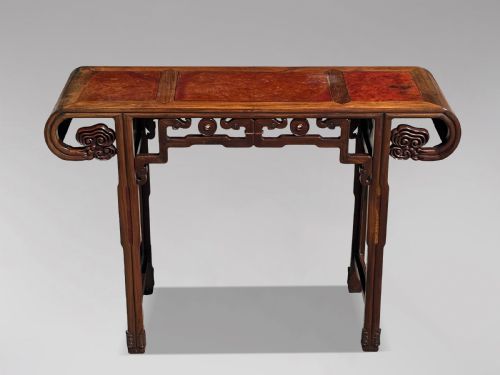
- A rectangular surface traditionally placed against a wall for display or ceremonial use. These tables feature elevated ends and carved aprons.
- Jardiniere stand
- A tall pedestal or small table designed specifically to elevate plant pots or floral arrangements. Such pieces often incorporate circular or square inset marble tops.
- Nest of tables
- A set of graduated tables designed to slide neatly beneath one another. This form appears frequently in nineteenth-century Chinese hardwood production.
- Rouge marble
- A reddish decorative stone imported and utilised for inset table panels. This material adds a cool, smooth surface contrasting with dark timber.
Hongmu Carved Side Table: Frequently Asked Questions
How were these tables used?
These pieces functioned as display surfaces for porcelain urns, bronze vessels, and decorative plants within traditional interiors. Their varied heights accommodated different viewing angles in reception rooms.
Smaller formats like nesting tables provided movable surfaces for tea or writing equipment. These items adapted easily to changing household arrangements.
How do I clean hongmu furniture?
Maintain the timber surfaces by dusting gently with a dry, soft cloth to prevent particle accumulation. Avoid chemical polishes or excessive moisture that might harm the antique finish.
Preserve the inset marble panels by wiping them with a damp cloth followed immediately by dry buffing. Keep the wood away from direct heat sources to prevent timber movement.
Are these pieces stable on modern floors?
Solid hardwood construction provides substantial weight and inherent stability for daily placement. Traditional joinery keeps the frames rigid across standard floor surfaces.
Uneven antique flooring can be accommodated with discreet felt leveling pads beneath the feet. This protects both the furniture base and delicate floor coverings.
How do I date a Qing dynasty table?
Dating relies upon timber density, the style of hand carving, and the integration of marble or inlay elements. Nineteenth-century examples display distinct Qing dynasty characteristics without modern machine tooling.
Examine the underside and joints for signs of age, tool marks, and wood shrinkage. Consistency in the patina indicates genuine nineteenth-century manufacture.