


Historical Naval Artwork
Historical naval artwork captures centuries of maritime conflict, exploration and seafaring life through oil paintings, engravings and watercolours.
Historical Naval Artwork
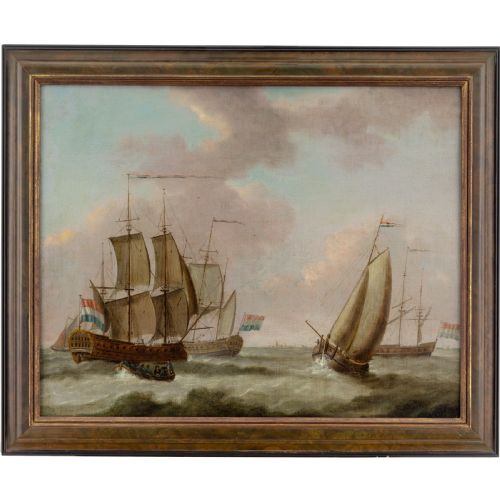
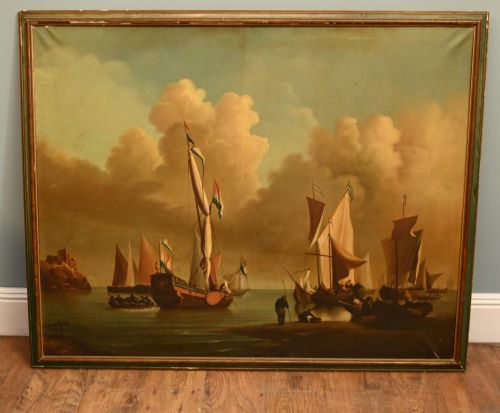
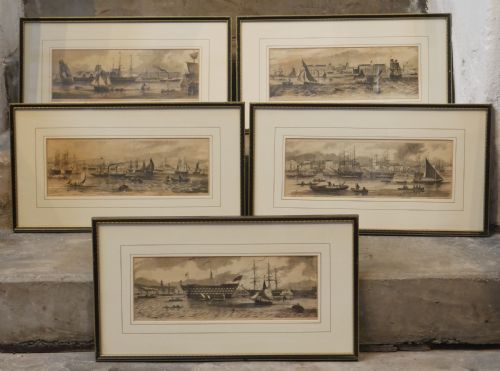
When searching for historical naval artwork, collectors encounter a diverse range of depictions focusing on ships, naval engagements, coastal scenes and portraits of prominent commanders. These pieces span multiple centuries, originating from periods such as the seventeenth century, the Georgian era, the Regency period and the Victorian age. The works appear as oil paintings on canvas, framed prints, engravings and watercolours.
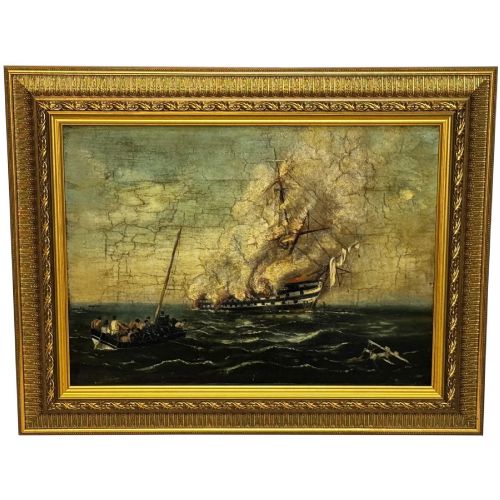
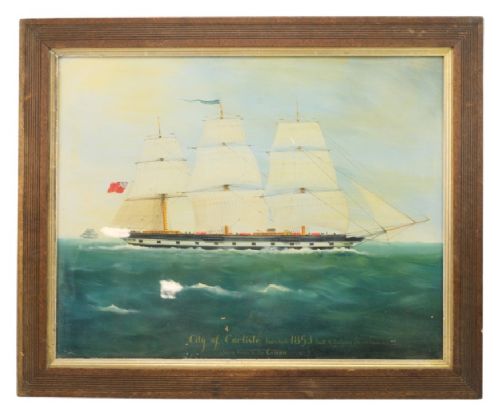
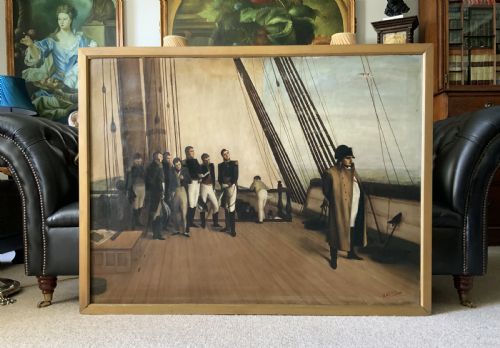
The subjects on this page frequently portray specific vessels, sea battles, dockyards and naval officers. Examples include depictions of warships with raised sails, engagements involving galleons, and scenes recording historical events like fleet reviews at Spithead or troop transport during the Crimea. Portraits of admirals and privateers also feature strongly within the selection.
Materials and technique
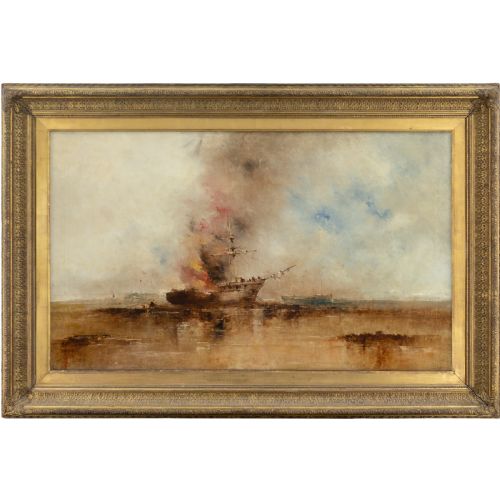
Many of the works utilise oil paint applied to canvas, capturing the texture of billowing sails, churning water and atmospheric skies. Artists often employed wood for stretchers and frames, sometimes incorporating gold leaf or gilt finishes to highlight the moulding.
Works on paper appear frequently in the form of engravings, lithographs and watercolours. These printed and drawn formats required skilled plate-making or meticulous brushwork to record the intricate rigging and hull structures of historical vessels.
Listings feature oil paintings, engravings, watercolours and lithographs spanning the seventeenth century to the twentieth century.
Assessing quality and execution
Quality in these maritime pieces rests upon the artist's command of perspective, vessel architecture and atmospheric movement. Superior examples demonstrate accurate depictions of nautical rigging, hull design and naval tactics, whereas lesser works often rely on formulaic compositions and rigid rendering of water.
The handling of light and shadow distinguishes accomplished marine painting from standard output. Finer canvases capture the complex interplay of smoke during naval engagements or the subtle reflection of sunlight upon coastal waters, supported by confident brushwork.
William McAlpine·Francis Hayman·Nicholas Condy·Vincenzo D’Esposito·Claude Lorrain·Richard Brydges Beechey·Frank Wood·Sir Thomas Lawrence·Jacob Knyff·Abraham Storck·Robert Ker Porter·Richard Hall·Ambrosini Jerome
The Historical Naval Artwork Glossary
- Privateer
- A privately owned armed vessel commissioned by a government to fight enemy shipping. These ships played a significant role in maritime warfare during earlier centuries.
- Frigate
- A warship built for speed and manoeuvrability, possessing a single continuous gun deck. These vessels appear frequently in period naval scenes.
- Engraving
- A printmaking process where an artist cuts an image into a metal plate with a burin. The inked plate transfers the design onto paper.
- Lithography
- A planographic printing process utilising stone or metal plates based on the repulsion of oil and water. This technique produced popular multi-plate ship prints in the nineteenth century.
- Seascape
- A work of art depicting the sea, coastal views or maritime activity. These compositions form a major category within historical naval depictions.
Historical Naval Artwork: Frequently Asked Questions
What periods do these artworks represent?
The selections span from the seventeenth century through the Georgian and Regency eras into the Victorian period and early twentieth century.
These dates reflect changing artistic styles and naval technologies across different maritime epochs.
How were these maritime scenes recorded?
Artists utilised oil paint on canvas, watercolours on paper, and printed methods such as engravings and lithographs.
Many painters observed naval operations directly or worked from contemporary accounts and sketches.
Who appears in the portraits?
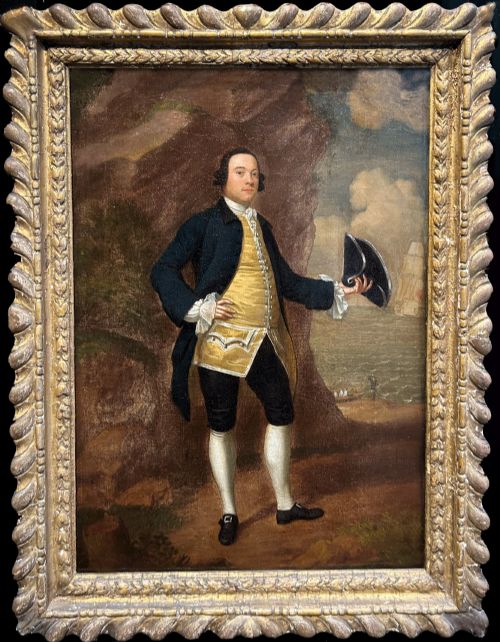
The subjects include admirals, privateers, naval officers and commanders holding swords or torches.
Notable figures recorded in the titles feature Admiral Sir Graham Moore and Admiral Sir William Sidney Smith.
What subjects besides battles are shown?
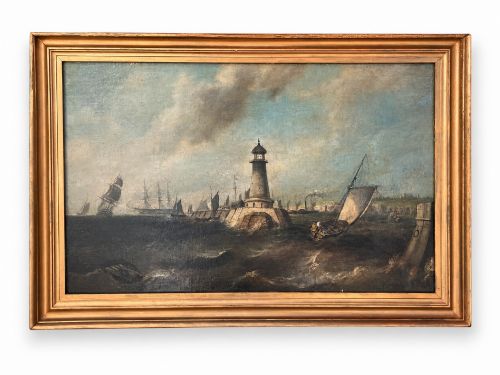
Artworks depict dockyards, lighthouses, harbour scenes with coastal figures, and peaceful fleet reviews.
Examples include Plymouth Breakwater Lighthouse and the Port of Ostia.