


Grey Marine Watercolour
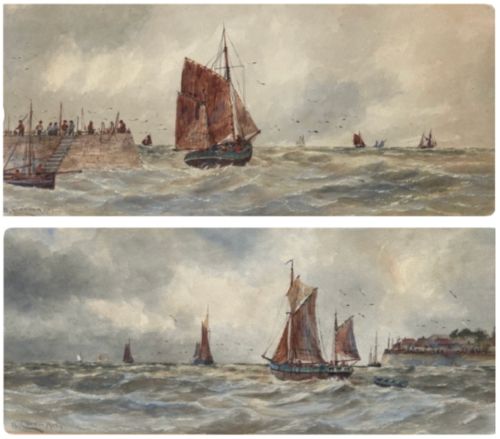
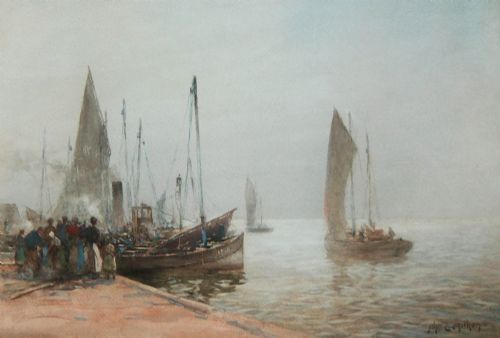
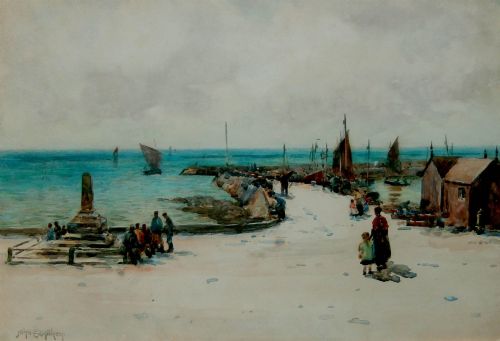
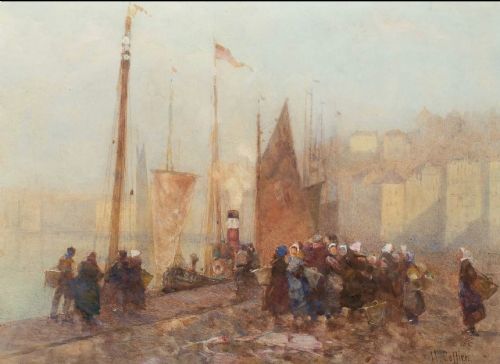
Grey marine watercolour works capture coastal scenes, fishing vessels and naval fleets through monochrome and muted washes on paper.
Grey Marine Watercolour
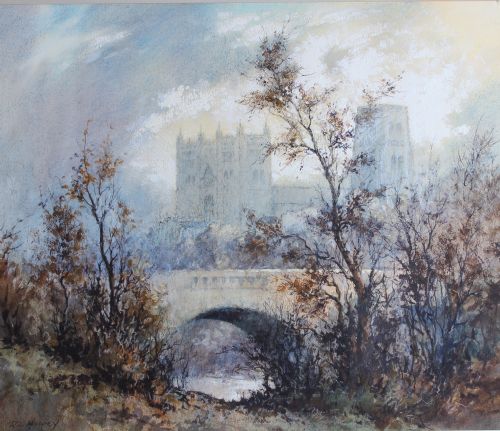
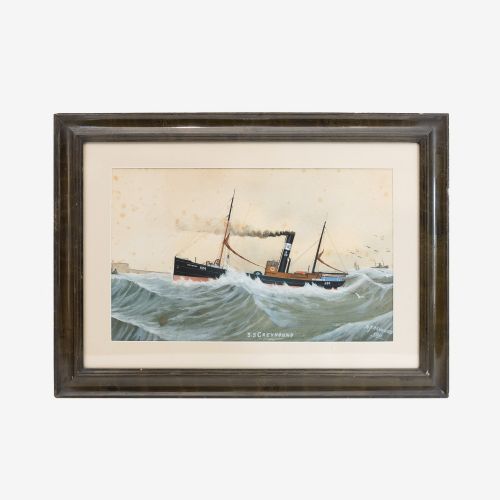
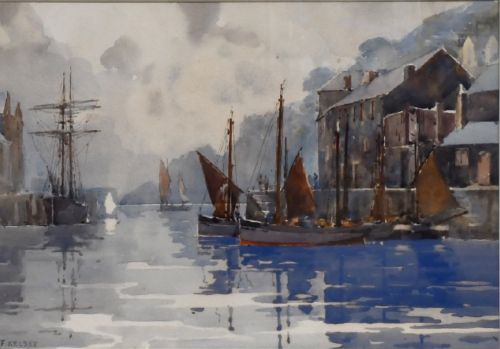
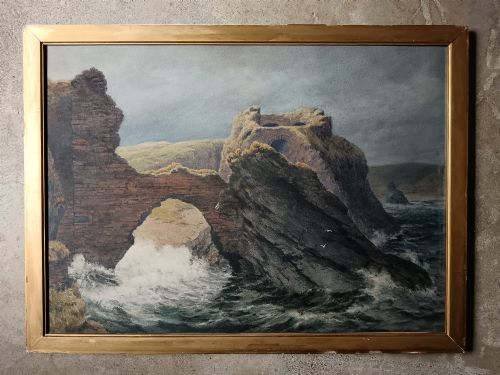
A grey marine watercolour depicts harbours, tall-masted ships and coastal communities through fluid pigment applied directly to paper. These works document maritime life from the late nineteenth century into the mid-twentieth century, capturing busy ports, fishing boats and naval vessels along British and European shores.
The selections available on this page lean heavily toward Victorian and Edwardian coastal views alongside mid-twentieth-century naval compositions. Painters utilised monochrome tones and subtle washes to render overcast skies, choppy waters and historic dockyards with direct observation.
Most examples appear framed behind glass, preserving delicate water-soluble pigments and gouache highlights on paper supports. Collectors encounter everything from rapid plein-air sketches to finished exhibition pieces bearing artist monograms or signatures.
Materials and methods
Artists painted primarily upon heavy wove paper, applying water-soluble pigments diluted with water to create translucent washes. Gouache frequently supplemented pure watercolour, introducing opaque highlights of white or grey to define breaking waves, billowing sails and foaming wakes.
Brushwork ranged from loose, impressionistic strokes capturing movement to precise linear details delineating rigging and hull structures. Pigments relied on earth tones, lamp blacks and Payne's grey to establish atmospheric depth without relying on a full chromatic spectrum.
Several Victorian sailors doubled as amateur artists, painting ironclad warships directly into logbooks between drills.
Assessing quality and execution
Quality rests upon the artist's command of tone and atmospheric perspective, where subtle gradations of grey convey the weight of sea mists and heavy clouds. Strong compositions balance architectural elements like piers or lighthouses against dynamic water movement.
Condition remains paramount, particularly the absence of acidic foxing spots or light-induced fading across the paper surface. Superior works retain crisp brushstrokes and energetic handling rather than laboured or overly static details.
William Cannon·James E Aitken·Hector Caffieri·Robert Leslie Howey·Alexander Harwood·Frank Kelsey·John Moxon·Charles William Adderton·Eric Tufnell·Vincenzo D Esposito·Thomas Bush Hardy·Ernest Dade·Edward Seago·Tom Clough·Frank H Mason·George Hamilton Constantine·John Mitchell·Samuel Owen·Clara Montalba·Ernest F Hill·Don Wilson·Frederick Stuart Richardson·Percy Brooke·Walter Duncan·William Kay Blacklock
The Grey Marine Watercolour Glossary
- Gouache
- An opaque watercolour paint containing pigment mixed with a binding agent and white filler. This material allows artists to lay light marks over dark washes.
- Wash
- A thin, fluid layer of diluted watercolour pigment spread evenly across paper. It creates luminous background skies and flat expanses of calm water.
- Foxing
- Brown spots caused by chemical reactions within older paper stocks. It appears frequently in nineteenth-century works exposed to humidity.
- Plein-air
- Painting outdoors in direct contact with the subject. This method gives marine watercolours an immediacy derived from observing changing coastal light.
- Monogram
- A cipher formed by overlapping initials used by artists to sign works discreetly. Many Victorian painters utilised these marks on smaller sketches.
Grey Marine Watercolour: Frequently Asked Questions
What is a grey marine watercolour?
It is a painting on paper focusing on ships, harbours and coastal views rendered primarily in monochrome or muted grey tones.
Artists used these restrained palettes to evoke overcast weather, sea spray and atmospheric maritime conditions.
How should I frame and display these watercolours?
Works on paper require framing behind glass with acid-free mounts to prevent direct contact with the glazing.
Keep them away from direct sunlight to protect sensitive pigments from fading over time.
How do I identify the period of a marine painting?
Rigging styles, vessel types and clothing worn by figures in the background offer clear chronological clues.
Paper watermarks, artist signatures and framing styles also help narrow down the decade of creation.
Did artists paint these works outdoors?
Many marine watercolours began as rapid on-the-spot sketches executed directly at the harbour or onboard boats.
Painters often completed larger, highly detailed exhibition pieces later inside their studios using these initial field studies.