


Highland Cattle Porcelain Vase
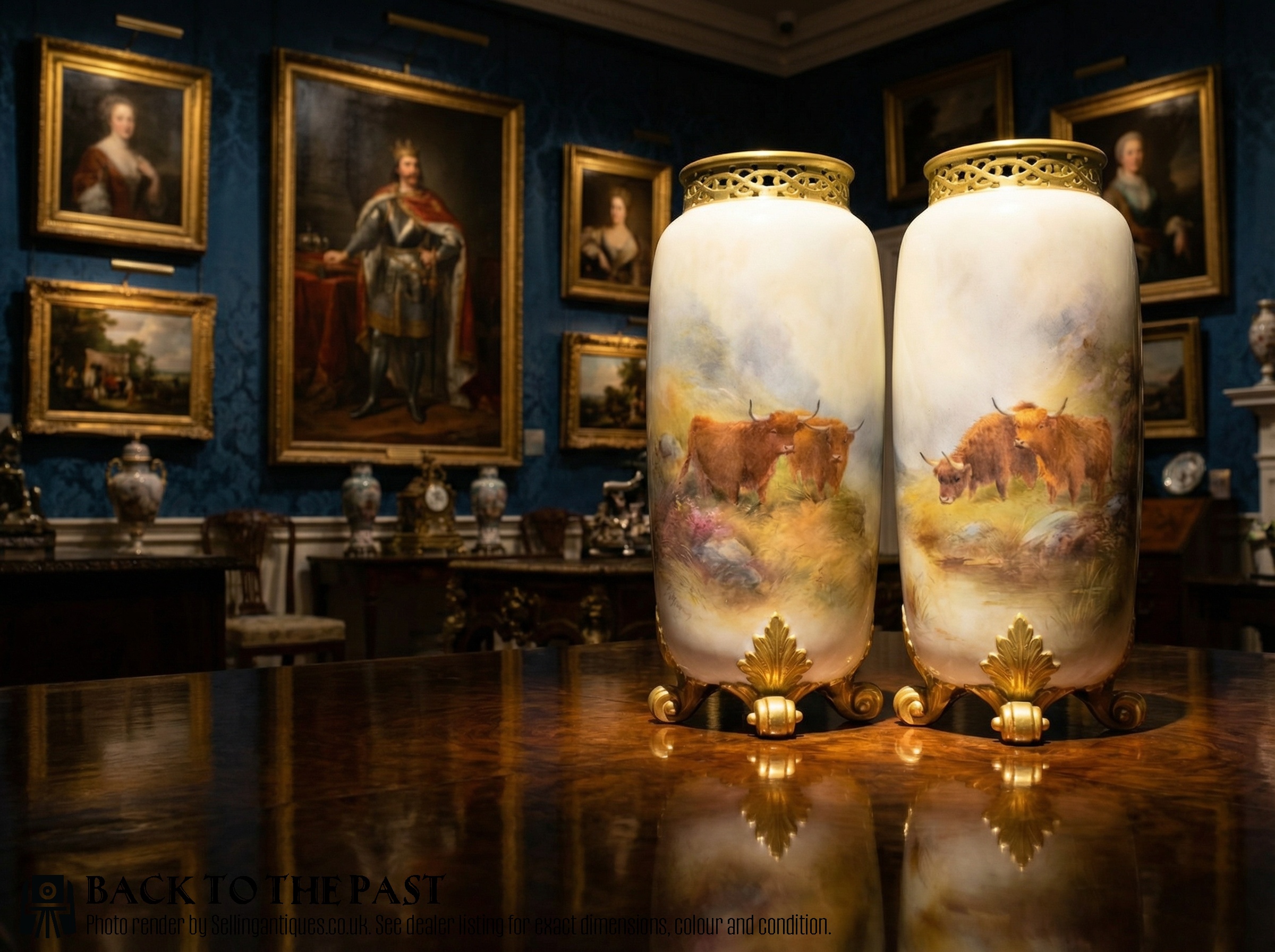
A highland cattle porcelain vase brings hand-painted Scottish scenes directly into the drawing room.
Highland Cattle Porcelain Vase
When you search for a highland cattle porcelain vase, you are looking at fine ceramic vessels featuring detailed hand-painted studies of cattle in highland landscapes. The versions you are most likely to meet on this page originate from the Edwardian period and the early decades of the twentieth century, taking forms such as spill vases, ewers, and covered urns.
These decorative pieces rely heavily on the output of a single renowned English porcelain manufacturer. Nearly every example recorded here bears the works of the Worcester factory, often featuring specific painted scenes associated with members of the Stinton family.
The assortment spans straightforward spill vases to large decorative urns and pairs of vases. Collectors encounter various vessel shapes including bow vases and ewers, all united by the characteristic pastoral subject matter.
How They Were Made
The creation of these pieces begins with fine white porcelain, shaped into traditional forms such as urns, ewers, and cylindrical spill vases. Artists then applied delicate enamel colours by hand to render the shaggy coats of the cattle and the misty highland backgrounds.
Makers finished many of these surfaces with rich gilt, gilding, or applied gold leaf around the rims, handles, and bases. This metallic detailing frames the painted pastoral panels and provides the characteristic Edwardian aesthetic found across the selection.
Every single highland cattle vase here somehow manages to look windswept and damp, despite living permanently indoors.
What Varies in Quality
Quality in these ceramics rests primarily upon the skill and identity of the hand painter. Pieces bearing signatures from established artists such as Harry Stinton or John Stinton command greater attention than unsigned factory work.
The complexity of the vessel form also distinguishes the range. Simple spill vases stand apart from elaborate covered urns and large ewers, while pairs offer a symmetry that single vessels lack.
Royal Worcester·Harry Stinton·John Stinton
The Highland Cattle Porcelain Vase Glossary
- Spill vase
- A tall, narrow vessel designed to hold taper spills used for lighting fires or candles. These cylindrical forms often provide a flat canvas for panoramic landscape paintings.
- Ewer
- A pitcher or jug with a wide spout and a curved handle, originating from practical washing vessels. In decorative porcelain, these take on purely ornamental roles.
- Gilt
- A thin layer of gold applied to the surface of porcelain. This technique highlights rims, handles, and borders to accentuate the luxury of the piece.
- Bow vase
- A vessel featuring a curved, bow-like contour to its body. This specific shape offers distinct panels for pictorial decoration.
Highland Cattle Porcelain Vase: Frequently Asked Questions
Who painted these porcelain vases?
Many of these pieces were decorated by members of the Stinton family working for the Royal Worcester factory. Artists such as Harry Stinton and John Stinton specialised in naturalistic pastoral scenes.
Their hand-painted cattle studies became a defining characteristic of the factory's output during the Edwardian era and the 1920s.
How do I date a highland cattle vase?
Dating relies primarily on factory backstamps found on the underside of the porcelain. Worcester pieces typically include code marks corresponding to specific years of manufacture.
Stylistic clues such as the Edwardian traditional aesthetic and signature formats also help narrow down the production decade.
What shapes do these vases take?
The inventory includes various forms ranging from simple cylindrical spill vases to grand decorative urns and ewers. Pairs of vases and bow-shaped vessels also appear frequently.
Each shape provides a different surface area for the detailed landscape paintings characteristic of the genre.
How should I display them at home?
These decorative vessels suit placement on mantelpieces, cabinets, or side tables where adequate light reveals the enamel colours and gilding. Pairing matching vases creates a balanced focal point in a traditional interior.
Keep them away from direct sunlight to preserve the delicate hand-painted enamel pigments over time.