



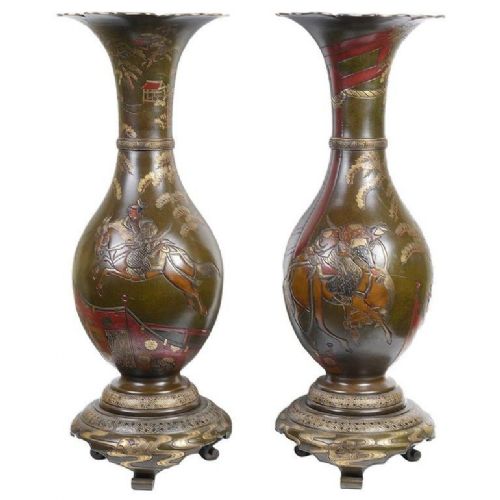


High Relief Japanese Bronze
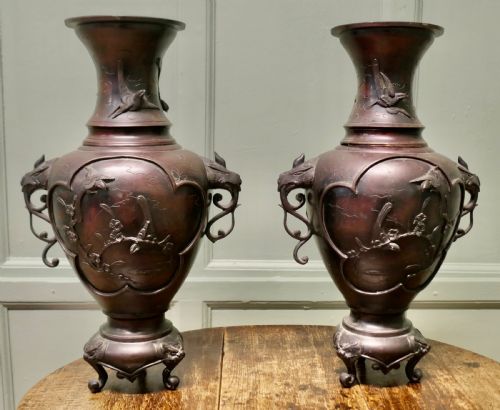
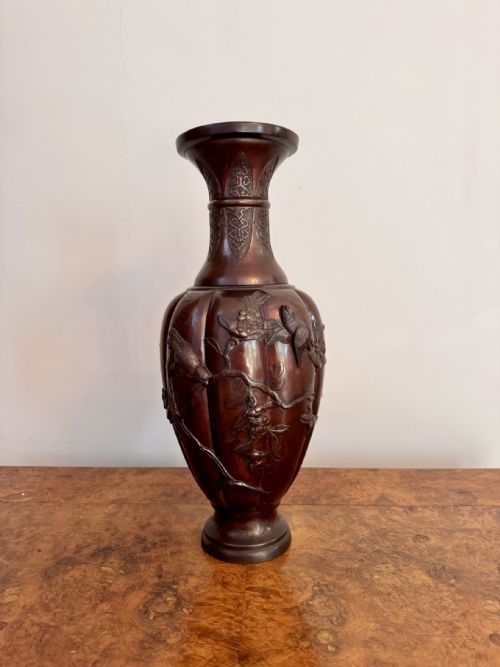
High relief Japanese bronze pieces bring sculptural depth to any room, taking the form of vases, jardinières and tsubas shaped during the Meiji and Edo periods.
High Relief Japanese Bronze
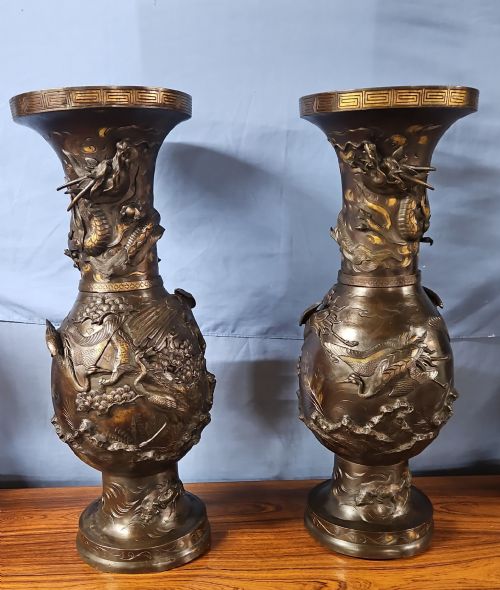
High relief Japanese bronze encompasses vessels and fittings where motifs project significantly from the background surface. Vases, jardinières and tsubas dominate the selection, spanning the Edo and Meiji periods.
Vases appear as single pieces and matched pairs, ranging from modest posy vessels to imposing floor urns. Jardinières provide larger planters for interior display, while tsubas offer intricate sword guards with raised dragon designs.
The objects stem predominantly from the nineteenth and early twentieth centuries, capturing the height of Japanese metalworking traditions. Buyers encounter works labelled under Victorian import periods alongside authentic Meiji dates.
How high relief Japanese bronze pieces were made
Craftsmen utilised cast bronze, patinated bronze and copper to form the structural bodies of vases and jardinières. Metalwork techniques involved complex casting methods that allowed motifs to stand proud of the main vessel wall.
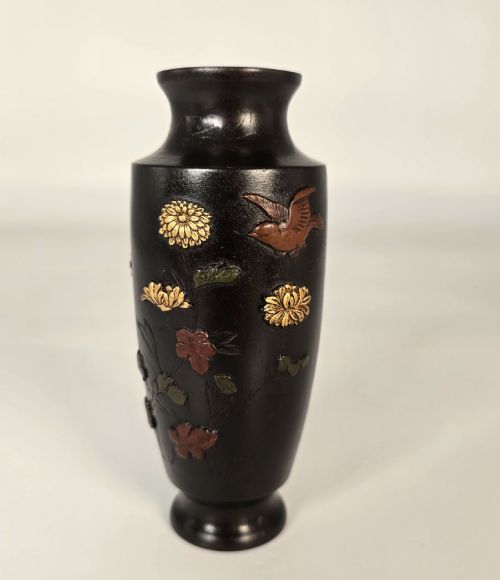
Makers applied gold inlay, gold gilding and mixed metal elements to highlight floral, bird and dragon details. Patination processes imparted varied dark and metallic surface tones to contrast against the bright inlaid highlights.
Listings feature bronze, copper, iron and gold inlay across Victorian and Meiji period dates.
What varies in quality in high relief Japanese bronze pieces
The depth and crispness of the chased and raised elements separate standard production items from masterworks. Superior examples display intricate detailing in feathers, scales and floral petals that catch the light.
Signed pieces by recognised makers demonstrate higher artistic ambition and meticulous finishing of mixed metal surfaces. The balance of the vessel form and the integration of the high relief decoration dictate overall visual success.
Genryusai Seiya·Seiya
The High Relief Japanese Bronze Glossary
- High relief
- Sculptural decoration that projects boldly from the flat background plane. This technique gives birds, dragons and floral sprays a three-dimensional presence on the bronze surface.
- Meiji Period
- The era in Japanese history spanning from 1868 to 1912. Many decorative bronzes available to collectors originated during this time of extraordinary metalwork output.
- Tsuba
- A traditional guard at the end of the grip of a Japanese sword. These metal plates often feature elaborate high relief carvings.
- Jardiniere
- An ornamental pot or stand designed to hold growing plants or floral arrangements. Large bronze examples function as floor-standing planters.
- Patinated bronze
- Metal treated with chemical solutions to produce an aged or coloured surface finish. This treatment enhances the shadows around high relief elements.
High Relief Japanese Bronze: Frequently Asked Questions
How do I date a high relief Japanese bronze?
Examine the recorded period styles, such as Meiji or Edo, alongside manufacturing signatures. Stylistic cues often point to late nineteenth or early twentieth century production.
Material choices like mixed metal inlay and patination also help establish the chronological context of each piece.
What is the difference between a vase and a jardiniere?
Vases are narrow vessels intended for holding cut flowers or standing alone as decorative objects. Jardinieres provide wider, deeper basins originally designed as plant containers.
Both utilise high relief bronze casting, but their functional forms serve distinct display purposes in domestic interiors.
Are signed Japanese bronzes common?
Signatures appear on select pieces, occasionally attributing the work to specific workshops or master metalworkers like Seiya. Unsigned pieces remain frequent across the selection.
An artist signature generally indicates higher workshop standards and careful attention to relief detail.
How should I care for patinated bronze surfaces?
Dust bronze surfaces gently with a soft, dry cloth to prevent the accumulation of grit. Avoid chemical polishes that might strip away historic patination or gold inlay.
Keeping pieces away from excessive moisture preserves the stability of the metal and the applied finishes.