
Asian Bronze Urn
An asian bronze urn brings sculptural weight and patinated depth to a room, drawing the eye with cast detail.
Asian Bronze Urn
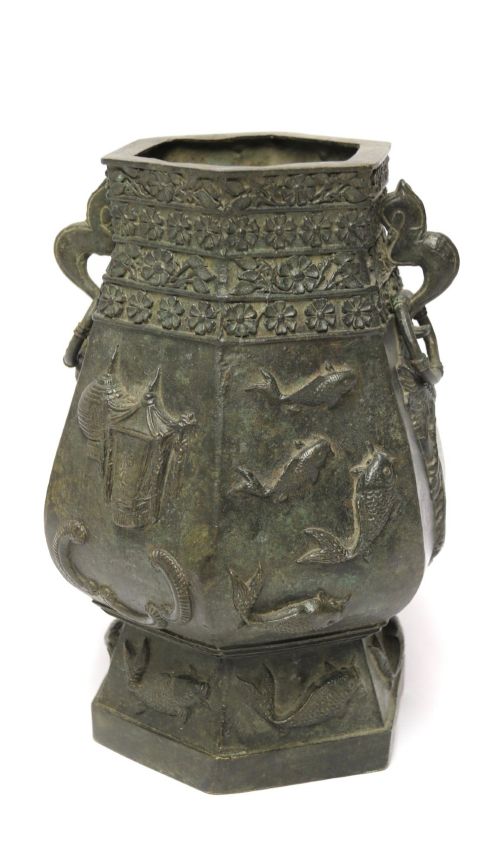
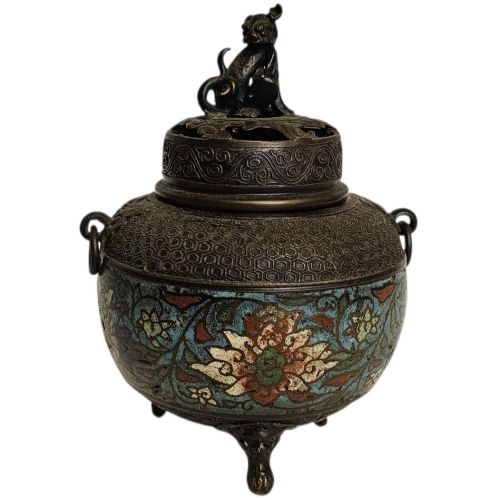
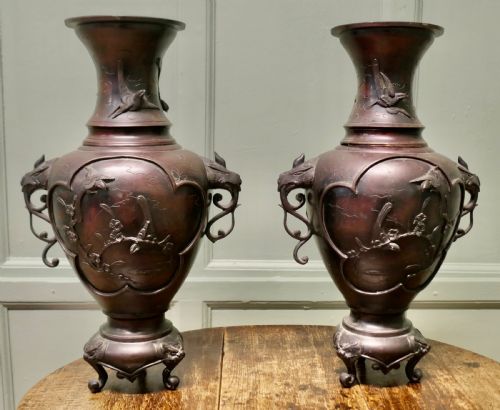
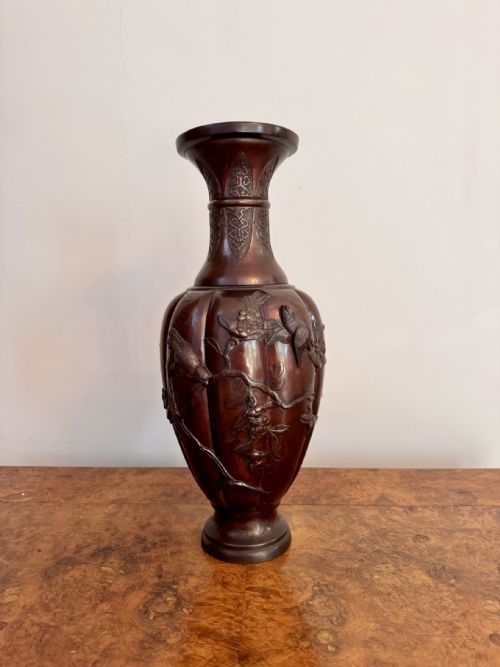
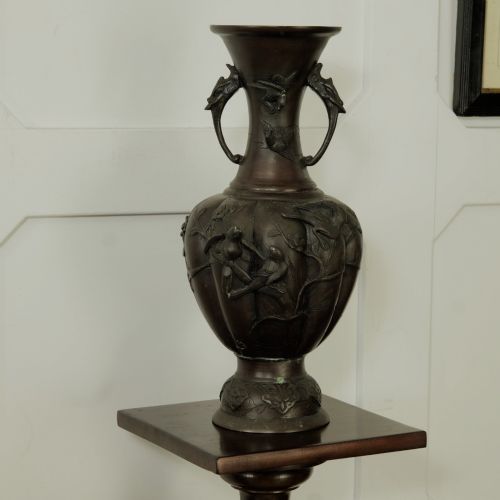
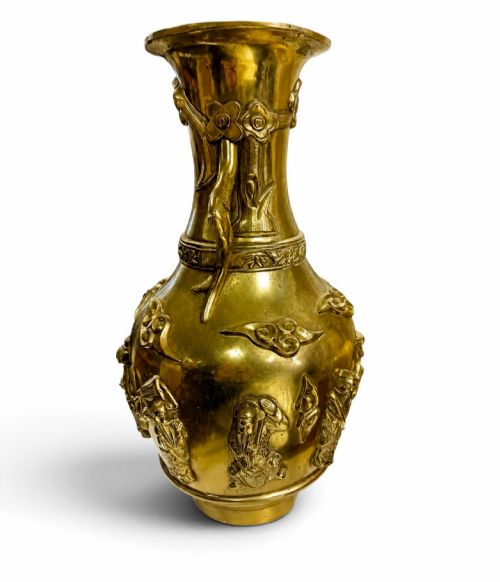
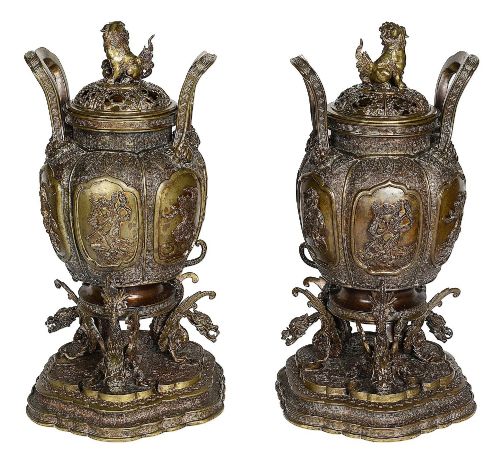
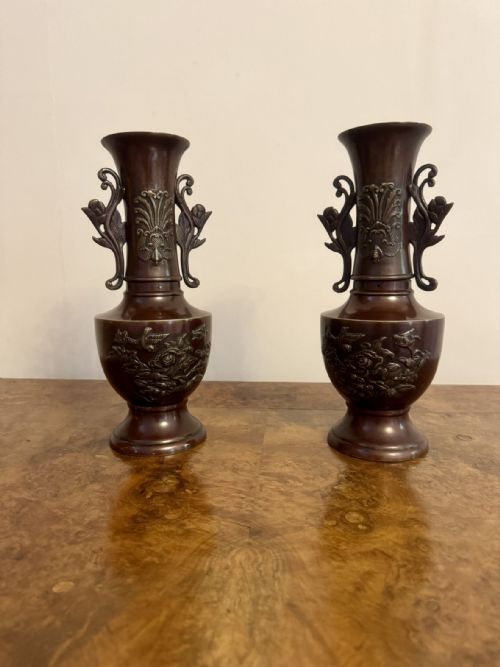
When you search for an asian bronze urn, you encounter vessels created across the nineteenth and early twentieth centuries in China and Japan. The pieces on this page span forms such as lidded temple jars, ritual vessels, baluster vases, and tripod censers.
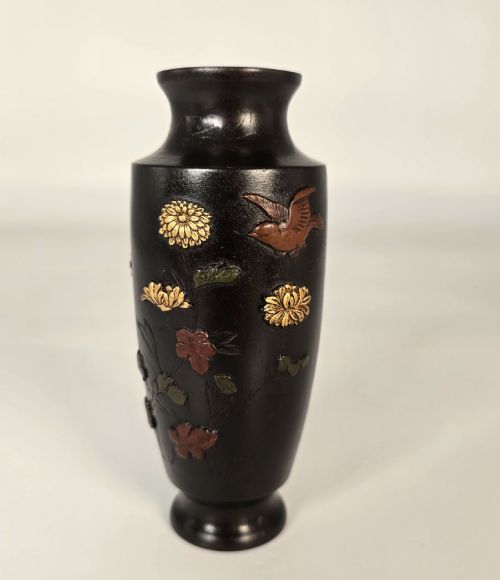
Japanese Meiji period examples and Qing dynasty Chinese works dominate the selection, often carrying high-relief ornamentation or inlaid wirework. Many of these metal forms served as incense burners or decorative display pieces before reaching the market today.
Makers occasionally signed their work or applied reign marks to the base, linking the object to specific workshops or periods of traditional casting.
Materials and Casting Techniques
The primary metalwork relies on bronze, copper-alloy, and brass, shaped through traditional lost-wax casting or hammered construction to achieve substantial walls and crisp surface contours. Artisans enhanced these metallic surfaces through applied patination, achieving deep brown, charcoal, or greenish tones.
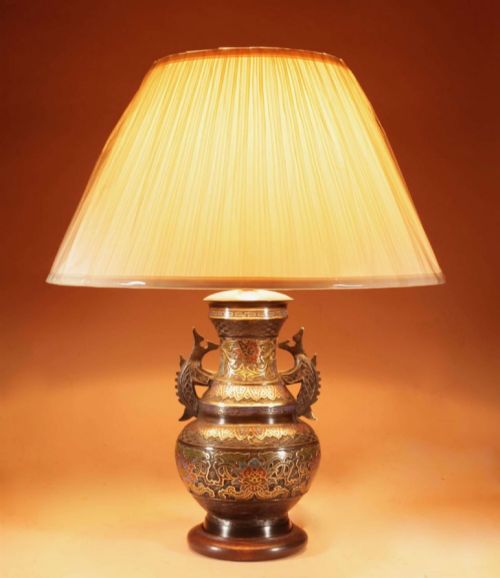
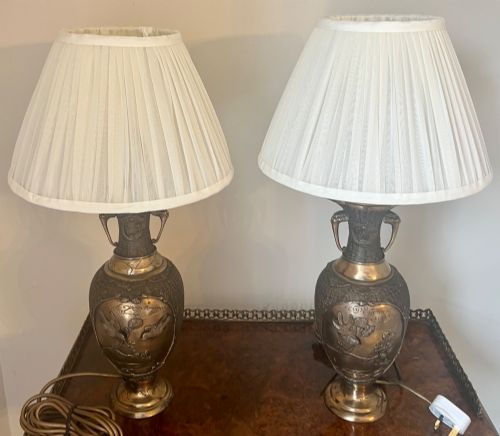
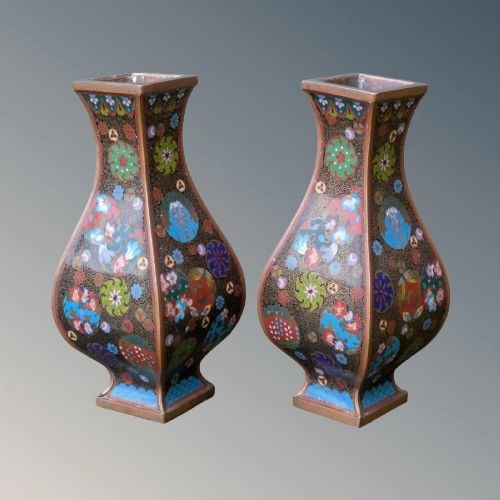
Enamel enrichment appears frequently in the form of champlevé and cloisonné, where coloured glass pastes fill recessed channels or wire cells soldered to the bronze body. Secondary elements like wooden display stands, fabric wiring for converted lamps, and copper fittings complete the physical structure of the pieces.
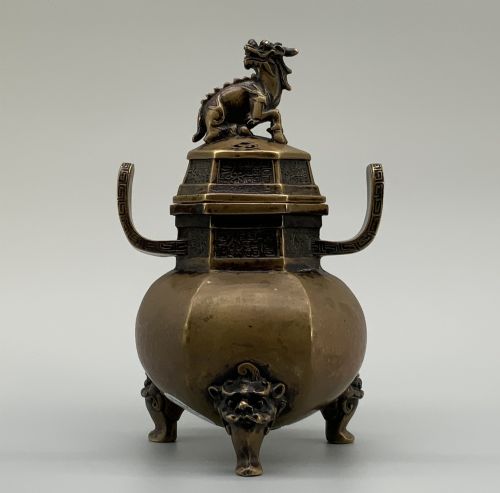
A solitary nineteenth-century incense burner hides a playful goat finial perched upon its lid.
Distinguishing Craftsmanship
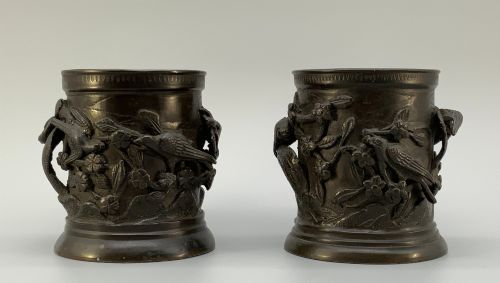
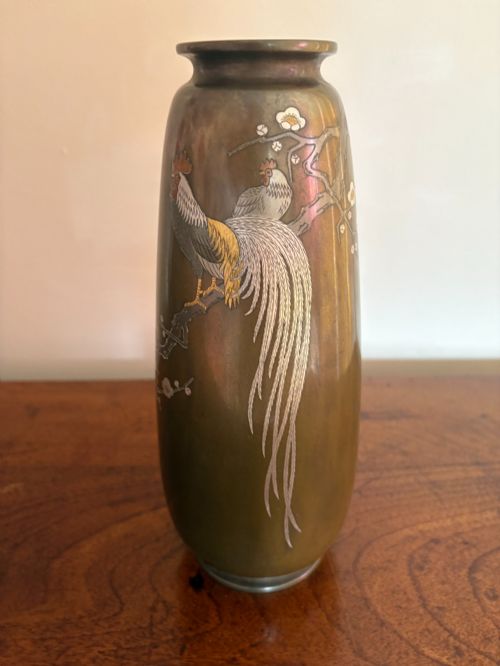
The standard of an asian bronze urn rests upon the sharpness of its chased details and the integrity of its patination. Superior items display crisp relief work, such as distinct plumage on birds or deeply articulated scales on dragons, executed by skilled hands rather than mass production.
The harmony of proportion and the precision of inlaid enamel or champlevé cells separate standard decorative objects from superior examples. Heavy gauge metal, stable tripod feet, and intact lids contribute further to the distinction of the piece.
KANASAWA·Kizan
The Asian Bronze Urn Glossary
- Champlevé
- An enamelling technique where troughs or cells are carved directly into the bronze surface and filled with vitreous enamel before firing. This method creates a flat, colourful pattern flush with the metal partitions.
- Cloisonné
- A technique using thin metal wires soldered to the bronze body to form compartments, which are then filled with enamel paste and fired. It produces intricate geometric or floral designs across the vessel.
- Tripod Censer
- An incense burner supported by three distinct feet, frequently cast with mythical beast motifs or handles. These vessels held aromatics in traditional settings.
- Archaistic
- A design style deliberately imitating ancient ritual bronzes from earlier dynasties. Makers adopted these archaic forms to invoke a sense of classical antiquity and reverence.
- Patination
- The natural or chemically induced surface coloration developed on bronze over time. A stable patina protects the underlying metal and adds visual depth.
Asian Bronze Urn: Frequently Asked Questions
How do I clean an antique bronze urn?
Dust the surface gently with a soft, dry cloth to preserve the historic patina. Avoid using harsh chemical polishes or water, which can strip the aged finish.
Allow the metal to retain its natural appearance over time, as aggressive cleaning diminishes the character built up across centuries.
Were these vessels used for incense?
Many forms originated as ritual or domestic incense burners, known as censers or koros. They often feature perforated lids designed to release fragrant smoke.
Other shapes served purely as decorative display pieces, flower vases, or later adaptations for electrical table lamps.
How do I distinguish Chinese from Japanese pieces?
Chinese examples often reference archaistic forms, deep relief Daoist figures, or imperial reign marks. The iconography typically draws from ancient dynastic traditions.
Japanese Meiji period pieces frequently display naturalistic flora and fauna, delicate inlaid wiring, or signature plaques from regional artisan schools.
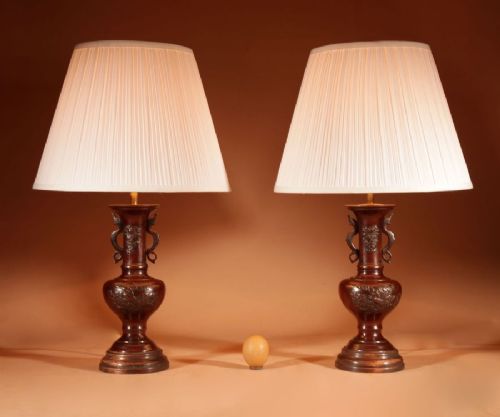
Why are some urns converted into lamps?
Late nineteenth and early twentieth-century decorative objects frequently underwent conversion to suit Western domestic interiors by adding electrical fittings.
This adaptation allowed households to repurpose heavy bronze vases and temple jars into functional table lighting while retaining the original artistry.