



High Relief Bronze
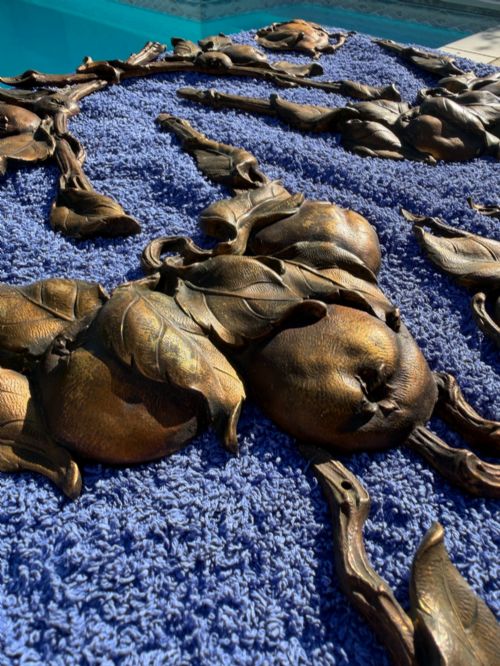
High relief bronze pieces bring sculptural depth to metalwork, offering tactile ornamentation through figures and motifs that project boldly from the surface.
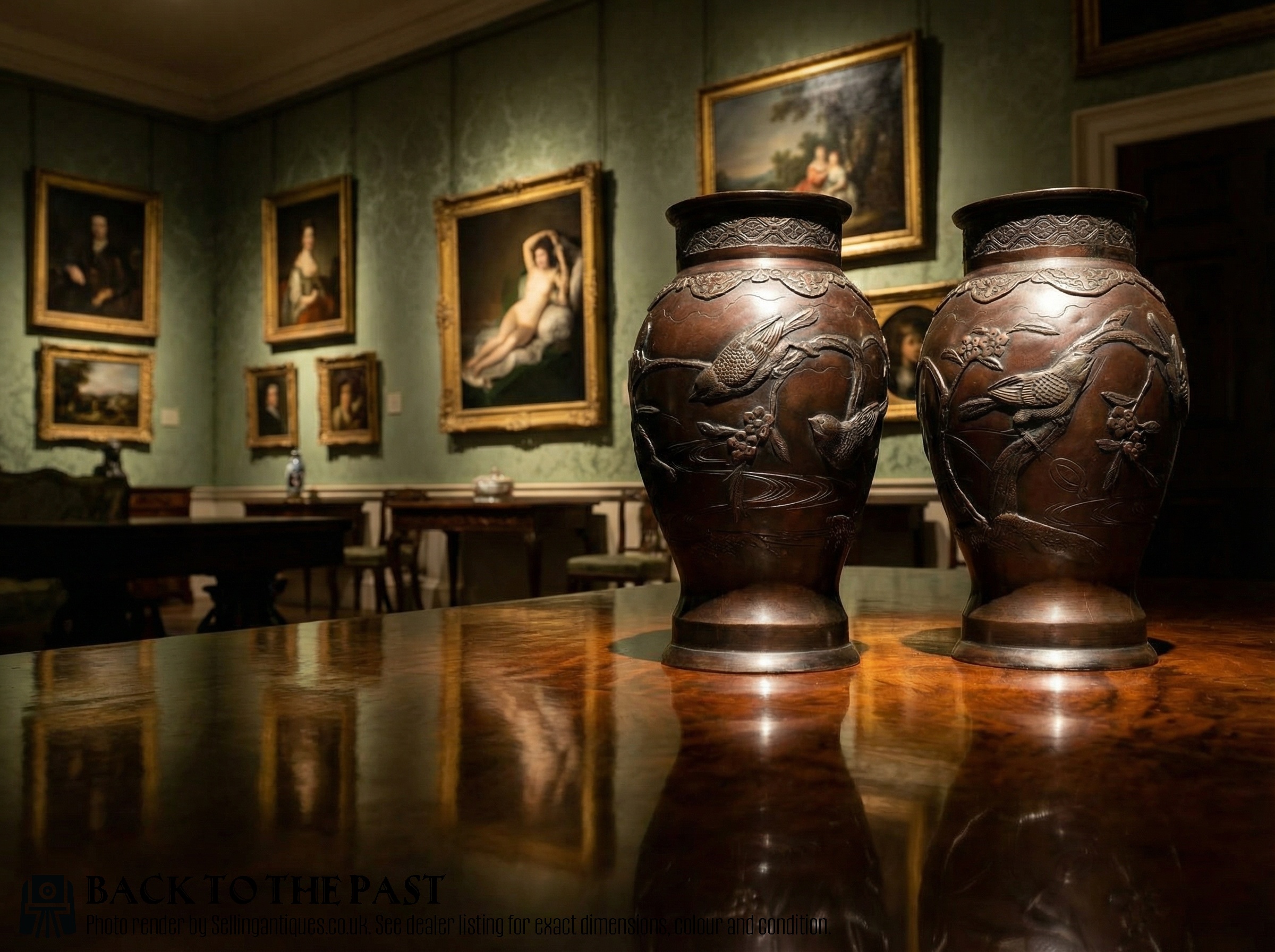
High Relief Bronze
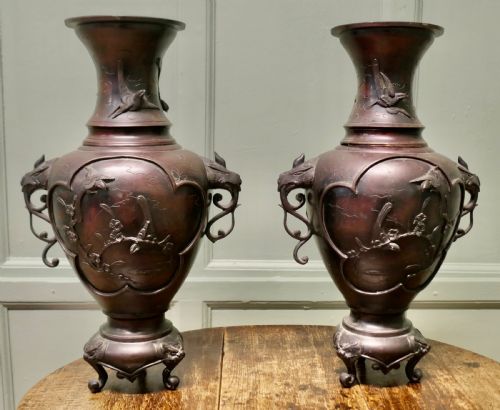
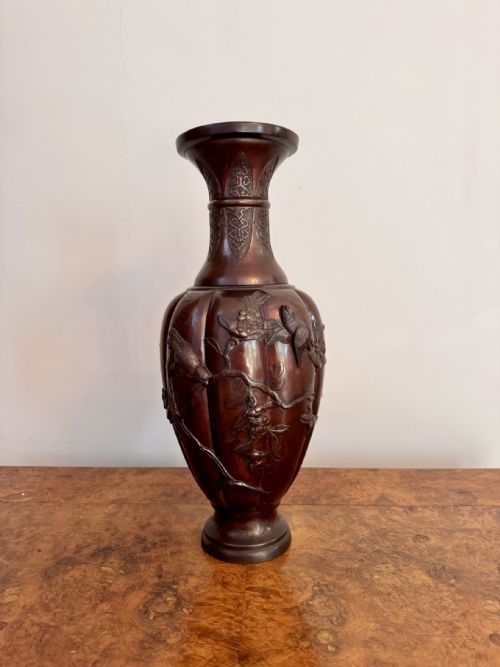
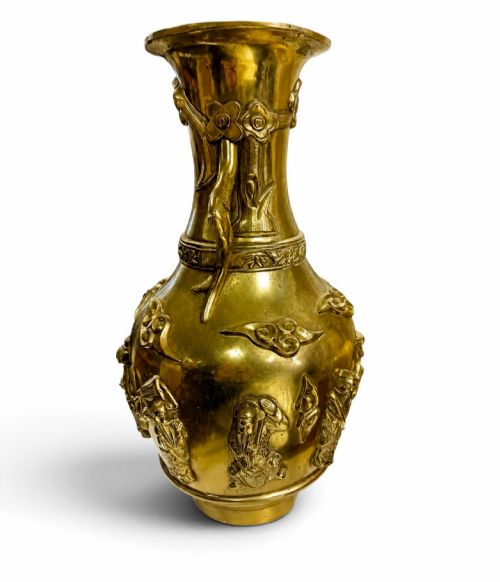
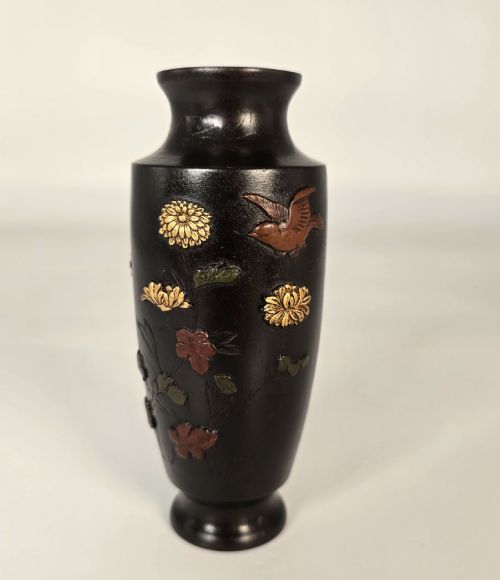
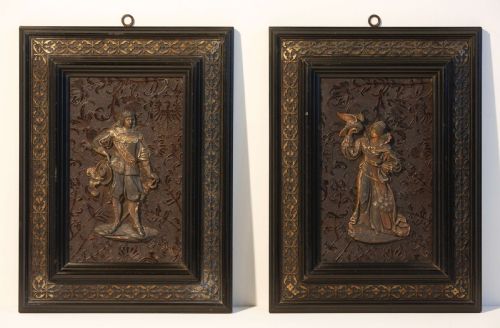
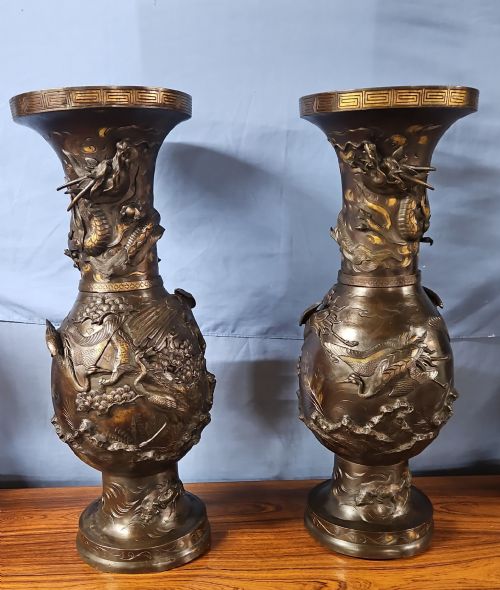
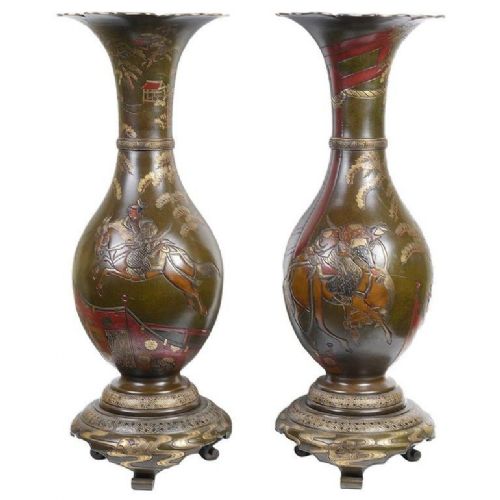
High relief bronze items encompass sculptural vessels, wall plaques, furniture mounts, and small decorative objects originating primarily from the nineteenth century and the early twentieth century. When exploring high relief bronze on this page, buyers most frequently encounter Japanese vases from the Meiji period alongside Chinese baluster forms and European decorative plaques.
The selection ranges from large jardinières and pairs of monumental urns down to compact posy vases and sword guards. These pieces draw attention through prominent raised ornamentation depicting floral arrangements, birds, Daoist immortals, and mythical dragons.
Materials and Technique
The works utilise cast bronze, copper alloy, and patinated or gilt bronze, often augmented by gold inlay and mixed metal elements to create varied surface tones. Makers achieved high relief by casting the primary form and subsequently applying separately cast or hammered motifs that project significantly from the background.
Finishing techniques include chemical patination, gilding, and the integration of white metal details to accentuate the three-dimensional depth of the raised ornamentation.
High Relief Bronze Retail Price Guide 2026
Typical asking prices for high relief bronze among the pieces listed under this phrase on Sellingantiques today, from the lower quarter to the upper quarter. They describe what is for sale here now, not the wider market.
Materials represented across the current selection include standard bronze, patinated bronze, gilt bronze, copper alloy, brass, and white metal.
Assessing Quality
Quality rests upon the crispness of the casting and the precision with which the raised elements integrate with the main body. Superior examples display meticulous hand-finishing in the background textures and the fine details of hair, feathers, or botanical subjects.
The weight and balance of the object, the complexity of mixed metal applications, and the presence of artist signatures or proper base marks distinguish the finest workshop productions from standard decorative wares.
Poix Blin·Carl Ranch Chronometer Maker·Genryusai Seiya
The High Relief Bronze Glossary
- High relief
- A sculptural technique where the figures and motifs project far out from the background plane. This method creates strong shadows and a powerful three-dimensional presence.
- Patinated bronze
- Metal treated with chemical solutions to produce a specific surface colour and aged appearance. This treatment protects the metal while enhancing the visual contrast of the relief.
- Meiji Period
- A span of Japanese history lasting from eighteen sixty-eight to nineteen twelve. Pieces from this era frequently exhibit exceptional technical mastery in bronze casting and mixed metal inlay.
- Applique
- An ornamental element formed separately and applied directly to the surface of a larger object. These decorative pieces contribute to the raised relief effect on furniture mounts and plaques.
- Baluster vase
- A vessel featuring a curved body that swells near the base and tapers toward a narrow neck. This traditional shape frequently serves as a canvas for large-scale relief decoration.
High Relief Bronze: Frequently Asked Questions
What is high relief bronze?
High relief bronze refers to metalwork objects featuring sculptural decoration that projects substantially from the flat background plane. This technique gives vases, plaques, and decorative items a strong three-dimensional quality.
Items matching this description span nineteenth-century European decorative arts and Japanese Meiji period metalwork. The raised elements are typically cast separately and attached or worked directly from the main metal body.
How do I identify a Meiji period bronze?
Meiji period bronzes originate from Japan between eighteen sixty-eight and nineteen twelve. They frequently display subjects such as birds, floral arrangements, and mythological figures rendered with meticulous surface detail.
Many pieces from this era incorporate mixed metal highlights or bear signature cartouches on the base. The combination of patinated bronze with copper and gold inlay points directly to this period of production.
Where were these bronze pieces displayed?
Vases, jardinières, and urns served as prominent interior decoration in nineteenth-century homes, often positioned on pedestals, mantelpieces, or central tables. Large pairs were frequently used symmetrically to anchor architectural spaces.
Smaller items like wall plaques and furniture mounts were integrated directly into interior fittings and wall displays. Their robust sculptural presence made them focal points in Victorian reception rooms.
How should I care for antique bronze?
Antique bronze requires gentle dusting with a soft, dry cloth to prevent the accumulation of grit within the recessed areas of the relief. Avoid using abrasive cleaning agents or commercial metal polishes that can strip away the original historical patina.
Stable indoor humidity and moderate temperatures protect the metal and any applied gilding or mixed metal inlays from degradation. Preserving the surface finish maintains the visual depth of the high relief work.