




High Back Carved Bench
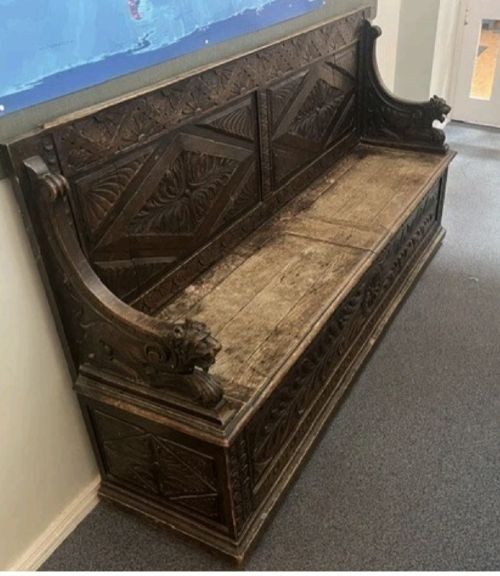
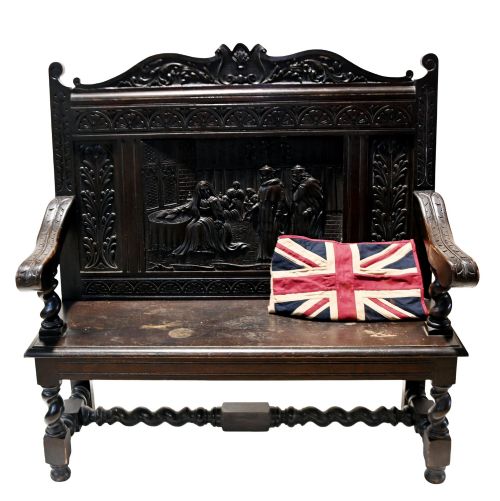
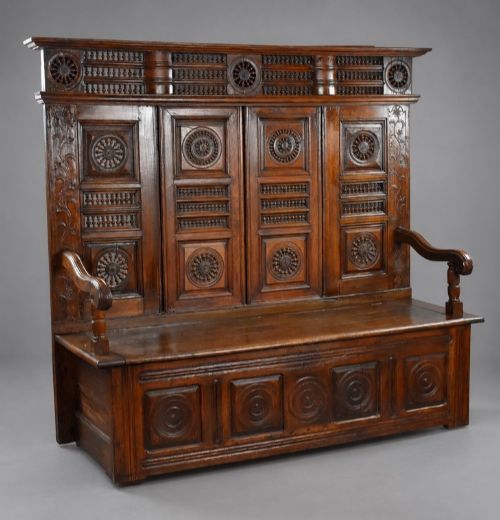
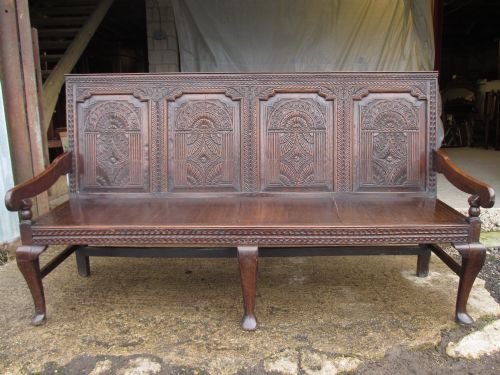
A high back carved bench brings centuries of solid craftsmanship and architectural presence into a hallway or living space.
High Back Carved Bench
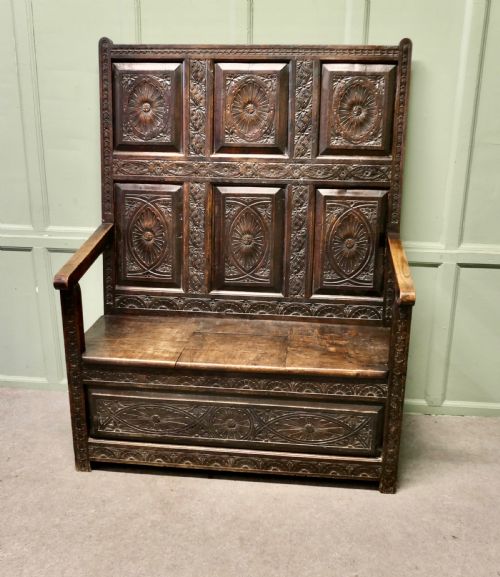
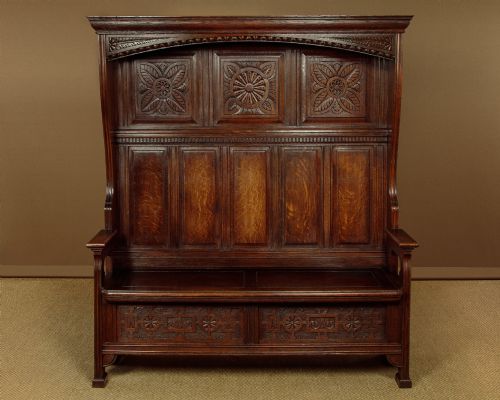
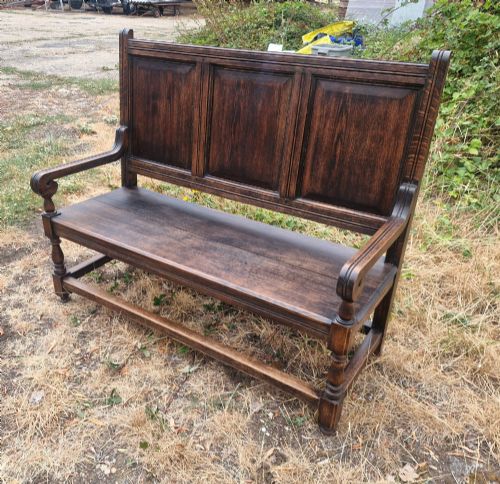
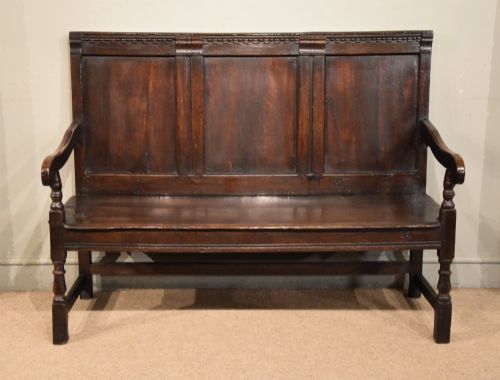
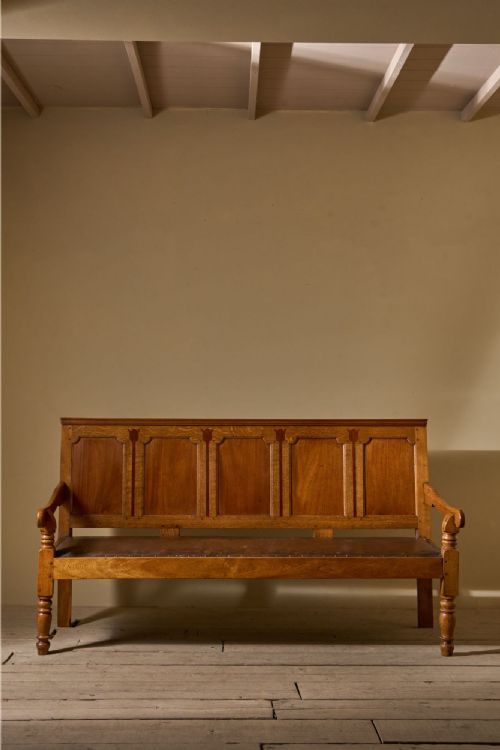
A high back carved bench, often found as a settle or panelled hall seat, combines sturdy timber construction with tall protective backs designed to keep out draughts. These pieces trace their origins from seventeenth-century vernacular furniture through to nineteenth-century revival interpretations.
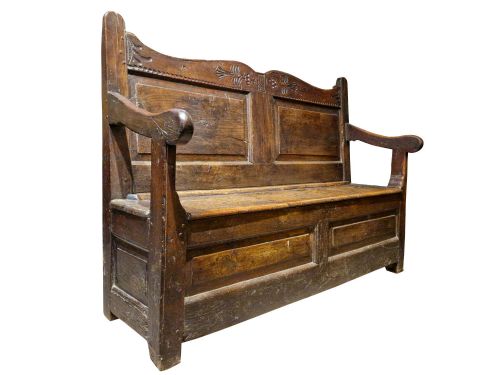
The versions most frequently met on this page are oak settles and hall benches bearing carved panels, box seats, or canopy tops. Examples range from eighteenth-century country pieces to Victorian Gothic and Jacobean revival interpretations.
Originating primarily in British, French, Spanish, and Italian workshops, these seats served practical domestic roles in large halls and farmhouses. Their high wooden or upholstered backs create a distinct spatial division within a room.
What varies in quality
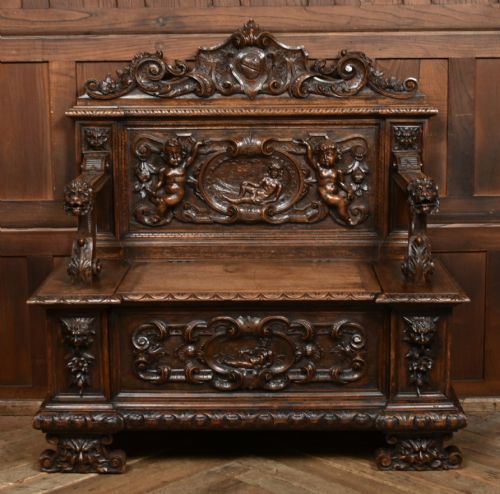
The depth and crispness of the hand-carving distinguish standard vernacular work from master furniture maker production. Crisp relief work, well-defined linenfold or figural motifs, and balanced proportions elevate the standing of a piece.
Originality of timber and structural integrity dictate the long-term character of the bench. Pieces retaining their early boarded backs, original box storage compartments, and undisturbed patina command greater appreciation than heavily altered examples.
Listings span multiple centuries, ranging from seventeenth-century English oak pieces to nineteenth-century Italian walnut cassapancas.
Hampton & Son's·Emma Grant
The High Back Carved Bench Glossary
- Settle
- A wooden bench with a high solid back, armrests, and frequently a box-base seat used for storage. It evolved to block cold draughts in medieval and early modern halls.
- Cassapanca
- An Italian wooden bench featuring a box seat base and a high back, often ornamented with Renaissance revival carving. It functions as a hybrid chest and seat.
- Panelling
- The construction method utilising vertical stiles and rails enclosing flat or carved thin wooden boards. This technique accommodates seasonal wood movement without splitting.
- Canopy top
- A projecting wooden hood or tester positioned above the high back of a settle. It traps heat from a hearth and shields the seated occupant.
- Green Man
- A decorative architectural mask carved as a human face sprouting foliage or vines. This pagan motif frequently appears in nineteenth-century Gothic revival woodwork.
High Back Carved Bench: Frequently Asked Questions
Where were high back carved benches originally placed?
These seats stood near the entrance hall or close to the hearth in large domestic rooms. Their high panelled backs shielded occupants from cold draughts sweeping across stone floors.
In country houses and farmhouses, the enclosed box base served as a convenient chest for blankets, boots, and everyday household items.
How do I tell an 17th-century settle from a Victorian revival piece?
Seventeenth-century examples display native tool marks, pegged joinery, and timber surfaces seasoned by centuries of wear and beeswax. The oak develops a deep, dry patina that modern staining struggles to replicate.
Victorian revival pieces often feature softer pine internal secondary woods, machine-sawn components behind the hand-carving, and crisper, deeper relief work associated with nineteenth-century Gothic tastes.
Can I use a hall bench for daily seating?
Solid timber construction makes these benches remarkably durable for everyday use in hallways or kitchens. Adding a simple linen or leather squab cushion provides extra comfort for prolonged sitting.
Positioning the bench away from direct radiator heat and sudden temperature changes protects the aged timber and historic joints from drying out.
What is the difference between a settle and a cassapanca?
A traditional settle is typically constructed from oak or pine with a functional, domestic vernacular aesthetic. Its high back and wings are designed purely for draught exclusion in British and Northern European interiors.
A cassapanca originates from Italy and incorporates Renaissance architectural motifs, panelled armrests, and sweeping arm supports. It functions as an elaborate seat and storage chest combined.