



Carved Walnut Hall Bench
A carved walnut hall bench brings immediate architectural weight to an entrance, offering both a formal seat and deep historic character.
Carved Walnut Hall Bench
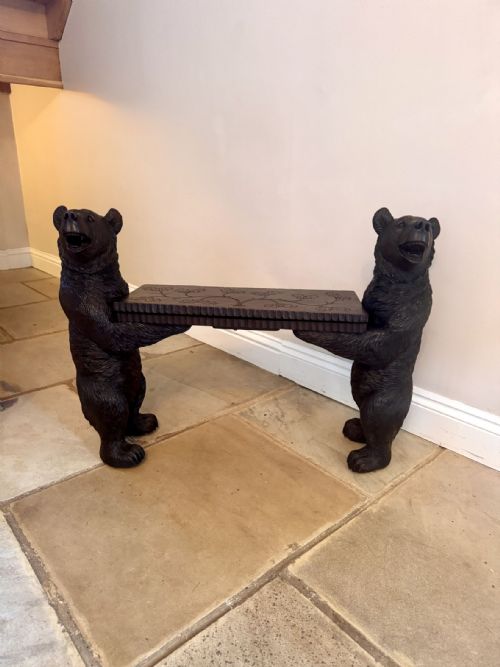
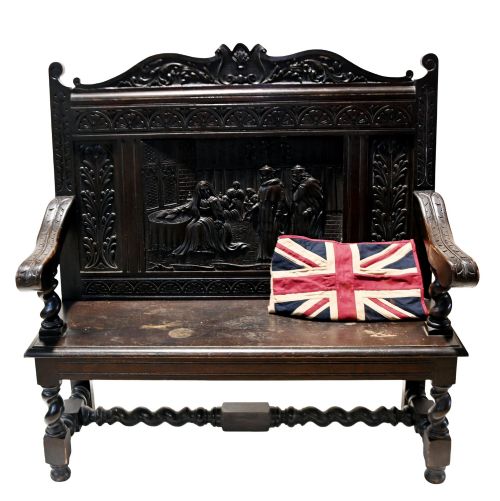
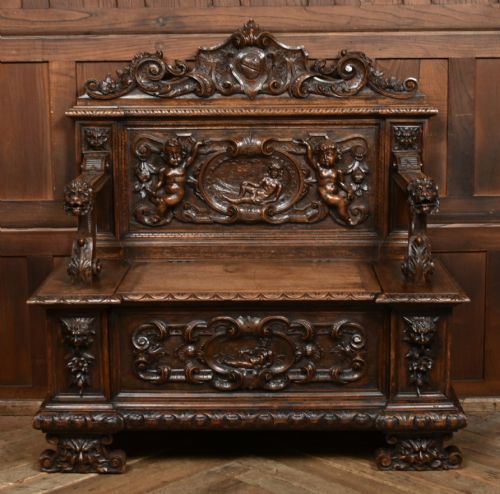
When you search for a carved walnut hall bench, you encounter heavy timber seating designed for passages, lobbies, and grand stairwells. The pieces on this page span the nineteenth century and earlier, drawing on Italian Renaissance Revival, Carolean, and Victorian styles.
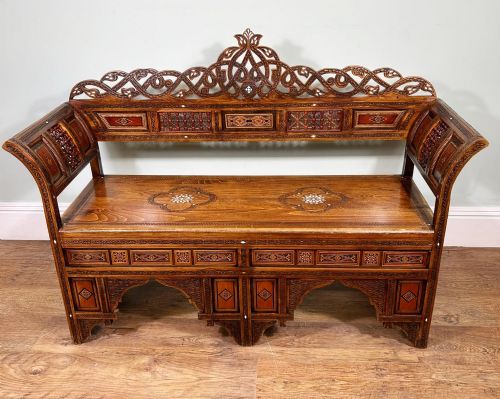
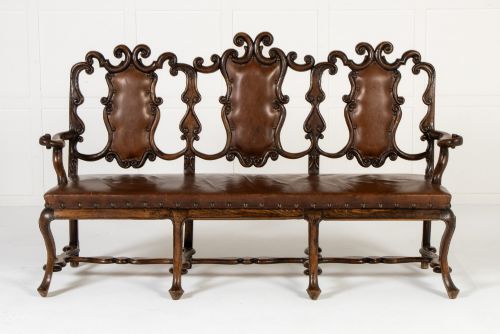
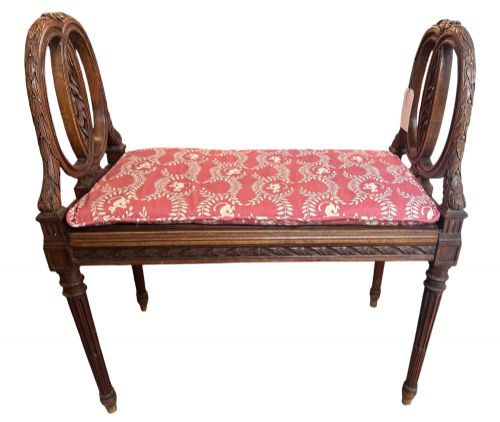
Most examples rely on dense walnut frames paired with elaborate woodwork, high panelled backs, and integrated seating. Alongside traditional settles, the selection includes window seats, settees, and cassette-style benches originating from English, French, and Italian workshops.
How they were made
Joinery relied on solid walnut timbers carved by hand, often incorporating turned or fluted legs and high relief panels. Artisans utilised traditional mortise and tenon construction to support the considerable weight of the timber and ornamentation.
Surface decoration frequently extended beyond simple carving to include applied details such as mother-of-pearl inlay, brass mounts, cane panels, or bone highlights. Upholstered variants were traditionally finished with fabric, leather, or linen fastened over stuffing.
The documented periods range from mid-eighteenth-century Italian pieces to early twentieth-century window seats and settles.
What varies in quality
Quality rests principally in the depth and crispness of the hand carving, where sharper, more articulate relief indicates superior workshop execution. The choice of timber grain and the integrity of the structural joinery also determine the standing of each piece.
Provenance and stylistic cohesion elevate certain examples, particularly those bearing distinct regional motifs like Italian Renaissance Revival scrolling or elaborate Flemish ornamentation. Original hardware, intact inlay work, and uncompromised structural frames distinguish the finest examples.
Hampton & Son's
The Carved Walnut Hall Bench Glossary
- Cassapanca
- A traditional Italian wooden bench with a high back and arms, featuring a storage chest integrated beneath the seat. This form combines seating with heavy compartment storage.
- Settle
- A wooden bench with high panelled backs, solid wooden arms, and often a storage box beneath the seat to block draughts in large halls. It represents one of the oldest forms of domestic seating.
- Carolean Revival
- A nineteenth-century style imitating the ornate, scrolling woodwork of the late seventeenth-century English Restoration period. It typically displays rich walnut carving and crown motifs.
- Renaissance Revival
- A nineteenth-century movement drawing inspiration from sixteenth-century classical architecture and furniture. Pieces in this style feature bold symmetry, architectural pilasters, and deep relief carving.
- Bergere
- An enclosed upholstered armchair or window seat with exposed wooden framing, usually cane or fabric-sided. The frame provides a lighter silhouette than panelled wooden benches.
Carved Walnut Hall Bench: Frequently Asked Questions
Where should I place a hall bench?
These benches suit large entrance halls, wide corridors, or garden rooms where their substantial depth and high backs can be fully appreciated against a plain wall.
Because many versions incorporate storage beneath the seat or within the base, they also function practically for stowing shoes and textiles out of sight.
How do I care for antique walnut?
Keep walnut furniture away from direct heat sources and strong sunlight to prevent the timber from drying out and the joints from shrinking over time.
Apply a traditional beeswax polish sparingly and buff with a soft cloth to maintain the natural lustre of the grain without building up heavy residue.
Are these benches comfortable to sit on?
Most antique hall benches were built primarily for formal presentation and posture rather than lounging, meaning wooden seats are firm and upright.
Upholstered variants, window seats, and those fitted with drop-in cushions offer a softer sit while retaining the historic walnut framework.
How can I tell the period?
Dating relies on examining the carving styles, construction methods, and tool marks left on the underside or interior of the timber frame.
Revival pieces often borrow motifs from sixteenth or seventeenth-century aesthetics but reveal nineteenth-century machine assistance or specific hardware styles upon closer inspection.