



Carved Relief Wooden Seat
A carved relief wooden seat brings tangible warmth and sculptural depth to an interior.
Carved Relief Wooden Seat
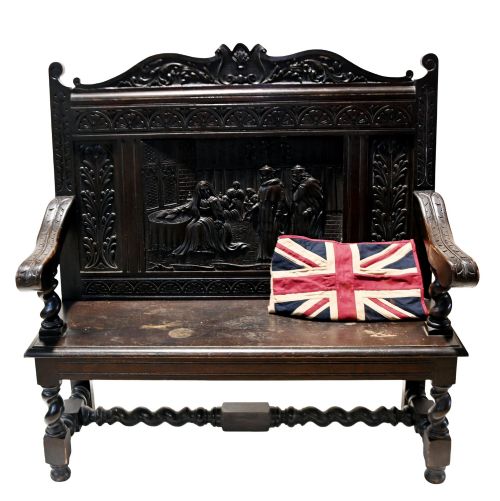
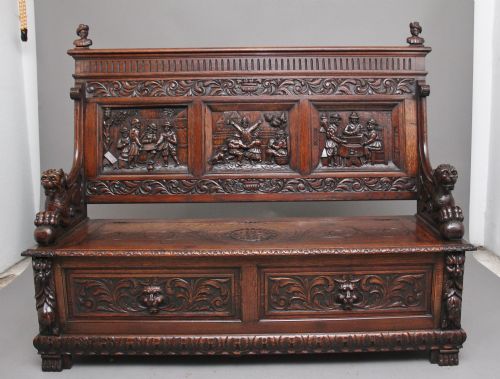
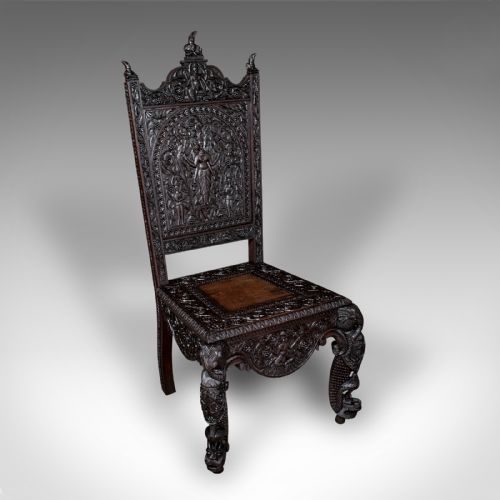
A carved relief wooden seat encompasses substantial furniture forms created across the nineteenth century, ranging from monumental hall settles to ceremonial armchairs and ritual figures.
Buyers encountering this group most frequently meet nineteenth-century oak, teak, and elm examples exhibiting revivalist influences such as Renaissance, Jacobean, and Gothic styles alongside French Breton and Chinese export traditions.
These seating pieces serve practical functions in hallways and living spaces while displaying intricate figural and geometric carving across backs, arms, and panels.
Materials and construction methods
Craftsmen utilised dense timbers including oak, teak, elm, and walnut to ensure structural stability for deep relief carving.
Surfaces were shaped using chisels and gouges to build up high-relief dimensionality, occasionally enhanced by polychrome pigment or paint.
Joinery methods such as pegged mortise and tenon construction supported heavy box settles and dug-out chairs.
Several chairs feature cunning storage boxes beneath the seat, perfect for hiding away modern clutter.
Assessing quality in carved wooden seating
Quality rests in the crispness and depth of the chisel work, where sharply defined figural motifs distinguish superior examples from softer, shallower cutting.
The choice of timber and the integrity of the original construction dictate durability, with well-figured oak and seasoned teak providing the most resilient foundation.
The Carved Relief Wooden Seat Glossary
- Settle
- A wooden bench with a high back, solid arms, and often a box compartment beneath the seat. This form provided draught protection in traditional hallways.
- Relief carving
- A sculptural technique where figures or patterns project from a flat background. High relief creates strong shadow and depth.
- Polychrome
- The practice of decorating architectural elements or sculpture in a variety of colours. Pigments applied to wood add vibrant surface detail.
- Dug-out chair
- Seating formed by hollowing out a single log or thick timber block. This primitive construction yields heavy, rustic seating.
Carved Relief Wooden Seat: Frequently Asked Questions
Where should I place a heavy wooden settle?
A large settle sits best against a sturdy wall in a generous hallway or living room, where its high back and carved panels can be appreciated.
Ensure the floor space accommodates the projection of the arms and the depth of the seat base.
How do I care for antique carved timber?
Maintain the wood by dusting regularly with a dry, soft cloth and occasionally applying a suitable beeswax to nourish the grain.
Keep these pieces away from direct heat sources and strong sunlight to prevent the timber from drying out or splitting.
What distinguishes Gothic revival seating?
Gothic revival pieces draw inspiration from medieval architecture, featuring pointed arches, tracery, and robust proportions.
Carvers emphasised vertical lines and ecclesiastical motifs to evoke an earlier historical period.
Are these seats comfortable for daily use?
Most antique wooden seats offer firm, upright support rather than deep lounging comfort.
Adding a loose fabric cushion can soften the wooden base for extended sitting.