



Hexagonal Wood Table
A hexagonal wood table brings geometric balance to a room, offering six-sided tops finished in walnut, mahogany, or rosewood.
Hexagonal Wood Table
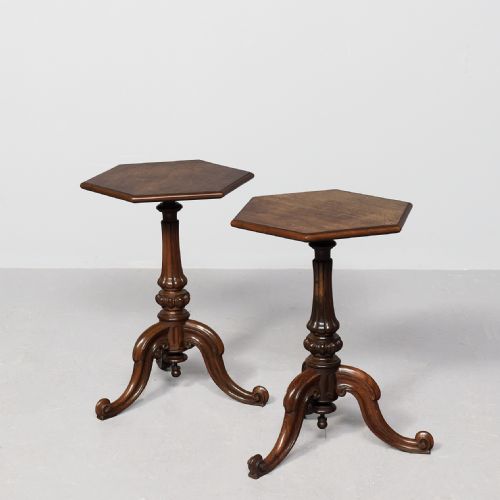
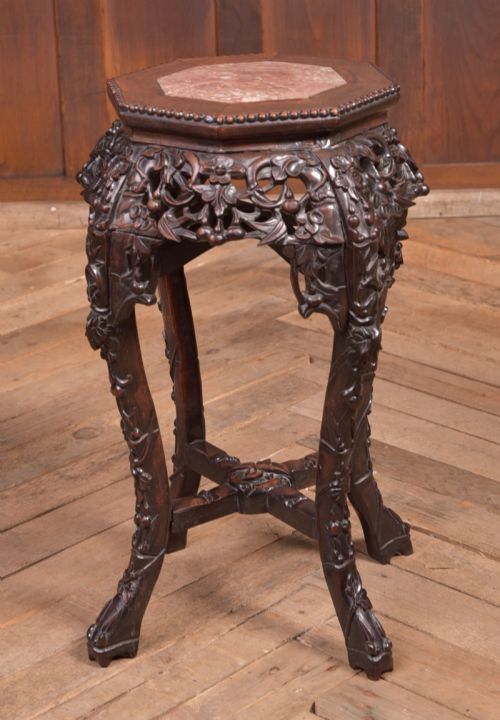
A hexagonal wood table appears in various forms across this selection, ranging from side tables and occasional tables to plant stands and pedestal cabinets. You will frequently encounter nineteenth-century and early twentieth-century examples shaped with six-sided tops, reflecting diverse global workshops.
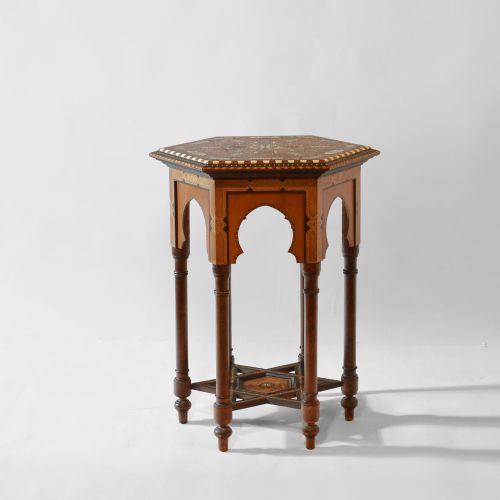
The styles span Georgian and Victorian periods through to Moorish Revival, Anglo-Indian, and Chinese Qing Dynasty pieces. Buyers seeking a hexagonal wood table often select these diverse interpretations for use as lamp tables or decorative stands.
Materials and Technique
Cabinetmakers utilised dense timbers such as mahogany, walnut, rosewood, teakwood, and padouk to construct stable hexagonal frames. Turned legs, carved supports, and fitted tiers provide structural integrity for these six-sided surfaces.
Decorative surfaces frequently incorporate intricate inlays of mother-of-pearl, bone, brass, ebony, and boxwood. Specimen wood marquetry arranges contrasting timbers in geometric patterns across the top.
Several small Ceylonese specimens double as miniature elephant tables, bringing an eccentric touch to the six-sided table tradition.
Standards of Execution
Quality rests in the precision of the joinery where six panels meet at precise angles and the crispness of hand-carved details. Superior examples maintain structural rigidity in their legs and tiers without wobble.
The refinement of surface inlay distinguishes finer pieces, where mother-of-pearl, bone, and contrasting woods sit flush within the timber. Richness of grain and depth of polish further separate standard production from exceptional craftsmanship.
Liberty and Co·Gillows
The Hexagonal Wood Table Glossary
- Specimen wood
- Furniture constructed using multiple different native and exotic timbers to showcase contrasting natural colours and grain patterns. These are often arranged in geometric compositions across tabletops.
- Marquetry
- The art of applying small pieces of veneer to a structure to form decorative patterns and pictures. It differs from inlay by assembling the pattern before adhering it to the surface.
- Torchere
- A tall ornamental stand designed to hold a candelabrum or lamp. Many examples feature slender vertical supports terminating in small platforms.
- Moorish Revival
- An architectural and decorative style popular in the nineteenth century that draws on Islamic design motifs. Tables in this style often feature dense geometric mother-of-pearl and bone inlay.
Hexagonal Wood Table: Frequently Asked Questions
What is a hexagonal wood table used for?
These six-sided tables serve primarily as occasional surfaces for lamps, vases, and decorative objects in principal rooms. Their distinctive geometry allows them to fit neatly beside seating or function as central plant stands.
Larger variants from the Georgian and William IV periods also function as breakfast or dining tables. Smaller stands provide versatile placement options in hallways and studies.
How do I identify the period of a hexagonal wood table?
Dating relies on timber selection, structural construction methods, and decorative style markers associated with specific eras. Georgian and Victorian examples display traditional cabinetmaking techniques and specific wood preferences like mahogany and rosewood.
Later pieces from around nineteen hundred often incorporate Moorish Revival or Anglo-Indian inlays. Comparing leg turning and joinery details helps narrow down the decade of manufacture.
Are these tables suitable for everyday use?
Solid timber construction and sturdy frames make these tables resilient for regular placement of everyday items. Care should be taken with inlaid surfaces to protect mother-of-pearl and delicate boxwood details.
Using coasters and avoiding placement in direct sunlight preserves the polish and natural grain of the wood. Regular dusting maintains the condition of intricate carved and inlaid panels.
What styles are available in hexagonal tables?
The selection encompasses British periods including Georgian and Victorian alongside international designs like Syrian, Chinese, and Indian works. Each cultural tradition brings distinct carving methods and decorative materials to the six-sided form.
From Arts and Crafts simplicity to elaborate mother-of-pearl marquetry, styles vary significantly across regions and decades. This diversity allows the tables to complement both traditional and eclectic interiors.