


Heraldic Lion Sculpture
These heraldic lion sculpture pieces bring centuries of carved wood, cast iron and stone pageantry straight into your rooms.
Heraldic Lion Sculpture
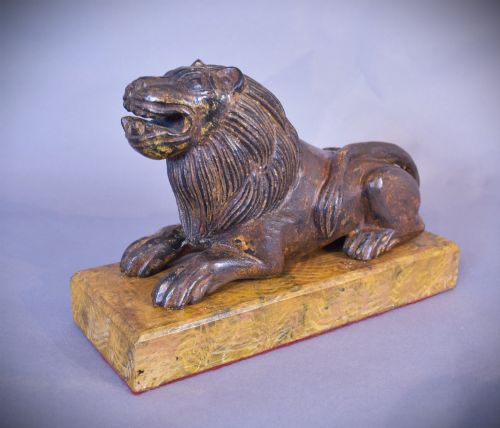
A heraldic lion sculpture represents the traditional beast of English and European heraldry, taking forms such as rampant beasts, seated guardians and monumental crests. When searching for a heraldic lion sculpture, buyers encounter objects ranging from heavy metal doorstops and bookends to architectural newel post finials and large garden statuary.
The pieces appearing on this page span several centuries, including seventeenth-century timber carvings, nineteenth-century cast iron doorstops and mid-twentieth-century reconstituted stone garden ornaments. Smaller items serve practical roles indoors, whilst larger carved wood figures and stone gate finials command attention in halls and gardens.
Makers and craftsmen across the periods adapted the iconic lion motif for diverse settings, utilising styles from Gothic Revival to Neoclassical. Whether an oak shield crest or a painted cast iron door keeper, each item carries the enduring symbolism of the royal beast.
How they were made
Carvers shaped timber such as oak and giltwood using traditional chisels and gouges, often finishing the details with polychrome paint or gilding. Earlier seventeenth-century works demonstrate hand-carving techniques applied to structural elements like newel posts and armorial crests.
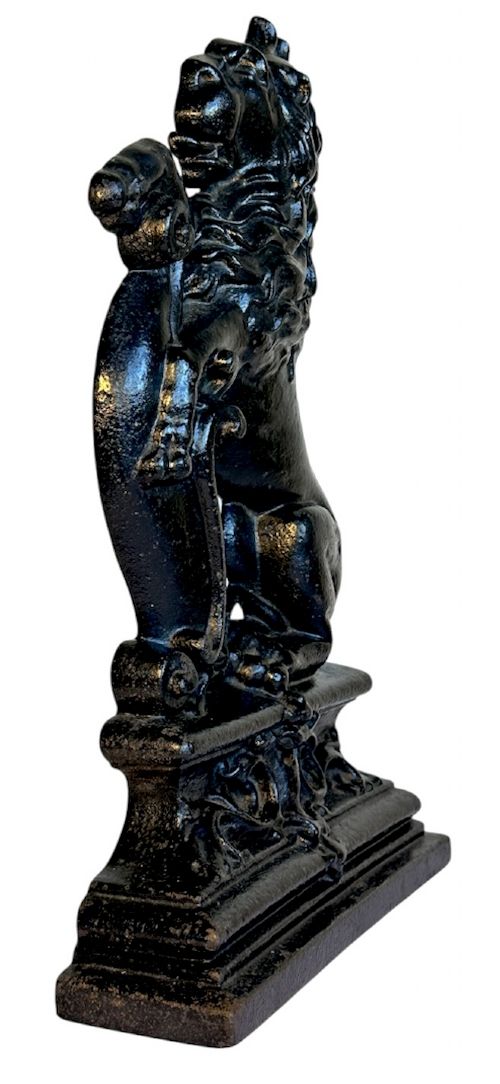
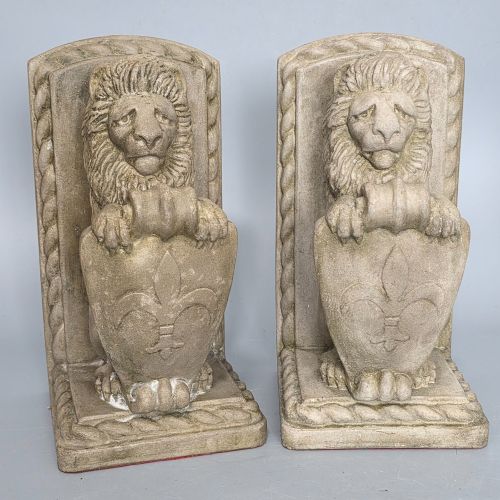
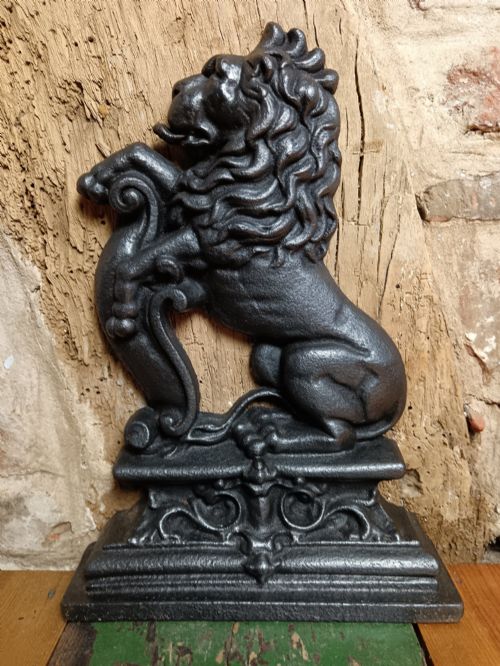
Foundries produced metal examples by pouring molten cast iron into sand moulds to create robust doorstops and architectural plaques. Stonemasons and manufacturers later utilised reconstituted stone and cast stone to shape durable garden figures and bookends intended for heavier domestic use.
Listings feature items spanning from the 17th century through the Victorian era to the mid-20th century.
What varies in quality
The standard of a heraldic lion sculpture rests upon the crispness of the carving or casting and the anatomical confidence of the beast. Superior pieces display sharply defined manes, muscular limbs and well-proportioned shields that reflect the hand of a skilled artisan rather than a generic production run.
Surface finish significantly influences character, particularly where original polychrome paint, gilding or natural patination remains intact. Items retaining genuine age-related wear on timber and iron demonstrate authenticity and superior historical preservation.
The Heraldic Lion Sculpture Glossary
- Rampant
- A heraldic posture where the lion stands on its hind legs with forepaws raised in the air. This aggressive stance appears frequently on cast iron doorstops and armorial shields.
- Newel post finial
- An ornamental carving mounted on top of the principal vertical post at the start of a staircase. These wooden sculptures often depict lions or griffins.
- Armorial crest
- A design derived from a coat of arms, typically featuring heraldic beasts and shields. These plaques were carved in wood or cast in metal to mark lineage or property.
- Polychrome paint
- Decoration utilising several distinct colours on a single object. Historical examples often display remnants of this multi-coloured finish on carved wood.
- Reconstituted stone
- A composite material made from crushed stone mixed with a binder to imitate natural stone. Manufacturers use this to cast durable garden statuary and architectural ornaments.
Heraldic Lion Sculpture: Frequently Asked Questions
What is a heraldic lion?
A heraldic lion is a traditional symbolic beast depicted in coats of arms, flags and sculptures according to strict heraldic rules. These figures represent strength, courage and nobility in English and European lineage.
Artists and metalworkers translated these symbols into three-dimensional objects like doorstops, finials and wall plaques for domestic and architectural display.
Where were doorstops placed?
Cast iron lion doorstops were positioned on floors inside rooms to hold heavy interior doors open against draughts. Their substantial weight kept doors securely in place during daily household use.
Today, collectors use these sturdy iron beasts both as functional door keepers and as decorative ornaments on floors or shelves.
How do I date a timber carving?
Dating a carved wood lion involves examining tool marks, timber shrinkage, joint construction and the style of the carving. Seventeenth-century pieces typically exhibit deep hand-tooling on native hardwoods like oak.
Surface patination and the presence of early paint or gilt layers also provide reliable indicators of a piece's age and historical period.
Can stone lions go outside?
Reconstituted stone and cast stone lion sculptures are specifically designed to withstand outdoor garden conditions. These materials endure weather changes when placed on gate posts, plinths or lawns.
During harsh winter frosts, gardeners sometimes cover stone statuary or move smaller pieces indoors to protect the material from surface spalling.