
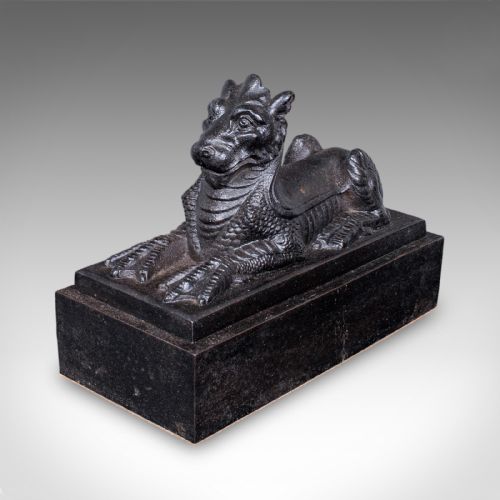
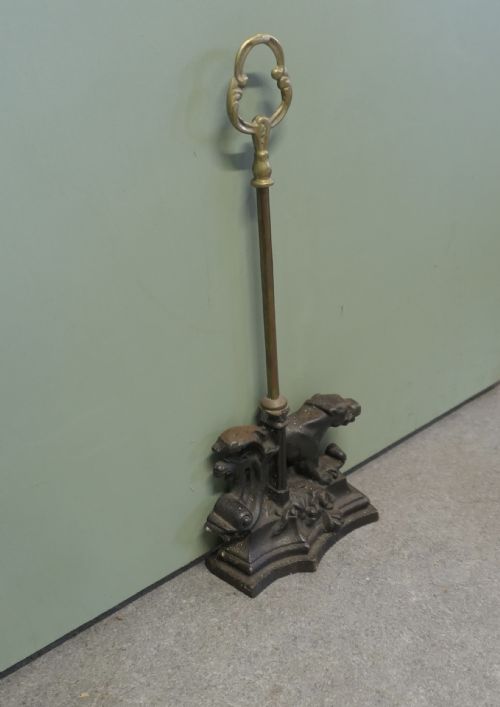


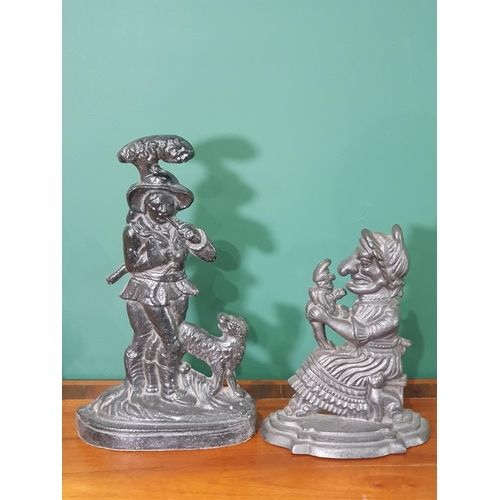


Black Iron Door Porter
These heavy black iron door porters are practical nineteenth-century stops designed to hold heavy doors open with authority.
What a black iron door porter is
A black iron door porter is a heavy piece of cast metal used to keep doors from swinging shut unexpectedly. Every example seen on this page dates to the Victorian period, reflecting the heavy-duty ironwork of the nineteenth century.
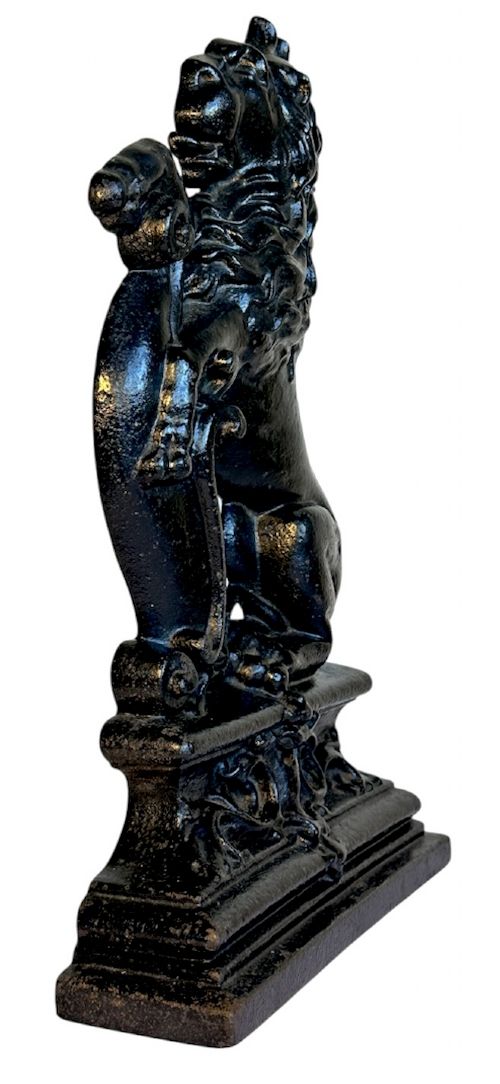
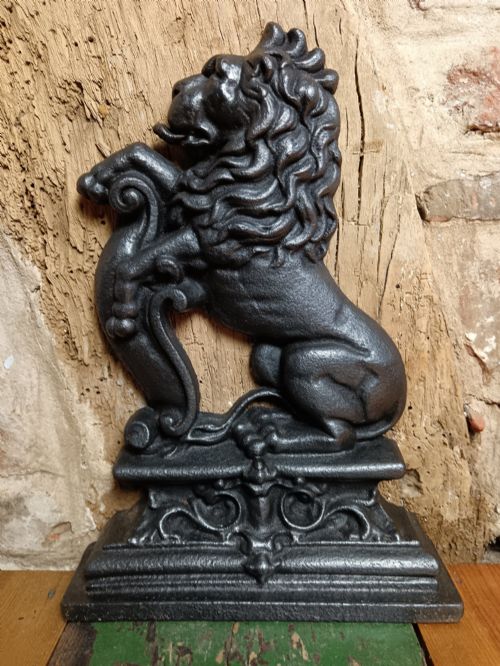
The most common form on this page is the lion motif, specifically the rampant lion design. These pieces combine utility with decorative presence, serving as both a doorstop and a room ornament.
How they were made
These items are produced entirely from cast iron, poured into moulds to create solid, heavy forms. The manufacturing process relies on traditional foundry techniques common in nineteenth-century English workshops.
Finished surfaces typically receive a dark protective coating or black paint to prevent oxidation of the underlying iron. This coating gives the metal its characteristic dark finish seen across all listed pieces.
Retail Price Guide 2026
Typical UK retail prices for black iron door porter, calculated from the Sellingantiques database of over a million retail prices indexed since 2003. This retail price guide relies exclusively on Sellingantiques data; no external sources or auction records are used, so the figures do not describe the wider market.
The fierce rampant lion stands ready to guard your hallway against the sudden draft of a closing door.
What varies in quality
Weight and balance also distinguish superior castings from simpler utility pieces. A well-balanced porter holds its position securely without relying on excessive bulk.
The Black Iron Door Porter Glossary
- Cast iron
- A strong, heavy alloy of iron and carbon poured into moulds while molten. This material provides the necessary mass to hold doors firmly in place.
- Door porter
- A traditional term for a heavy portable doorstop. These objects sit on the floor rather than fixing to the door itself.
- Rampant lion
- A heraldic posture depicting a lion standing on its hind legs with forepaws raised. This is the predominant decorative motif found on the iron doorstops listed here.
- Victorian
- Relating to the reign of Queen Victoria from eighteen thirty-seven to nineteen oh one. All items recorded on this page originate from this era.
Frequently Asked Questions
What is a door porter?
A door porter is a heavy portable weight placed on the floor to keep interior doors open. Unlike modern wedges, these substantial items rely on gravity and mass.
They were common in nineteenth-century hallways where draughts and heavy wooden doors required a sturdy barrier.
How heavy are these iron doorstops?
These pieces possess significant weight due to their solid cast iron construction. The heavy mass ensures they remain stable against large doors.
Such weight prevents the stop from sliding across carpeted or wooden floors during everyday use.
Are these pieces English?
The available evidence points to English origin for these nineteenth-century items. Cast iron production flourished in Britain during the Victorian period.
Foundries across the country produced utilitarian household ironmongery alongside decorative doorstops.
How do I care for cast iron?
Cast iron requires minimal maintenance beyond keeping the surface dry and clean. Dusting with a soft cloth preserves the dark finish.
Avoid using harsh chemical cleaners that might strip the protective coating from the metal.