


Heraldic Coat of Arms Plates
These heraldic coat of arms plates display family lineage and civic pride across porcelain, copper, pewter, and pottery.
Heraldic Coat of Arms Plates
These pieces display painted, enamelled, or cast armorial bearings belonging to specific families, towns, or institutions. When you search for heraldic coat of arms plates, you encounter items spanning the eighteenth, nineteenth, and early twentieth centuries.
The selection ranges from Chinese export porcelain made for European households to English pewter and glazed pottery items. Soup plates, cabinet plates, and chargers form the main categories available on this page.
Origin varies widely from English factories and French workshops to Chinese kilns producing export wares. Each piece records a distinct lineage or civic identity through painted or metalworked heraldry.
Materials and construction methods
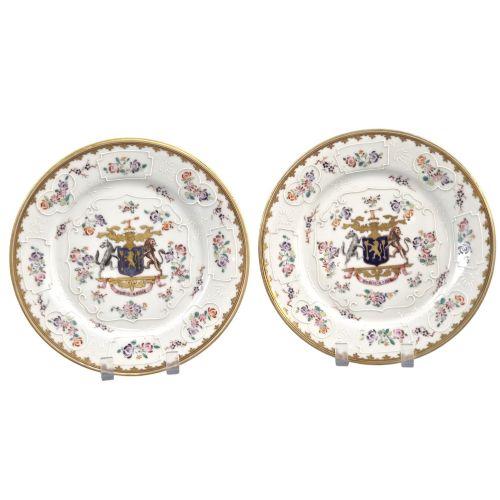
Porcelain bodies utilise underglaze blue, famille rose enamels, and gold leaf decoration applied in European and Asian workshops. Potters shaped these pieces into octagonal soup plates, round dessert plates, and cabinet dishes.
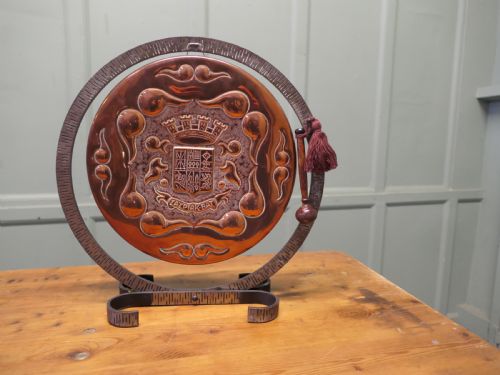
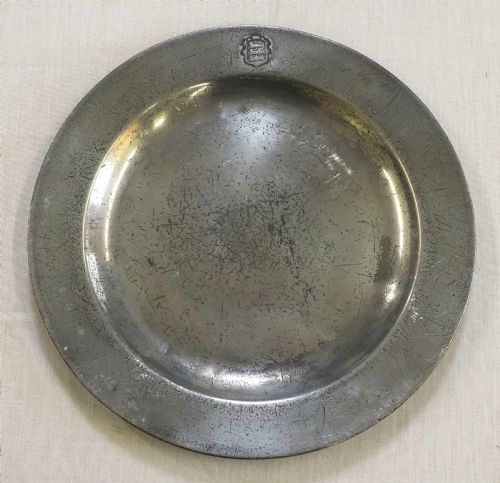
Metal versions rely on hand hammered copper, cast iron, and pewter shaped into plates, firebacks, and table gongs. Artisans engraved or applied coats of arms directly onto the metallic surfaces.
Materials represented across the inventory include porcelain, copper, pewter, iron, and glazed pottery.
Evaluating the craftsmanship
The precision of the heraldic painting and the complexity of the enamelling determine the visual merit of ceramic examples. Crisp detailing in the crest and accurate rendering of tinctures distinguish finer pieces.
Metal items demonstrate quality through the weight of the copper or pewter and the clarity of the hammered or cast armorial design. Well preserved gilding and minimal surface wear elevate the standing of a plate.
Edmé Samson & Cie·Wood & Michell·Coalport Porcelain·Chamberlain Worcester·Barr Flight & Barr·Minton Cabinet Porcelain
The Heraldic Coat of Arms Plates Glossary
- Armorial
- Bearing a coat of arms or heraldic device. These designs identify specific noble families or corporate bodies.
- Famille Rose
- A palette of opaque rose enamel introduced in Chinese ceramics during the eighteenth century. This colouring dominates many export porcelain pieces.
- Pewter
- A malleable metal alloy of tin mixed with copper and antimony. English makers utilised this material for utilitarian and display plates.
- Soup Plate
- A deep ceramic plate with a broad rim designed for liquid courses. Armorial examples were commissioned for wealthy dining tables.
Heraldic Coat of Arms Plates: Frequently Asked Questions
What are heraldic plates?
These items are ceramic, metal, or pottery dishes painted or cast with specific family crests and coats of arms. They were commissioned to display lineage and wealth during formal dining.
Examples span from the mid eighteenth century through the Victorian era and into the early twentieth century. They include export porcelain, pewter, and glazed earthenware.
How were armorial plates used?
Wealthy households utilised armorial services for dining and formal presentation at the table. Soup plates and dessert plates formed part of larger dinner services.
Other metal examples served as decorative wall pieces or components of table gongs and firebacks. Their primary function was to signal status and familial identity.
How do I identify the family?
The painted or engraved heraldic shields, crests, and mottoes correspond to registered coats of arms in heraldic rolls. Researching the specific tinctures and charges reveals the original owner.
Many pieces were commissioned for British peers, landed gentry, or prominent civic locations. Export porcelain often records the lineage of European and British families through specialised documentation.
How do I date these plates?
Stylistic evidence, paste composition, and ceramic body types provide chronological markers. Eighteenth century Chinese export porcelain differs noticeably in weight and glaze from Victorian glazed pottery.
Maker marks stamped into pewter or porcelain bases help narrow the production period. Comparing the style of the armorial painting to known historical periods yields further accuracy.