




Hepplewhite Drop Leaf Table
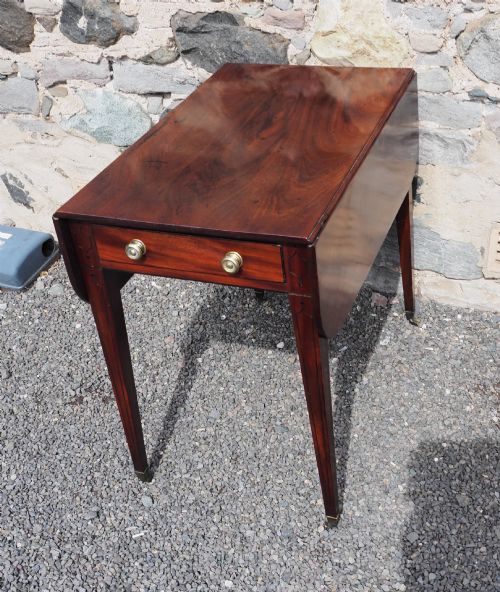
These hepplewhite drop leaf table examples are versatile Pembroke and dining tables designed for compact living spaces with folding leaves.
Hepplewhite Drop Leaf Table
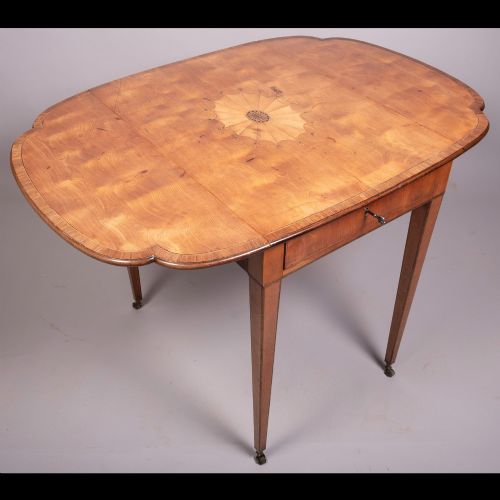
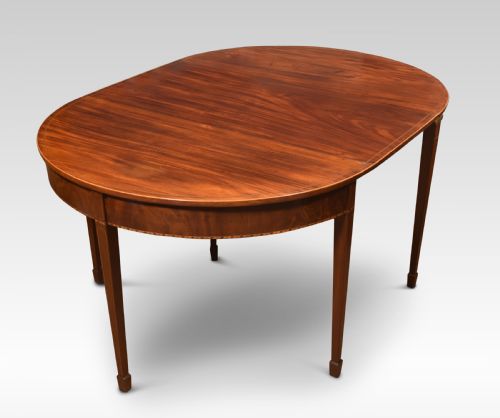
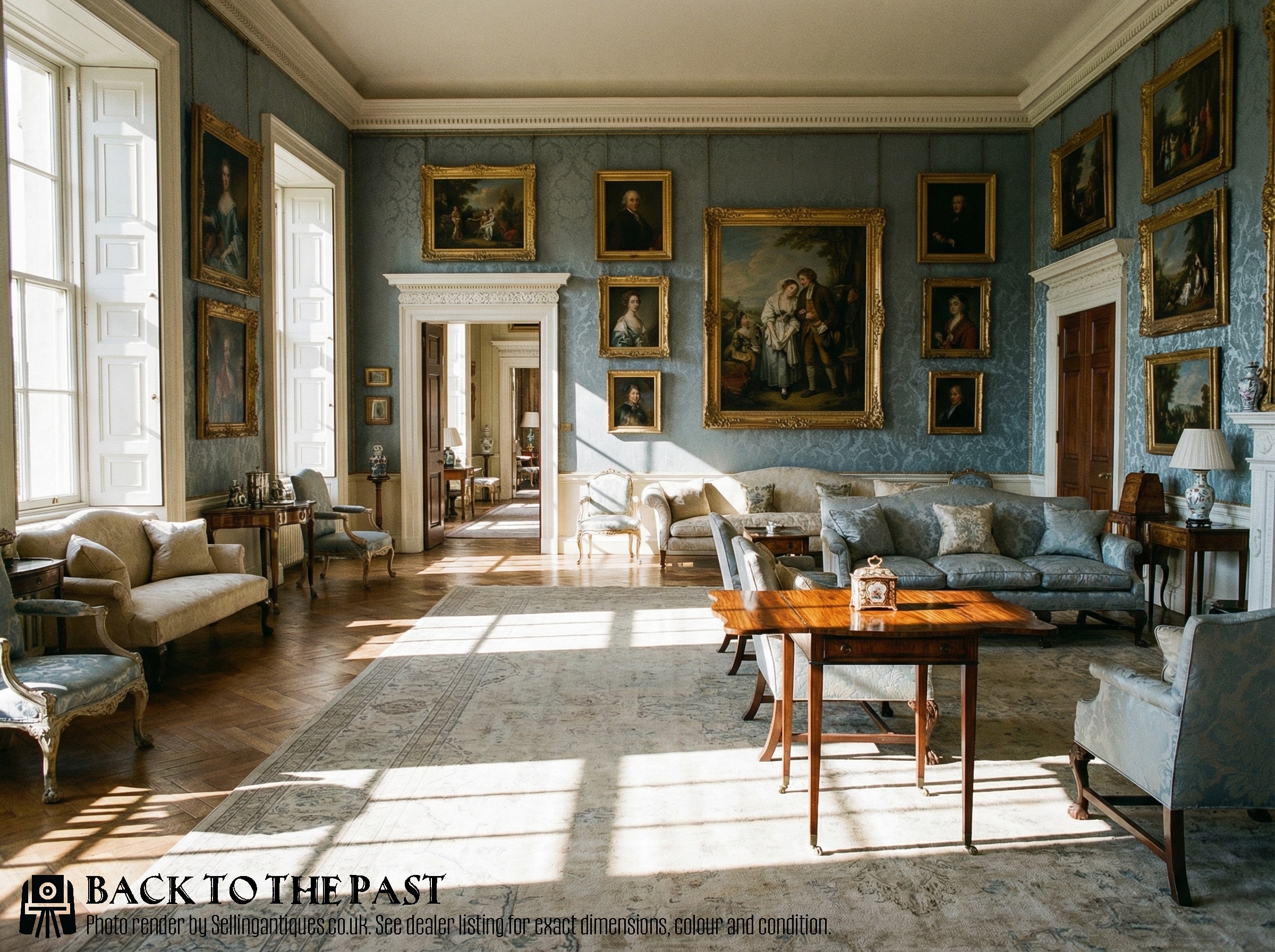
A hepplewhite drop leaf table search brings up a selection of Pembroke tables, side tables, and D-end dining tables spanning the Georgian period and the nineteenth century. These versatile pieces feature hinged leaves supported by folding brackets, allowing the surface area to expand or contract according to the needs of the room.
The pieces listed here lean heavily towards mahogany construction, often enhanced by satinwood, boxwood, and tulipwood inlay or marquetry detailing. Oval tops and serpentine edges appear frequently alongside more traditional rectangular forms, reflecting the refined proportions characteristic of the era.
How they were made
Cabinet makers utilised solid mahogany alongside supportive secondary timbers, shaping the drop leaves to drop cleanly against the central framework. Brass hinges and castors were fitted to permit movement and everyday domestic use without straining the structural joints.
Decorative surfaces relied on contrasting veneers and fine stringing, incorporating satinwood, boxwood, and tulipwood inlay to create delicate borders and central motifs. Marquetry techniques added pictorial or geometric detail to the timber panels.
Hepplewhite Drop Leaf Table Retail Price Guide 2026
Typical asking prices for hepplewhite drop leaf table among the pieces listed under this phrase on Sellingantiques today, from the lower quarter to the upper quarter. They describe what is for sale here now, not the wider market.
What varies in quality
The refinement of the inlay work distinguishes standard workshop production from finer cabinet work, where boxwood and satinwood stringing follows complex curves with exact precision. Timber selection also dictates visual depth, with well-figured mahogany displaying rich grain patterns across both the leaves and the main surface.
Structural integrity relies on the snug fit of the hinged fly brackets and the stability of the leg joints under weight. Tables that retain their original brass fittings and balanced proportions command greater appreciation among collectors.
The Hepplewhite Drop Leaf Table Glossary
- Pembroke table
- A small drop leaf table with hinged flaps on either side, typically featuring one or two small drawers.
- Marquetry
- The art of applying pieces of veneer to a structure to form decorative patterns, often using contrasting exotic woods.
- Serpentine
- A curved line or surface that undulates gently with a convex centre flanked by concave curves.
- D-end table
- A dining table whose end sections are semi-circular in shape, resembling the letter D when separated.
Hepplewhite Drop Leaf Table: Frequently Asked Questions
What is a Pembroke table?
A Pembroke table is a compact occasional table with hinged drop leaves on two opposing sides. They were designed to sit easily against a wall and expand when extra surface space was required.
Most examples include one or more small drawers beneath the top and stand on slender legs often fitted with castors for mobility.
How do I spot Hepplewhite style?
Hepplewhite style is defined by light, elegant proportions, tapered legs, and subtle decorative inlay rather than heavy carving. The lines tend to be graceful and restrained.
Look for contrasting wood stringing, serpentine edges, and oval tops that emphasise delicacy and refined craftsmanship.
Where were these tables used?
These tables served multiple functions in Georgian and nineteenth-century homes, moving easily between parlours, sitting rooms, and dining spaces. Their folding leaves made them adaptable for writing, sewing, or serving light meals.
Their modest footprint meant they could be tucked away neatly when not in active use.
How do I care for antique mahogany?
Keep mahogany furniture away from direct sunlight and sudden temperature shifts to prevent the timber from drying out or splitting. Gentle dusting with a dry cloth is usually sufficient for daily maintenance.
Occasional application of appropriate wax polish helps nourish the grain and preserves the natural lustre of the wood.