


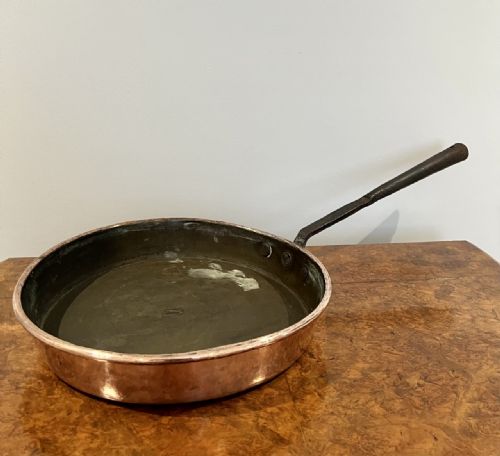

Heavy Gauge Copper Cookware
Heavy gauge copper cookware brings warmth, substance, and direct thermal response to the kitchen.
Heavy Gauge Copper Cookware
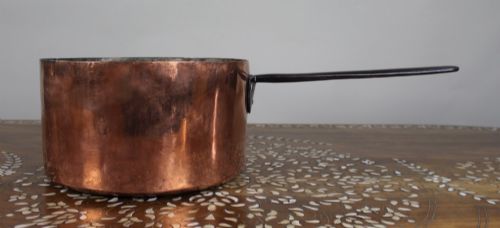
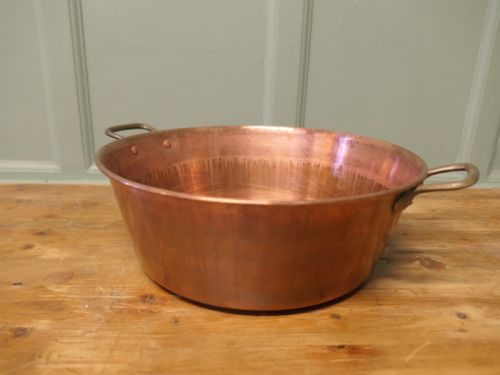
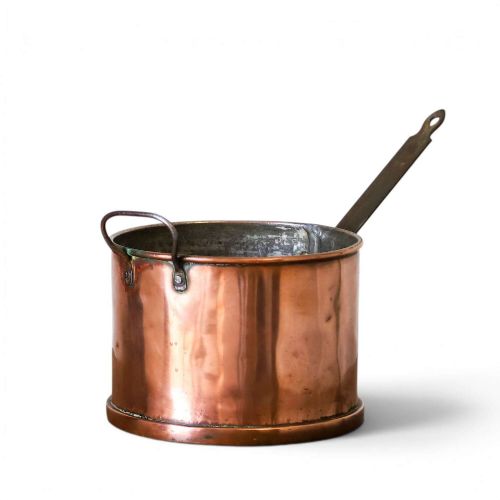
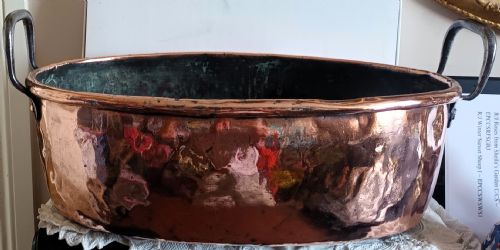
When you search for heavy gauge copper cookware, you are looking at robust utilitarian vessels designed for serious kitchen work over centuries. These pieces span the Georgian and Victorian eras, taking forms such as deep saucepans, jam pans, cream setting pans, and fish kettles.
You are most likely to meet large Victorian and Georgian saucepans and multi-piece sets on this page. These sturdy vessels often feature contrasting handles in iron, brass, or wrought iron, built to lift heavy loads of liquid and preserves.
The origins represented range from English country kitchens to French workshops, reflecting a shared European tradition of heavy metalwork for food preparation. Each vessel carries the distinct hammer marks and surface variations of manual production rather than mass fabrication.
How they were made
The primary material is thick copper sheet, shaped by hand-beating over anvils to achieve the desired depth and structural rigidity. This substantial gauge allowed the metal to withstand intense heat and constant stirring without warping.
Handles and attachments utilise durable metals like cast iron, wrought iron, and brass, secured firmly with heavy rivets. Interiors were typically lined with tin to prevent direct contact between copper and acidic foods during cooking.
Listings feature periods from the 1800 Georgian era through the Victorian nineteenth century, utilising copper, iron, brass, and tin.
What varies in quality
Quality rests in the thickness of the copper plate and the integrity of the original hand-beaten construction. Heavier walls distribute heat more evenly and resist denting under daily kitchen use.
Maker identification elevates a piece, as seen in stamped workshop marks from makers such as Liptons. The clean integration of riveted iron or brass handles also separates standard kitchen utensils from finer presentation pieces.
Liptons
The Heavy Gauge Copper Cookware Glossary
- Heavy gauge
- A thicker sheet metal measurement that provides greater durability and thermal stability. This thickness prevents the pan from buckling over direct fire.
- Tin lining
- A protective interior coating applied to copper cookware to prevent chemical reactions with food. Traditional vessels require this layer renewed periodically.
- Jam pan
- A wide, open vessel designed for boiling fruit and sugar with a high evaporation rate. These pots often feature secure double handles for safe lifting when full.
- Fish kettle
- An elongated pan equipped with a fitted lid and internal draining rack for poaching whole fish. This specialist shape ensures even cooking without breaking delicate flesh.
- Cream setting pan
- A wide, shallow vessel used in dairy work to allow cream to rise to the milk surface. These historical kitchen items show the specialised nature of older domestic metalwork.
Heavy Gauge Copper Cookware: Frequently Asked Questions
What is heavy gauge copper cookware?
Heavy gauge copper cookware consists of thick-walled metal pots and pans designed for intensive cooking tasks. These vessels offer superior heat conduction and longevity.
The pieces on this page originate from the Georgian and Victorian periods, utilising sturdy copper bodies combined with iron or brass handles.
How were these copper pans used?
These vessels served everyday culinary duties including sauce preparation, jam boiling, cream setting, and fish poaching. Their substantial weight helped maintain steady temperatures during long cooking processes.
Kitchens relied on these durable pots for both open-fire and stove-top cooking before modern lightweight utensils became common.
How do I live with antique copper?
Living with antique copper involves integrating functional history into a working or display kitchen. Many owners choose to use them for cooking after proper inspection or display them to showcase their warm metallic tones.
Regular care maintains the surface finish, whether you prefer a bright polished shine or a deep natural patina accumulated over generations.
How can I tell periods apart?
Periods are identified through construction methods, handle design, and maker stamps. Georgian pieces often display specific handle profiles and hand-beaten textures distinct from later Victorian manufacturing.
Examining the rivet styles and overall heft helps separate earlier 18th-century work from mid-19th-century workshop production.